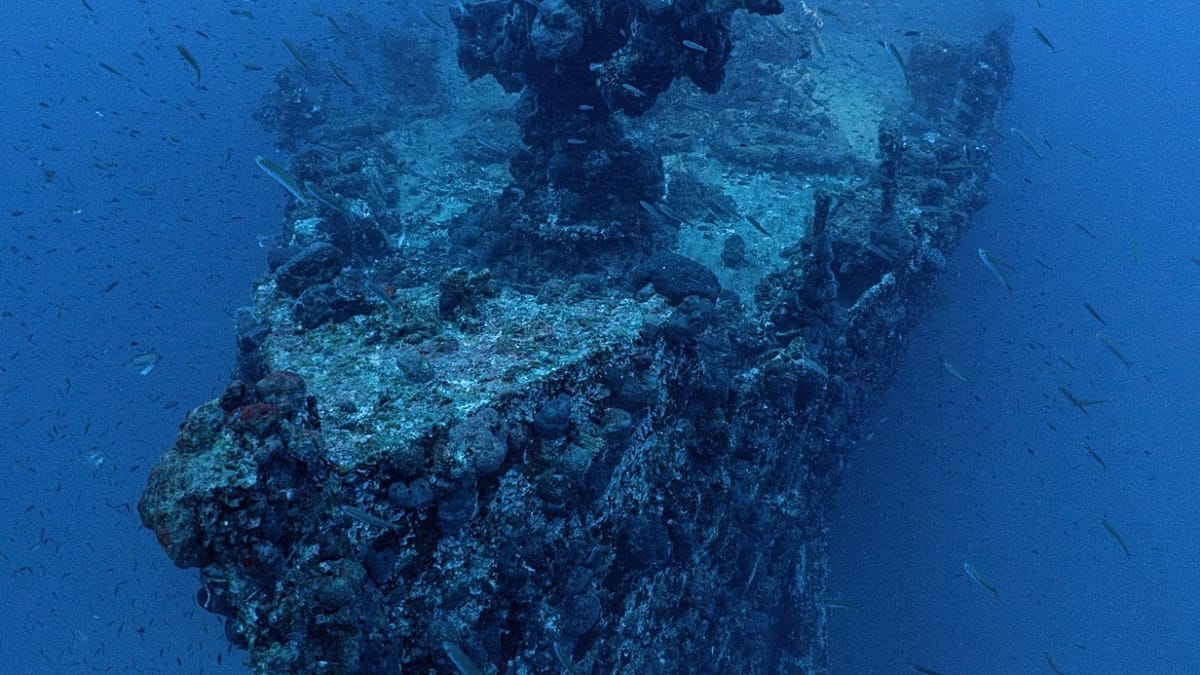
Kea, a short ferry ride from Athens, is known for its beaches and tavernas. But beneath the Aegean surface lies a different kind of attraction: three shipwrecks that have turned the island into a destination for serious divers. The most famous is the HMHS Britannic, the Titanic's sister ship, which sank in November 1916 after striking a German mine. It now rests at a depth of around 120 metres, a site that divers describe as the 'Everest of diving'.
A wreck that commands awe
The Britannic was built as a luxury liner but served as a hospital ship during the First World War. Its design had been improved after the Titanic disaster, with more lifeboats and better watertight compartments. Yet it went down in just 55 minutes. Thanks to the improvements and the proximity of Kea, about 1,300 people were rescued, though 30 lost their lives, mainly because lifeboats were launched too early while the engines were still running.
Giannis Tzavelakos, owner of the diving centre Kea Divers, recalls the first reaction of divers who reach the wreck: 'Awe. The first feeling you get is really awe. The size is something extraordinary. I don't think you can easily find a wreck of this size that is accessible to divers. It is in very good condition. Even though at least 112 years have passed since it sank, everything is still in its place. It is essentially an underwater museum.'
The wreck was discovered in 1975 by Jacques-Yves Cousteau, who explored it a year later. After years of effort, the Greek authorities established the Underwater Historical Site of Kea, a pioneering protected marine area that encompasses the three wrecks: the Britannic, the Patris, and the Burdigala. For technical divers, the Britannic is a lifetime goal. Tzavelakos explains: 'When the divers reach the surface and take out their mouthpiece and mask, you see a sparkle in their eyes and a huge smile of satisfaction, because beyond everything else, for divers the Britannic is something like Everest. Every diver, at some point, dreams of managing to dive on the Britannic. Essentially it is the fulfilment of a life goal.'
The other two wrecks are also historically significant. The Patris, a steamship that sank in 1868, lies in shallower water and is more accessible. The Burdigala, a French ocean liner converted into a troop ship, was sunk by a German submarine in 1916. Together, the three wrecks offer a unique window into maritime history.
From seabed to summit
But Kea is not only about what lies beneath the waves. On land, the island offers a network of about 81 kilometres of marked hiking trails, divided into 12 main routes. These paths wind through valleys, past ancient ruins, and up to the island's highest points, with views over the Cyclades.
One of the most striking landmarks is the 'Lion of Kea', a 6th-century BC sculpture carved into solid schist rock, standing about 500 metres from the main settlement of Ioulis. The lion, weathered but still imposing, is a reminder of the island's ancient past.
Local volunteers are working to keep the trails alive. Anna Podogyrou, a member of Kea's hiking group, says: 'Over the last year we have formed a group of friends who walk across the island and bring its paths back to life through our activities. We carry out clean-ups, we try to include the springs we encounter on our routes. We cross the paths with respect and take care to keep them clean.'
The trails also lead through the island's most precious natural asset: the Valonia oak forest. This is the largest such forest in the Cyclades, and some believe it is a remnant of a time when the islands were covered in deciduous trees. Others argue it was planted by humans, as acorns were once widely used in tanning. Either way, the forest is a haven for hikers and a vital ecosystem.
Podogyrou emphasises the importance of the paths for tourism: 'The paths give the island a different tourism identity. Almost all the paths run through the oak forest, which is of unique beauty and environmental importance. They end at beautiful beaches, connect the villages with one another and create a link between the past and the present.'
Kea's proximity to Athens—just a few hours by ferry—makes it an ideal destination for a weekend or a three-day break. In recent years, even day trips have been organised for those who want to sample the trails without staying overnight. Whether you come for the diving or the hiking, Kea offers a rare combination of underwater history and terrestrial beauty.