The 46th Gold Key Awards for Excellence in Hospitality Design have named their winners, and the world's best luxury hotel is in Europe. La Réserve Firenze, a collection of six apartments inside a restored 15th-century palazzo on Florence's Via Santo Spirito, claimed the top honour in the luxury hotel category.
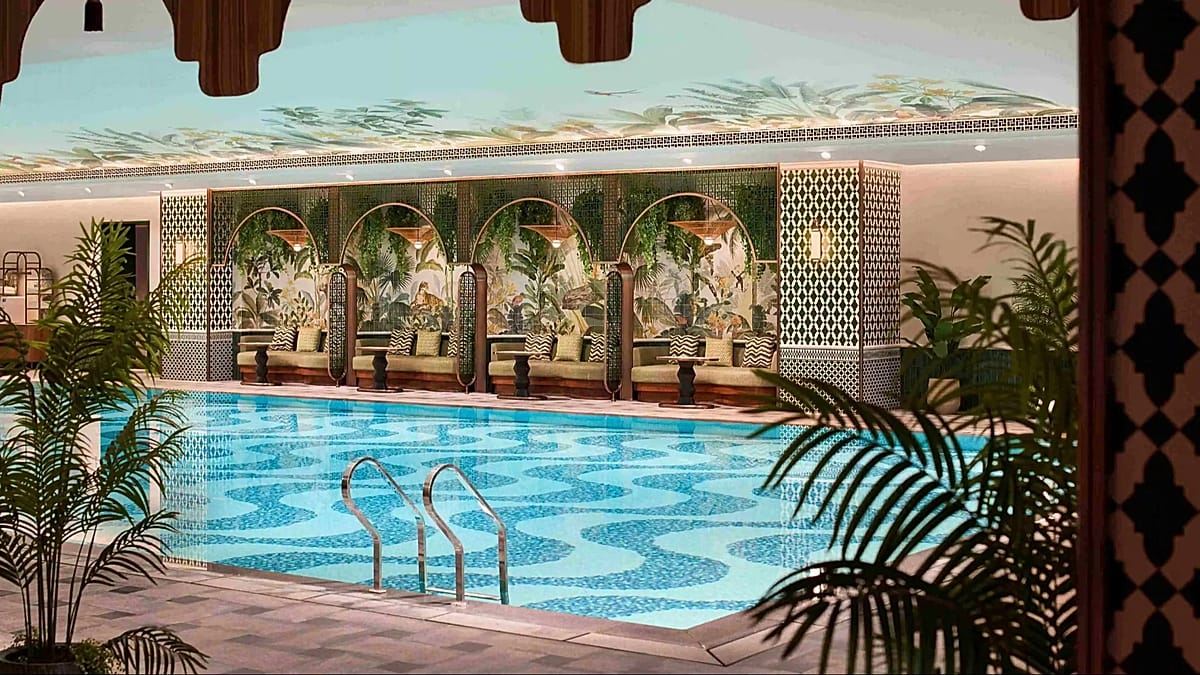
The property's interiors, designed by the Paris-based studio Gilles & Boissier, impressed the jury with what they described as "a soothing material palette, a subtly wabi-sabi atmosphere, and a meticulously curated selection of art." The design philosophy, according to architect Patrick Gilles, was one of restraint. "Our architectural approach was one of restraint, almost of silence," he said. "We opted for a deliberately understated design, while bringing as much light as possible into this long-dormant building on Via Santo Spirito, whose top floor overlooks the Arno and the city."
The Gold Key Awards, now in their 46th year, recognise interior designers across categories such as lobbies, guestrooms, hotels and resorts. This year, more than 425 projects from around the globe were submitted.
European contenders and global winners
Among the runners-up in the luxury hotel category were two properties designed by AvroKO: Six Senses London and Shangri-La Kunming in China. Six Senses London occupies the former Whiteley's department store in the British capital, with interiors inspired by William Whiteley's fascination with the Great Exhibition of 1851. Shangri-La Kunming, meanwhile, evokes a tea merchant's private residence, a nod to Yunnan's status as the birthplace of tea.
In the resort category, the top prize went to Four Seasons Resort & Residences AMAALA at Triple Bay in Saudi Arabia. Design firm Goddard Littlefair said the design honours "the raw, elemental beauty of Triple Bay, its mineral geology, shifting desert light and vast horizons."
Rosewood Mandarina in Mexico's Riviera Nayarit, a runner-up, drew on the traditional art of the Indigenous Huichol and Cora peoples, with custom pieces including Barro Negro pottery and rope-assembly installations. Another runner-up, Zoland Resort Hotel on Emei Mountain in Sichuan Province, China, was designed by Studio J. Bridgland to blend into the surrounding forest using local stone and timber.
Europe also had a presence in the eco-conscious/socially conscious hotel category, where 1 Hotel Copenhagen was named a runner-up. The Danish property combines greenery with handcrafted furnishings, reflecting a broader trend in Scandinavian hospitality. For travellers planning their next European break, the cheapest days to fly and book hotels this winter might be worth checking.
The Gold Key results come as Europe's luxury tourism sector continues to expand, though unevenly. A recent analysis highlighted that Italy's luxury tourism has reached €10.4bn, yet 25 provinces still lack five-star hotels. Meanwhile, other rankings, such as the Condé Nast Johansens awards for Europe's best hotels, offer alternative perspectives on the continent's top stays.
For design enthusiasts, the Gold Key Awards remain a key reference, highlighting how hotels are increasingly using architecture and interiors to tell stories, whether rooted in local heritage or contemporary minimalism. As the industry evolves, European properties continue to set benchmarks in both aesthetics and sustainability.