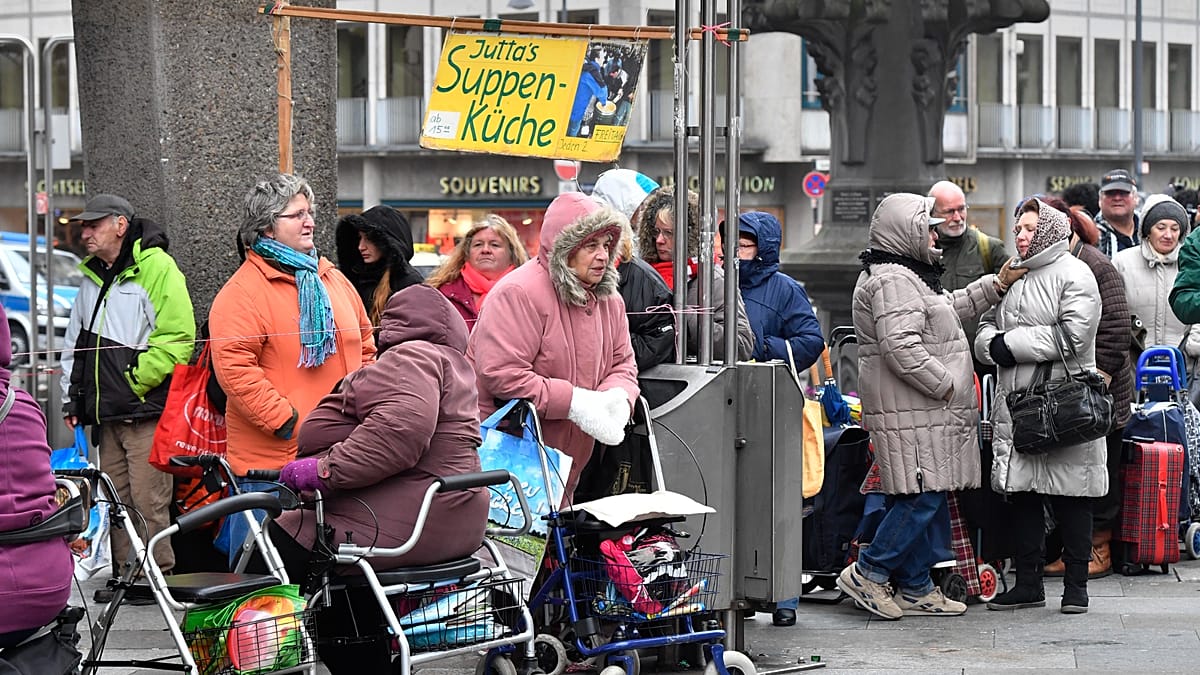
New data from Eurostat reveals that in 2025, 92.7 million people across the European Union—nearly one in five residents—were at risk of poverty or social exclusion. But the headline figure masks deep internal divides: the gap between the most and least vulnerable regions within a single country can reach nearly 40 percentage points.
The AROPE indicator (at risk of poverty or social exclusion) captures not only low income but also severe material deprivation and very low work intensity. Across the EU, the national averages range from 11.5% in Czechia to 29.0% in Bulgaria. Greece (27.5%) and Romania (27.4%) follow closely behind. Among the bloc's four largest economies, Spain records the highest rate at 25.7%, while France sits just below the EU average at 20.8%.
Capital cities: a tale of extremes
When the lens narrows to capital cities, the disparities become even more pronounced. Among 24 European capitals with available data, the AROPE rate ranges from a low of 2.9% in Bratislava to a high of 33.6% in Brussels. Neither Slovakia nor Belgium ranks among the three highest or lowest countries overall, yet their capitals define the extremes.
Vienna (29.4%) and Berlin (24.4%) follow Brussels at the top of the list. More than one in five residents are also at risk in Athens (23.6%), Paris (20.9%) and Rome (20.7%). By contrast, Eastern European capitals such as Warsaw (7.1%), Prague (9.1%) and Budapest (below 15%) show far lower vulnerability.
In most countries, the capital region fares better than the national average. But there are striking exceptions. The most dramatic is Brussels versus Belgium: 33.6% against 16.5%, a gap of 17.1 percentage points. Vienna follows with a gap of 10.6 points above the national average. Berlin is 3.2 points higher. In Amsterdam, Copenhagen and Paris the difference is marginal.
On the other side, Slovakia's national average is 13.8 percentage points above Bratislava, and Romania shows the same gap, with Bucharest sitting well below the country figure. Among the four largest EU economies, Spain's national average (25.7%) is notably higher than Madrid (19.4%), a gap of 6.3 points. In Italy the gap is smaller, just 1.9 points, but the national average still exceeds Rome.
Regional extremes: Italy and Spain lead the list
When all regions are included, the internal gaps widen considerably. Italy records the widest divide at 39.7 percentage points: AROPE stands at 45.3% in Calabria while it is just 5.6% in Valle d'Aosta. In Spain, the gap between Ciudad de Melilla and País Vasco is 29 points. Finland has the narrowest gap of just 3 points, between Helsinki-Uusimaa (15.5%) and Länsi-Suomi (18.5%). Portugal, Slovenia and Denmark also show among the smallest internal differences.
Four regions in Italy and three in Spain are among the 15 highest in Europe. Calabria tops the list at 45.3%, followed by two other Italian regions and Ciudad de Melilla in Spain at 43.7%. Central and Eastern Europe dominate the lowest 15. Bratislavský kraj in Slovakia records just 2.9%, the lowest in Europe, while five Italian northern regions also feature among the least exposed.
In 2025, there were 20 regions where at least one-third of the population was at risk of poverty or social exclusion. These regions were concentrated in Italy, Spain and Bulgaria with four each, and Greece with three. This group also included two predominantly urban regions in western Europe: Région de Bruxelles-Capitale in Belgium (33.6%) and Bremen in Germany (35.4%), as well as Ticino in Switzerland (33.1%).
The data underscores that poverty risk in Europe is not just a national issue but a deeply regional one. As the EU prepares for its €2 trillion budget talks, where defence spending is surging while farmers and regions face cuts, these disparities may become even more politically charged. Meanwhile, the tens of thousands who marched in Brussels against the Belgian government's social reforms reflect the growing frustration in the capital with the highest poverty risk in Europe.
Beyond the numbers, the findings also have implications for urban policy and quality of life. As European cities dominate global walking rankings, the ability to afford to live in them remains uneven. The World Urban Forum in Baku recently highlighted the global housing divide, a crisis that demands cross-border solutions—and Europe's internal poverty gap is a stark reminder of the work ahead.