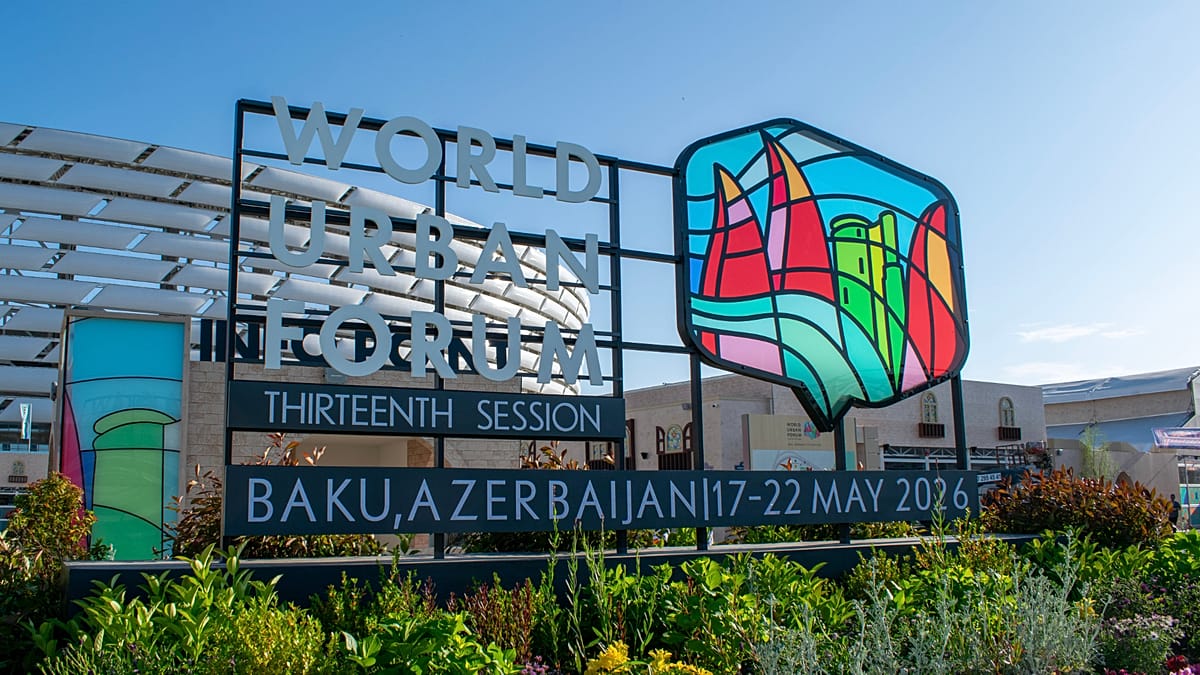
The thirteenth session of the World Urban Forum (WUF13) convened in Baku on Sunday, drawing more than 40,000 delegates from 182 countries to address what speakers described as a deepening global housing crisis that no single nation can resolve alone.
Slovakia's Deputy Prime Minister Tomas Taraba set the tone with a blunt comparison: while 80% of Slovaks own their home, some countries report ownership rates as low as 20%. "This creates a really big disruption in the social quality of living," Taraba told Euronews, "and the increasing prices are an extremely big topic at this moment."
Housing as a Transnational Challenge
The forum, organised by UN-Habitat, brought together ministers, urban planners, and development experts from across the globe. A central theme emerged early: the housing crisis now transcends national borders, driven by rapid urbanisation, climate pressures, and infrastructure deficits that outpace the capacity of any single government.
Malaysia's Minister of Housing and President of the UN-Habitat Assembly, Nga Kor Ming, stressed the need for credible projects to attract investment. "It's important for governments to come up with decent projects that are actually convincing, because we need to back up whatever project with good track record and integrity," he said. "Once that can be done, we believe there are people who are more than willing to step forward."
Czech Deputy Minister for Regional Development Filip Endal emphasised the forum's role as a source of inspiration rather than a one-size-fits-all solution. "I do not think that there exists one single approach how to improve everything all around the world," Endal told Euronews. "But this is a very good place for inspiration, and I will come home with some ideas on how to make maybe some new approaches and new ideas on how to improve the situation."
African delegates highlighted the particular urgency for developing nations, which require greater access to financing and technology to manage rapid urban expansion. Gambia's Minister of Land and Housing, Hamat Bah, pointed to Azerbaijan's own reconstruction experience as a model. "We need to learn from what we have in Azerbaijan — their courage, their dedication to get things done," Bah said. "It is a driving force. We commit national commitment together. It's a driving that makes this country back in the map."
The forum's location in Baku, a city that has undergone significant urban transformation in recent decades, provided a fitting backdrop for discussions on rebuilding and resilience. For European delegates, the housing crisis is increasingly felt in capitals from Bratislava to Prague, where affordability has become a political flashpoint. The event underscores a broader recognition that housing policy can no longer be treated as a purely domestic matter.
As the forum continues through the week, participants are expected to explore financing mechanisms, technology transfer, and governance models that can be adapted across continents. The message from Baku is clear: the gap between those who have adequate housing and those who do not is widening, and addressing it will require sustained international cooperation.