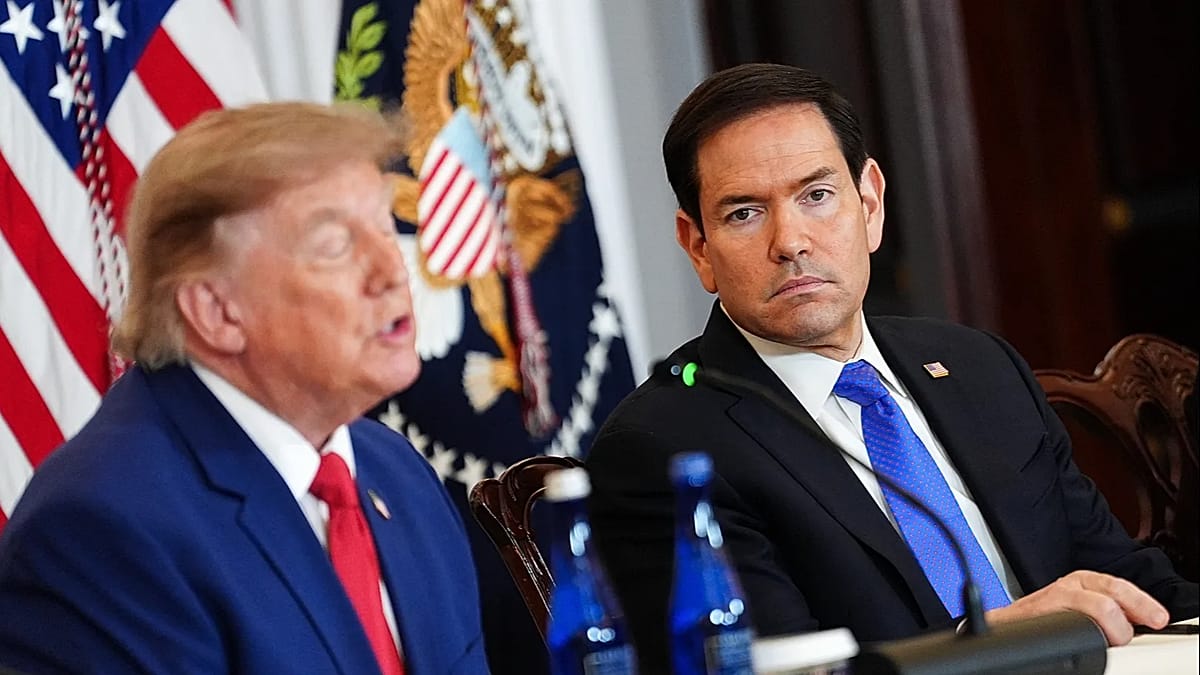
The International Criminal Court has pushed back against new American sanctions targeting two of its most senior figures, warning that the measures strike at the foundations of international justice. The move, announced by US Secretary of State Marco Rubio on Tuesday, is the latest escalation in Washington's campaign against the Hague-based tribunal.
Rubio said the US was sanctioning ICC President Tomoko Akane and senior trial lawyer Abdoulaye Seye for their alleged role in efforts to investigate, arrest, or prosecute officials from countries that have not consented to the court's jurisdiction. In a statement, he described the ICC as a “corrupt and fatally politicised supranational court” that had “maliciously abused its authority and exceeded its mandate.”
The court responded swiftly, arguing that the sanctions “undermine the rule of law.” In a statement reported by multiple outlets, the ICC added: “When judicial actors are threatened for applying the law, it is the international legal order itself that is placed at risk.”
The sanctions come amid a broader US effort to dismantle the court. In July, the State Department outlined plans to “systematically disable” the ICC's ability to operate, with possible measures including visa revocations and travel bans on court personnel. Tuesday's action marks the first concrete step in that campaign.
Roots of the dispute
Washington has long accused the ICC of overreach, particularly regarding its investigations into US nationals and allies. The court's November 2024 arrest warrant for Israeli Prime Minister Benjamin Netanyahu, linked to the war in Gaza, has intensified American hostility. The US, which is not a party to the Rome Statute, argues that the ICC has no authority over countries that have not ratified the treaty.
European governments have generally defended the ICC as a cornerstone of the international legal system. Several EU member states, including Germany and France, have expressed support for the court's independence, though they have been careful not to directly criticise Washington. The sanctions could strain transatlantic relations, especially as the EU prepares to tighten its own sanctions regime in other areas.
The ICC's defenders argue that the court is designed to hold perpetrators of war crimes, genocide, and crimes against humanity accountable, regardless of nationality. They point to its role in investigating atrocities in Ukraine, Sudan, and elsewhere. The court's work in Ukraine has been particularly significant, with the ICC issuing arrest warrants for Russian leaders over the invasion.
However, critics within the US and elsewhere contend that the court has become politicised, focusing disproportionately on certain nations while ignoring others. The sanctions against Akane and Seye are the first to target the court's president directly, a move that legal experts say sets a dangerous precedent.
The ICC has faced similar challenges before. In 2020, the Trump administration imposed sanctions on then-Prosecutor Fatou Bensouda and another senior official, only for the Biden administration to lift them a year later. The current measures, however, appear more sweeping, targeting the court's leadership and potentially its broader operations.
European legal scholars have warned that such actions could undermine the ICC's ability to function, particularly in ongoing investigations. The court is currently handling cases related to conflicts in Gaza, Ukraine, and several African nations. Any disruption to its work could have far-reaching consequences for international justice.
The sanctions also come at a time when the EU is seeking to bolster its own legal and security frameworks. The bloc has been working on aligning non-EU states with its sanctions policies, and the ICC dispute could complicate these efforts. Some European officials have called for a coordinated response to the US measures, though no formal action has been announced.
For now, the ICC has vowed to continue its work. In its statement, the court said it would not be deterred by threats, insisting that its judges and prosecutors would carry out their duties in accordance with the Rome Statute. The international community, it added, must stand together to protect the rule of law.
The sanctions are likely to be a topic of discussion at the upcoming UN General Assembly, where European leaders may press the US to reconsider. But with the Trump administration showing little appetite for compromise, the standoff between Washington and The Hague appears set to continue.