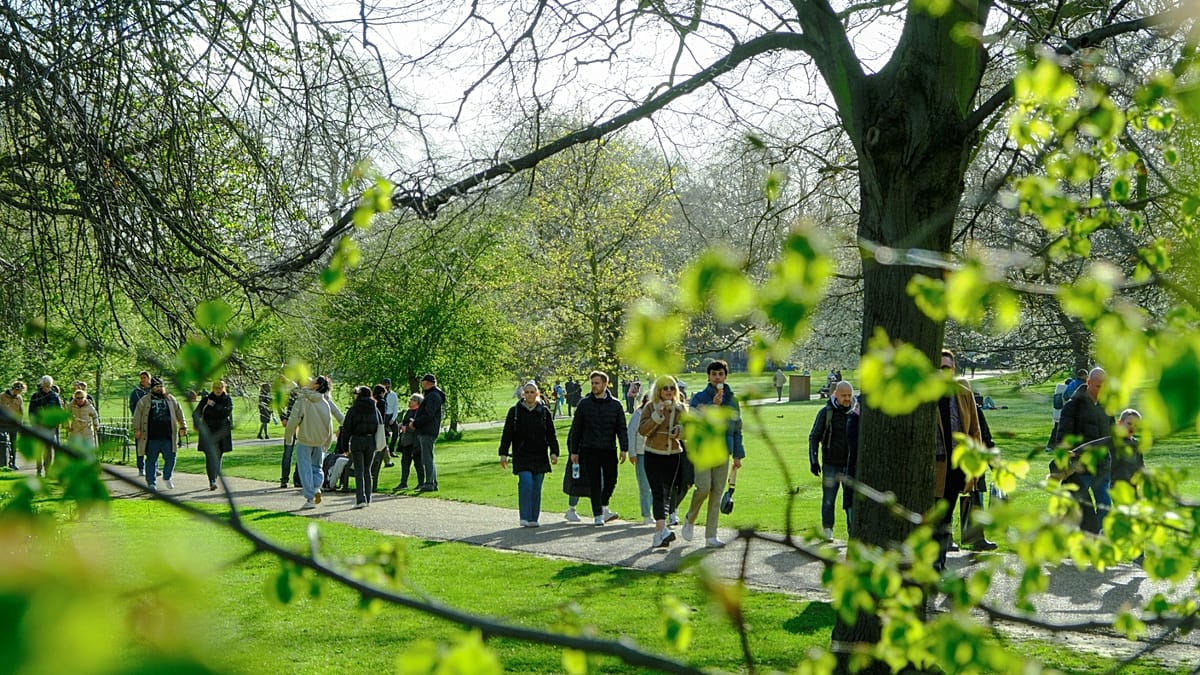
Europe continues to dominate the global stage for pedestrian-friendly urban exploration, claiming every position in the top 10 of a new ranking of the world's best walking cities for 2026. The list, compiled by walking tours company GuruWalk, draws on more than 467,000 verified reviews from 3,600 tours across over 800 cities worldwide, reflecting where tourists actually go and how they rate their experience of exploring on foot with a local guide.
The Top 10: A European Monopoly
Rome takes the top spot, a city whose nearly 2,800-year history is best absorbed through its cobblestone alleyways. Must-sees include the Colosseum, the Pantheon with its unreinforced concrete dome—the largest in the world—and Vatican City. Madrid comes second, offering the 125-hectare Retiro Park, the bustling Gran Vía, and the Prado Museum, home to one of Europe's finest painting collections. Budapest, the "Pearl of the Danube," ranks third, drawing 8 million visitors in 2025 to sights like its parliament building and the Fisherman's Bastion, not to mention the Széchenyi thermal baths.
Prague, with its Astronomical Clock dating from 1410, the Old Town Square, St. Vitus Cathedral, and the Charles Bridge, takes fourth place. Lisbon, despite its hills, comes fifth, with the Alfama neighbourhood, Jerónimos Monastery, and São Jorge Castle offering rich rewards for walkers. Amsterdam, known for its canals and bikes, ranks sixth, with UNESCO-listed waterways, nearly 1,200 bridges, and the Rijksmuseum. Porto, set along the Douro River, is seventh, its Ribeira district revealing tiled churches and the Gothic Dom Luís I Bridge. Barcelona, eighth, combines beaches, the Sagrada Família, Park Güell, and the Gothic Quarter. London, ninth, offers Westminster Abbey, Big Ben, Buckingham Palace, and the Thames path. Berlin rounds out the top ten, blending the Brandenburg Gate, the Reichstag, remnants of the Berlin Wall, and the creative districts of Kreuzberg-Friedrichshain.
Asia's Rapid Rise
While Europe holds the top tier, Asian cities are climbing the ranking at an unprecedented pace. Japan leads this charge: Tokyo jumped 16 positions to 20th place, and Kyoto ranks 35th. This shift reflects growing traveller interest in walkable urban experiences across the continent.
The ranking methodology combines traveller volume (65%) with satisfaction ratings (35%) to produce a final score. GuruWalk's third annual list highlights that European cities remain the gold standard for pedestrian exploration, even as global competition intensifies.
For those planning a walking-focused trip, Europe's top cities offer a wealth of options. Europe's top cities for day trips also feature prominently, with London, Paris, and Rome leading the way. Meanwhile, Time Out's ranking of Europe's top cultural cities for 2026 similarly places London, Paris, and Berlin at the forefront, underscoring the continent's enduring appeal for immersive urban experiences.
Beyond the top ten, other European cities with excellent walkability include Vienna, Munich, and Copenhagen, all of which rank highly in the broader list. The data suggests that walkability is not just about compact geography but also about the quality of guided tours and the richness of historical and cultural attractions.
As travellers increasingly seek authentic, slow-paced experiences, walking remains the most intimate way to discover a city. Europe's dominance in this ranking is a testament to its dense urban fabric, well-preserved heritage, and the high satisfaction of visitors who choose to explore on foot.