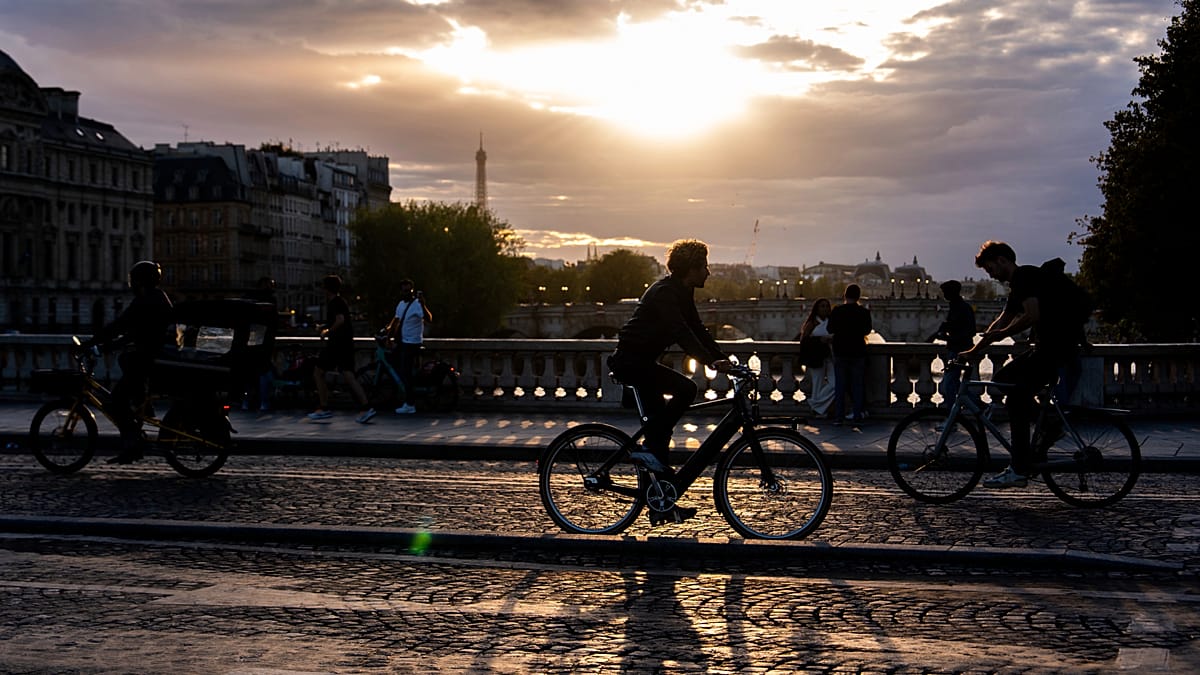
Paris has undergone a remarkable transformation in recent years, earning a reputation as one of the world's leading cycling cities. This shift is not only changing how locals move around but also how visitors experience the French capital. Increasingly, tourists are swapping bus tours and long walks for two wheels, discovering iconic sights in a more intimate and flexible way.
Last June, Paris welcomed approximately 3.8 million tourists, a 3% increase compared to the same period in 2025, according to the city's tourism office. As visitor numbers climb, so does the appeal of cycling as a practical and enjoyable way to navigate the city's streets.
"Since Covid, cycling in Paris has really taken off," says Michaël Tosello, who runs guided bike tours in the city. "Many more people want to do guided bike tours and hire bikes. It has become a hugely popular way of discovering the city." Tosello also notes that routes beyond the capital have multiplied, with cycle paths now linking Paris to London, Mont-Saint-Michel, and even Spain via the long-distance Scandibérique route.
A new perspective on familiar landmarks
The surge in demand has given rise to numerous companies offering comprehensive excursions that cover major attractions—Notre-Dame, the Place de la Concorde, the Champs-Élysées, the Eiffel Tower—in just a few hours. For guide Jean-Baptiste Blondiaux, this is the most appealing option because it allows visitors to see far more than they could on foot. "In ten minutes by bike, you can see two different monuments. On foot, that's impossible," he explains. "I think you can see a lot more of Paris. You see the city, people walking past and all sorts of things between stops. That's why it's so interesting."
The Buss family from the United States found cycling to be the perfect solution for their limited time in the capital. "It's nice just to be in the moment," says Jamie Buss, who is visiting with her husband and their three children aged 22, 18, and 16. "And then you can come back and look at things a second time later, with a bit more time to take in all the history and culture of it all."
The family is on a 12-day trip across Europe. After a week in Tenerife, they arrived in Paris and opted for a three-hour guided tour. "It is a great way to get to know the city," says father Mike Buss. "It's hard to take everything in. But with JB's explanations and the fact that you're outdoors while you do it all, it's wonderful."
Paris already boasts more than 1,000 kilometres of cycle lanes, and the city hall has ambitious plans to expand this network to around 1,500 kilometres, making active travel even more accessible. This investment aligns with broader European trends, as cities like Amsterdam and Copenhagen have long demonstrated the benefits of cycling infrastructure. For tourists, this means more opportunities to explore sustainably—a factor that resonates with many visitors, as highlighted in initiatives across the continent that reward eco-friendly travel.
The rise of bike tourism also reflects a wider shift in how people engage with cities. Rather than being passive observers on a bus, cyclists become part of the urban fabric, interacting with the environment in a more direct way. This is particularly evident in Paris, where the recent enforcement of safety rules for e-scooters shows the city's commitment to regulating new forms of mobility.
For many, the appeal lies in the balance between efficiency and immersion. "You can cover a lot of ground, but you still feel the rhythm of the city," says Blondiaux. "It's a unique way to connect with Paris." As the city continues to invest in cycling infrastructure, it seems likely that more tourists will follow the Buss family's example, trading four wheels for two.