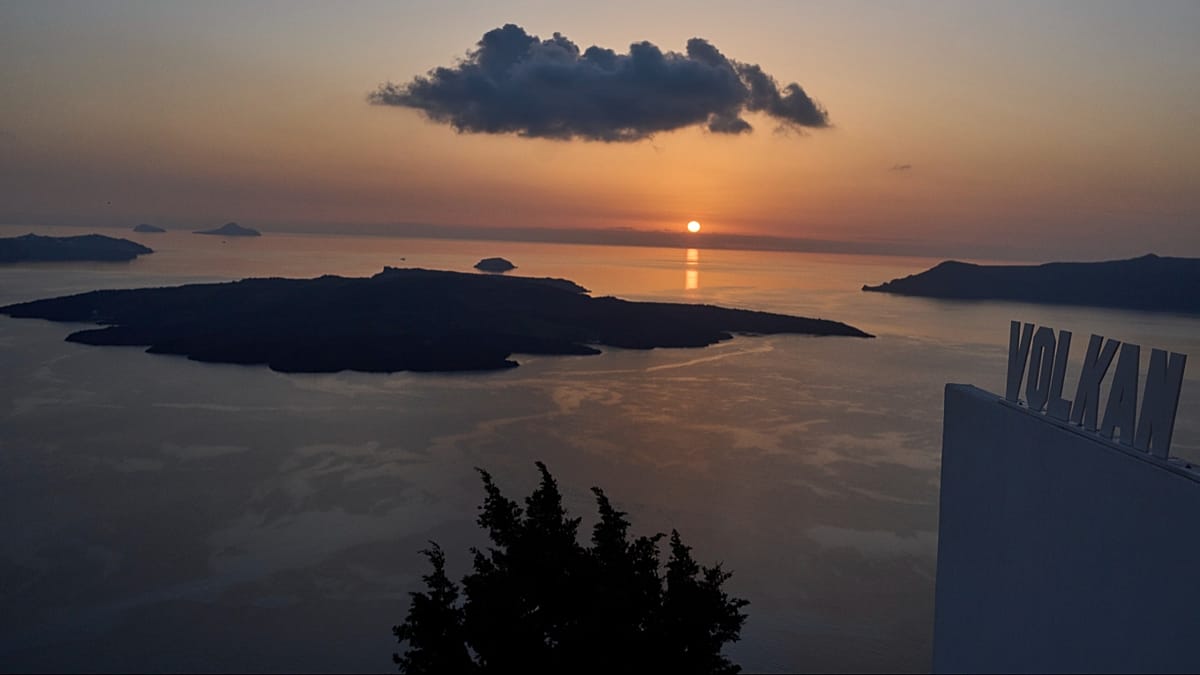
Santorini, the Cycladic island known for its caldera views and whitewashed villages, is trying to shed its image as a purely summer destination. With visitor numbers down over the past two years, local hoteliers and the municipal authority are now betting on gastronomy, wine, and cultural tourism to fill rooms in the off-season.
Thomas Giannis, a hotel owner on the island, told European Pulse that the recent slump was triggered by events beyond Greece's control. "After the Covid pandemic we had intense tourist activity, but because of some unrelated events—first the seismic activity on the neighbouring islands and later the war in the Gulf—we experienced a drop in tourism," he said. "For me personally it was around 30 to 40 percent."
The sharpest decline came from US travellers, a key market because of their high spending. Many American tourists book their holidays in early spring, which coincided with the seismic events of 2025 and the start of the conflict with Iran this year. Although Greece was far from the conflict zone, that distinction was not always clear to potential visitors.
Despite the rocky start, the season recovered somewhat after the summer. Nikos Zorzos, mayor of Thira, the municipality that includes Santorini, noted: "Tourism in Santorini started this year with a sense of numbness, but the situation then stabilised. September and October are strong tourist months and attract visitors who have a special interest in the island."
Beyond the sunset
That "special interest" is precisely what the island now wants to cultivate. A new digital campaign, consisting of 32 short videos, will showcase experiences that are often overshadowed by the famous Oia sunset and luxury hotels. The focus will be on Santorini's distinctive wine tradition—shaped by volcanic soil and arid climate—its emerging gastronomy scene, and its cultural and religious sites.
This approach aligns with broader efforts across Greece to build year-round tourism. The island's main source markets are European: the UK, Germany, France, Italy, Spain, Austria, the Netherlands, Poland, Belgium, and Romania. In July, Italy led with 93,315 passenger movements to and from the island, followed by the UK (59,362) and France (35,158). Germany recorded 17,746, while Spain, Austria, and Romania each contributed over 10,000.
Giannis also pushed back against the perception that Santorini is prohibitively expensive. "Santorini is for every budget," he said. "It has rooms from very cheap to extremely expensive." He argued that outside the peak season, there are many excellent deals, making the island accessible to a wider range of travellers.
However, the drop in occupancy is not solely due to external shocks. The mayor pointed to the constant construction of new hotel units as a structural problem. "The increase in the number of beds creates an issue with accommodation occupancy," Zorzos said, and he has called on the Greek government to curb unregulated building on the island.
Cruise tourism: a double-edged sword
Santorini welcomes roughly 3.5 million visitors a year, including cruise passengers. But locals argue that the official figures are inflated because many travellers use the island's airport as a gateway to neighbouring islands, without actually staying overnight. Even so, cruise ships remain a major source of visitors—and a point of contention.
For years, cruise tourism has been seen as both a blessing and a curse. It boosts numbers but brings limited revenue to local businesses and contributes to severe overcrowding in the narrow streets of Fira and Oia. To address this, the municipality introduced a cap on daily cruise arrivals about a decade ago, based on a study with the University of the Aegean. Today, up to 8,000 passengers can disembark per day.
"We regulated cruise tourism," Zorzos explained. "As a result there are no longer crowds in different parts of the island and movement is easier. So cruise tourism is no longer the problem it was in the past."
Still, residents remain wary. The balance between welcoming visitors and preserving the island's character is delicate. The new push for year-round tourism, with its emphasis on wine and culture, may offer a more sustainable path—one that spreads visitors across the calendar and encourages them to stay longer, rather than just snap a photo at sunset.
As Europe grapples with overtourism, Santorini's efforts to diversify its appeal could serve as a model. The EU's first sustainable tourism strategy highlights the need for such approaches, and other destinations like Valencia are experimenting with similar ideas. Whether Santorini can pull it off will depend on whether visitors are willing to trade the summer crowds for a quieter, more authentic experience—and whether the island can manage its infrastructure accordingly.