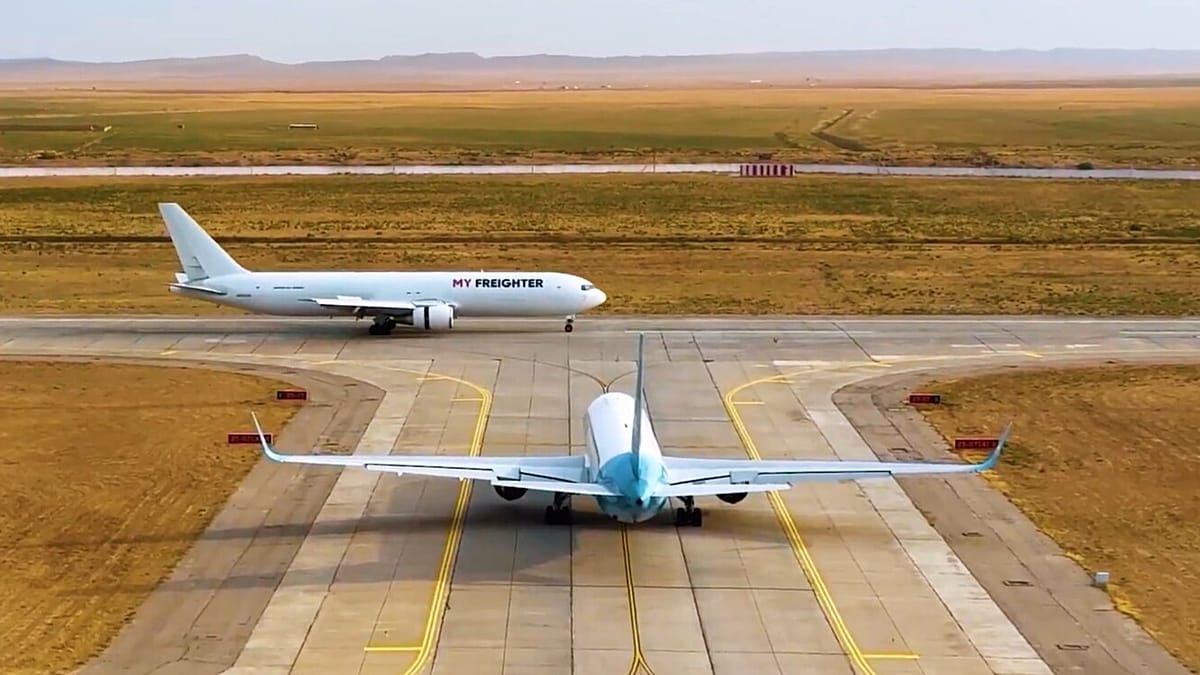
Aviation authorities from China, Uzbekistan and Kazakhstan have agreed to raise the number of permitted weekly flights, a step that could reshape air travel across Central Asia and open new corridors toward Europe. The deals were signed during the third meeting of the Central Asia–China (C5+1) Working Group on Civil Aviation Cooperation, held in Tashkent.
Under the new arrangements, Uzbekistan and China will allow up to 114 weekly flights between the two countries, up from the previous cap of 100. Kazakhstan secured a more generous increase, raising its limit with China from 150 to 180 weekly frequencies. The Kazakh agreement also adds Chengdu and Kashgar to the list of Chinese cities that airlines may serve, broadening access beyond the usual hubs of Beijing and Shanghai.
Building the Air Silk Road
These agreements build on the Air Silk Road initiative, a framework launched in January 2024 when Uzbekistan's Ministry of Transport and the Civil Aviation Administration of China signed a memorandum to develop new routes and ease cross-border operations. Kyrgyzstan followed with its own memorandum later that year.
Jamoliddin Nazarov, head of the Air Transport Department at Uzbekistan's Ministry of Transport, said the country wants to position its airports as transit hubs for travellers flying from China and neighbouring Central Asian states to Europe. That ambition is already taking shape: in April 2026, China's Chengdu Airlines launched a weekly direct service between Kashgar in western China and Osh, Kyrgyzstan's second-largest city, using a Chinese-made C909 aircraft.
Qanat Tologonov, deputy director of Kyrgyzstan's State Civil Aviation Agency, highlighted the practical outcome of the initiative. "In 2025, working together with our Chinese colleagues, we opened a new air corridor," he said.
In Kazakhstan, airlines are eager to serve more Chinese destinations beyond the traditional gateways. Saltanat Tompiyeva, chair of the country's Civil Aviation Committee, said carriers want to expand their networks to secondary cities, reflecting growing demand for direct connections.
Expanding air travel within Central Asia
The Tashkent meeting also produced agreements covering intra-regional flights. Uzbekistan and Kazakhstan agreed to raise the weekly limit on services between Tashkent and both Almaty and Astana from 42 to 60 flights per route. Other routes between the two countries will see their cap increase from 14 to 20 weekly flights.
Kazakhstan's Civil Aviation Committee said the changes are designed to meet rising demand for travel between the two neighbours. The expansion comes as Vietjet Qazaqstan, a Kazakh carrier, launched direct flights from Astana to Bishkek and Samarkand in November 2025, and increased frequencies on both routes in early 2026.
Adilbek Umraliyev, the airline's CEO, told Euronews that further opportunities exist in smaller regional destinations. He highlighted Bukhara and Samarkand for their "quite significant tourism potential," suggesting that secondary cities could benefit from more regular international service.
Rising costs pose challenges for airlines
Despite the optimistic outlook, operating costs remain a significant hurdle. Umraliyev pointed to rising fuel prices and higher airport charges as factors making regional flights more expensive to operate. He called for closer cooperation between aviation authorities and airlines to address these costs and make cross-border travel more affordable.
Passenger demand is another consideration, particularly for smaller cities seeking regular international connections. While the new agreements provide a framework for growth, the actual viability of routes will depend on market conditions and cost pressures.
The expansion of air links between China and Central Asia comes at a time when the broader aviation sector is facing challenges, including disruptions from security incidents and volatile fuel prices. For Central Asian carriers, the new agreements offer a chance to diversify routes and tap into growing traffic between Asia and Europe.
As the Air Silk Road initiative gains momentum, the region's airports could become increasingly important transit points. Whether they can overcome cost challenges and attract sufficient passenger numbers will determine how quickly these new connections translate into regular services.