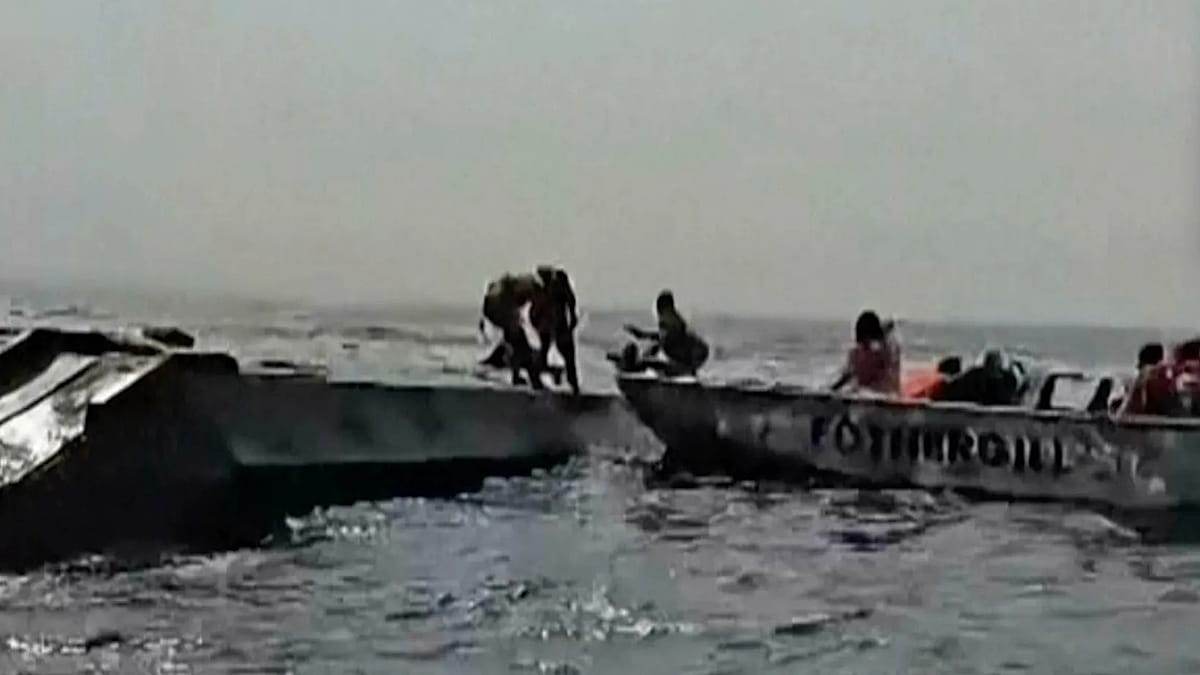
KARIBA, Zimbabwe — A man who survived the ferry disaster on Lake Kariba that has now claimed at least 46 lives has described the harrowing moments when the vessel capsized, leaving him and others clinging to the upturned hull while friends and relatives drowned.
Chance Siyamavhu, 45, spoke at a memorial service in the lakeside town of Kariba, near the Zambian border, on Thursday. He told AFP that a wave pushed the sinking boat, allowing him and a few others to climb onto its overturned bottom. From there, he watched helplessly as passengers struggled to stay afloat.
“When the boat capsized, most of the people scrambled to get the life jackets but most of them did not even know how to use them,” Siyamavhu said. “Most people could not make it.” His best friend and seven relatives were among the dead.
The ferry, a government-operated vessel that serves as a vital link for villagers and fish traders around the vast lake, went down in choppy waters on Tuesday. It was one of the worst passenger boat disasters in the country’s history.
Overcapacity and mechanical failure
Officials said the boat was authorized to carry 90 people but was packed with 114 adults, five crew members, and an unspecified number of children. The civil protection unit reported that 77 people were rescued, but there are fears that other passengers remain unaccounted for.
Survivors said they had pleaded with the captain to turn back as the boat began taking on water. Anymore Chambati, a security official on the vessel, told AFP he tried to distribute life jackets as the boat started to sink.
“I managed to only give not more than 10,” Chambati said. “The ferry engines were filled with water because of the heavy winds and eventually they failed, save for one.”
The disaster has raised questions about safety standards on Lake Kariba, a massive reservoir on the Zambezi River that is shared by Zimbabwe and Zambia. The lake is a major hub for fishing and transport, and overcrowded boats are a recurring problem.
At the memorial service, dozens of mourners gathered in front of 44 coffins, with police announcing that the death toll had risen to 46. A police statement said the names of the victims would be released in due course.
“Our relatives were swept in another direction and they sank because we were not in a position to help them,” Siyamavhu said, his voice breaking.
The tragedy has drawn attention to the broader issue of maritime safety in the region. In recent years, similar accidents have occurred on lakes and rivers across Africa, often due to overloading and poor maintenance.
As the community in Kariba mourns, there are growing calls for stricter enforcement of passenger limits and better safety equipment on the vessels that serve remote communities. The government has promised an investigation, but for the families of the victims, the immediate focus is on burying their loved ones.
For those who survived, the memories of Tuesday’s ordeal will not fade easily. “Thank God that a wave pushed the sinking vessel and we managed to climb on top,” Siyamavhu said, but the relief of survival is overshadowed by the loss of so many.