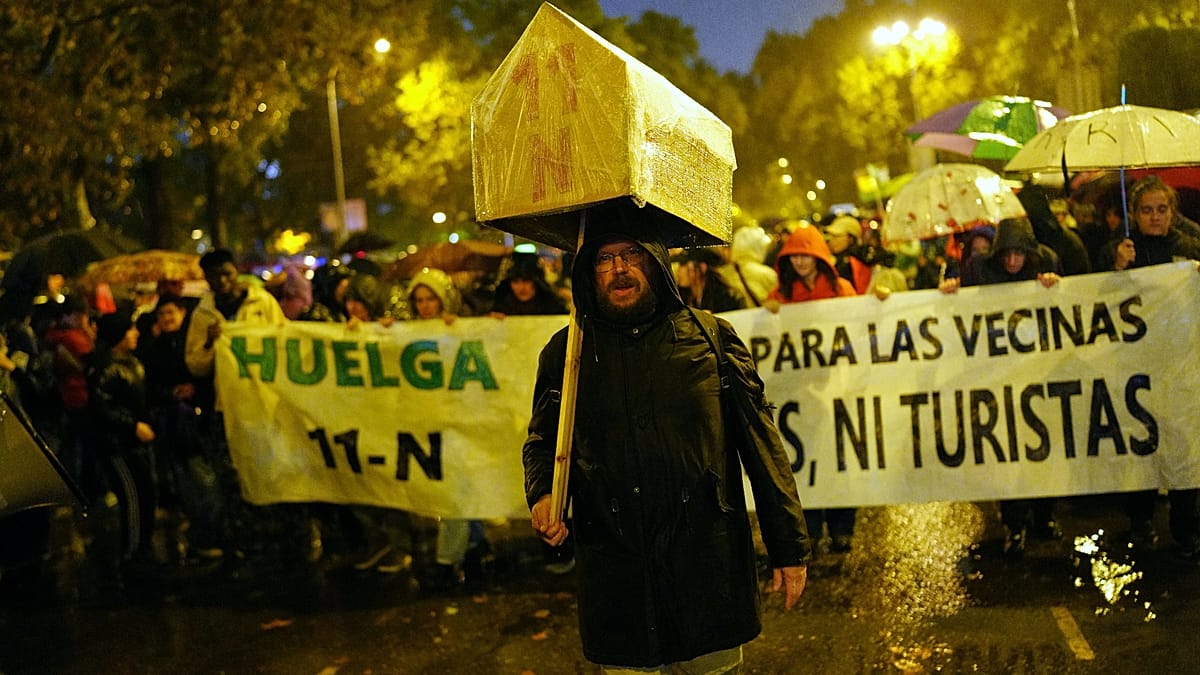
On a rain-soaked Wednesday, an estimated 120,000 people took to the streets of Madrid, marking Spain's first nationwide general strike in over a decade. The demonstration, called by major unions, was a forceful response to the country's escalating housing crisis and the squeeze on household finances that has left many Spaniards struggling to make ends meet.
A city under pressure
The march snaked through the capital's central arteries, from Atocha to Plaza de España, with protesters carrying banners that read “Housing is a right, not a commodity” and “Wages up, rents down.” The turnout, despite the downpour, underscored the depth of public frustration. According to the government delegation in Madrid, the crowd numbered around 120,000; organisers put the figure higher.
Spain's housing market has become increasingly unaffordable, particularly in urban centres like Madrid and Barcelona. Average rents have climbed by more than 40% over the past five years, while wages have stagnated, leaving many young people and families unable to secure stable accommodation. The problem is acute for those under 35, who face some of the highest youth unemployment rates in the European Union.
The strike, which disrupted public transport, industry, and services across the country, was called by Spain's two largest union confederations, CCOO and UGT. They are demanding a substantial increase in the minimum wage, which currently stands at €1,134 per month in 14 payments, and stronger rent controls. The government has pledged to build more social housing and has introduced a rent cap for large landlords, but critics argue these measures are too timid.
“We are here because the future is being stolen from us,” said María González, a 29-year-old teacher from Vallecas, who marched with her two young children. “I work full-time, but I cannot afford to leave my parents' home. This is not the Spain we were promised.”
The protest comes at a delicate political moment. Prime Minister Pedro Sánchez's minority coalition has been navigating a series of crises, from the aftermath of the recent floods in Valencia to ongoing negotiations over regional budgets. The housing issue, however, has become a lightning rod for broader discontent with the cost of living, which has been exacerbated by inflation and the lingering effects of the energy crisis.
Economists point out that Spain's housing problem is structural. The country has one of the lowest rates of social housing in Europe—just 2.5% of the housing stock, compared to the EU average of around 9%. Meanwhile, tourism-driven short-term rentals have reduced the supply of long-term housing in many cities, pushing prices even higher.
The strike also highlighted the precarious situation of many workers in the so-called “gig economy,” who lack the protections of traditional employment. Delivery riders and platform workers joined the march, calling for better conditions and the right to collective bargaining.
In a statement, the government acknowledged the protesters' concerns but defended its record, pointing to recent measures such as the housing law passed in 2023, which introduced rent caps in stressed areas and increased protections for vulnerable tenants. However, the law's implementation has been uneven, with some regions, including Madrid, refusing to apply the caps.
The general strike is a stark reminder that Spain's economic recovery, which has been among the strongest in the EU, has not translated into tangible improvements for many ordinary citizens. While GDP growth has outpaced the eurozone average, the benefits have been concentrated in certain sectors and regions, leaving a large segment of the population feeling left behind.
As the rain continued to fall, the crowd's mood remained defiant. Union leaders vowed to keep up the pressure, announcing further protests in the coming weeks. For many, the march was not just about housing or wages, but about the kind of society they want to live in—one where hard work is rewarded and a roof over one's head is not a luxury.
The demonstration in Madrid was part of a broader European trend, as similar protests have erupted in cities like Lisbon, Dublin, and Berlin, all grappling with the same affordability crisis. The outcome of Spain's strike could set a precedent for how other governments respond to the growing demand for housing justice.