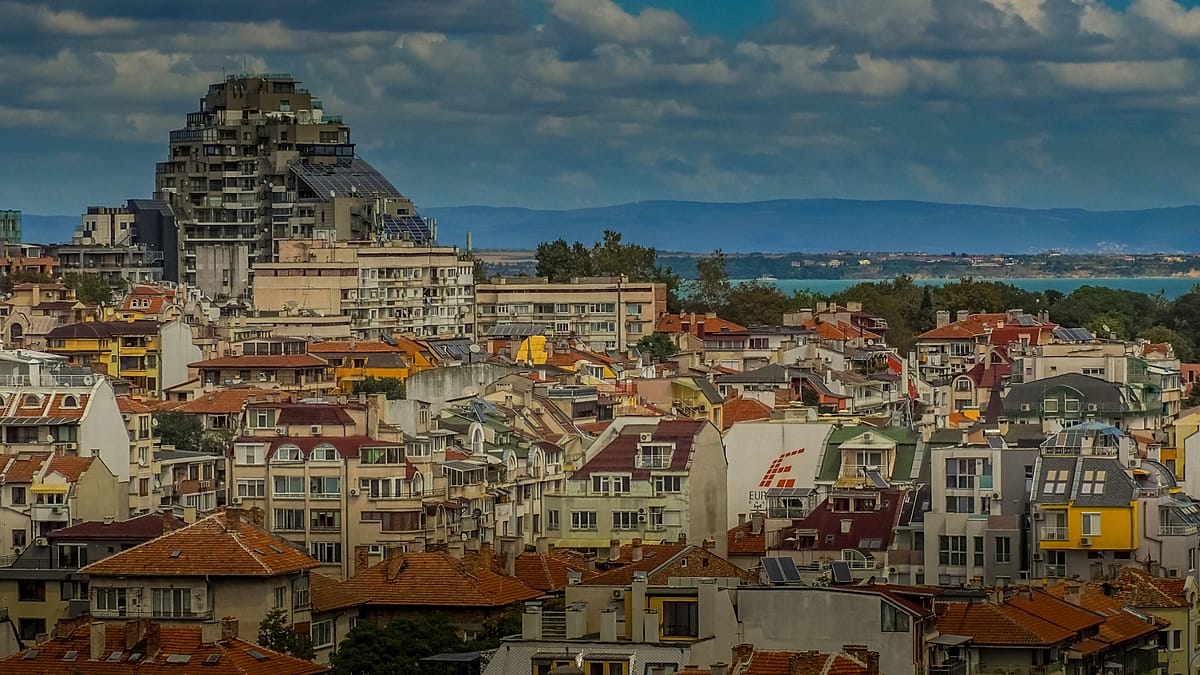
When Bulgaria won the Eurovision Song Contest, many assumed the capital Sofia would stage the 2027 event. Instead, the organisers chose Burgas, a Black Sea port city that is far less known internationally but beloved by Bulgarians as a summer escape. The contest arrives in May, and with it a wave of visitors who will discover a destination that combines sandy beaches, a leafy seafront park, and a surprisingly vibrant cultural scene.
Burgas is Bulgaria's fourth-largest city, sitting on the Black Sea coast about 400 kilometres east of Sofia and just under 150 kilometres south of Varna, the hometown of 2026's winner Dara. While the city may not be a household name, its airport is better connected than you might expect. Located only 10 kilometres from the centre, Burgas Airport receives direct flights from several European hubs, including London, Rome, and Berlin. A frequent bus service links the terminal to the city centre, making the journey straightforward.
If you're combining a trip to Burgas with a stay in Sofia, trains run roughly eight times a day, with the fastest journey taking just under six hours. Buses are quicker, completing the route in about five hours, and operate on average six times daily. Once in Burgas, getting around is easy: e-bike rentals are widespread, and the local Burgasbus network covers the city efficiently.
Where to stay and what it costs
Eurovision typically sends accommodation prices soaring, but Burgas remains remarkably affordable. A quick check by our travel desk found private rooms from €32 per night in August, four-star hotels from €67, and even a one-night stay at the five-star beachfront Hotel Residence Promenade for €130. That's a fraction of what you'd pay in many other host cities.
For those who want to be close to the action, the city's beaches are the obvious draw. Central Beach and Northern Beach are lively, lined with restaurants and bars, while Sarafovo Beach and Kraymorie Beach offer a more laid-back atmosphere and natural beauty. After a day by the water, the Pier of Burgas is a must-visit, providing panoramic views of the city and an ideal spot to watch the sunset.
Adjacent to the pier lies the Sea Garden, a 5-kilometre stretch of paved paths through a vast public park. It's perfect for walking or cycling, and you'll encounter exotic plant species, cultural monuments, and some of the region's most impressive Balkan architecture. The Old Town, pedestrianised and full of restaurants, bars, and shops, is home to the Orthodox Church of Saints Cyril and Methodius.
Culture is a serious business here. The Sand Sculptures Festival runs from early July to late September, showcasing international pop culture in ephemeral art. The Spice Music Festival is another highlight, with Luis Fonsi, known for 'Despacito', headlining earlier this year. These events, alongside the Eurovision buzz, make Burgas a year-round destination.
Eating and drinking like a local
Bulgarian cuisine may not have the global fame of French or Italian food, but it's worth exploring. Being coastal, fish is a staple. Try midi po burgaski, local mussels cooked in their shells with onions, tomatoes, peppers, and herbs, or grilled Black Sea turbot. For a taste of wider Bulgaria, sample strandzhanski dyado, a cured and spiced meat, and the national dish Shopska salata, a salad of diced tomatoes, cucumbers, onions, and peppers topped with grated sirene cheese.
To drink, don't miss Burgas 63, a rakia made from local grapes, or Bulgarian wines like the full-bodied red Mavrud. For beer lovers, Burgasko, brewed in the city since 1971, is a local favourite. Prices are remarkably low: a meal at an inexpensive restaurant averages €12.39, a half-litre of local draft beer €1.79, and a three-course dinner for two at a mid-range spot around €40.90, according to Numbeo.
As Eurovision descends on Burgas, the city is ready to show the continent what it has to offer. Whether you're here for the music or the sea, this is a host that rewards exploration beyond the arena. For more on the broader context of Eurovision hosting rules, see our piece on why some nations are barred from hosting. And if you're planning a longer Bulgarian trip, you might also be interested in the recent discovery of a mammoth skeleton in the Danube riverbed.