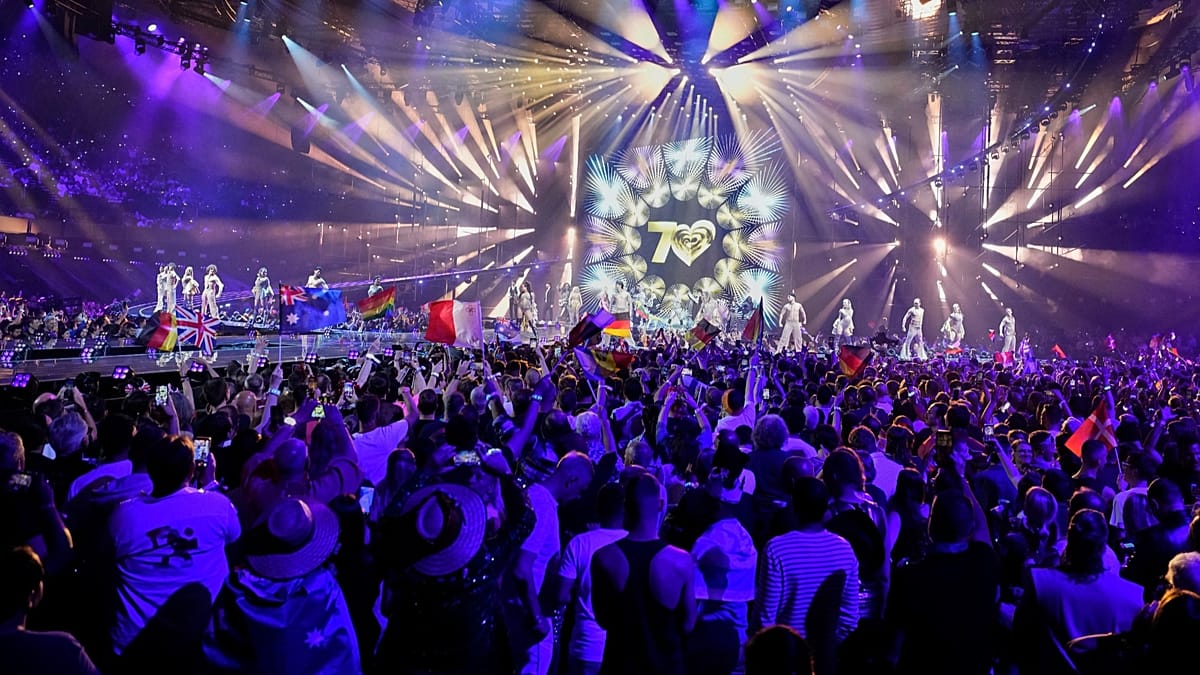
The European Broadcasting Union (EBU) has amended the rules of the Eurovision Song Contest to bar any country involved in an armed conflict from hosting the event. The change, announced on Wednesday, is designed to ensure that the competition can be staged safely and without political disruption.
Under the new framework, the winning broadcaster will automatically lose the right to host if an armed conflict, a sensitive geopolitical situation, or any other circumstance materially affects the security, safety, or stability of its state or immediate region. The EBU said it may commission an independent security assessment to determine whether a winning country can safely host the event.
The statement did not name any specific country, but the move comes after Israel narrowly missed winning the contest in both 2025 and 2026, finishing second on each occasion. In 2026, five countries—Spain, Ireland, the Netherlands, Slovenia, and Iceland—boycotted the final in Vienna, marking the first mass boycott in Eurovision's history. They refused to participate alongside Israel because of its military campaign in Gaza, which began after the Hamas attack on 7 October 2023.
If a winning country is deemed unable to host, the EBU will appoint another host nation. Under the new rules, that country will organise the event "in its own right" and will not be required to stage it on behalf of the original winner. This provision aims to clarify the responsibilities and avoid the ambiguity that arose when Ukraine won in 2022 but could not host the following year due to Russia's full-scale invasion.
Ukraine's experience illustrates the challenges. It hosted Eurovision in 2017 despite the ongoing conflict in the eastern Donbas region between Ukrainian forces and Moscow-backed separatists. However, after its 2022 victory, the contest was moved to Liverpool, with the UK stepping in as host on Ukraine's behalf.
The EBU's decision reflects a broader trend in European public life, where security considerations increasingly shape cultural and political decisions. As security-first politics have come to define EU migration policy, similar logic now extends to the continent's most-watched cultural export.
The rule change has been met with mixed reactions. Some see it as a necessary safeguard to protect participants and audiences, while others worry it could be used to sideline countries for political reasons. The EBU insists the assessment will be independent and based on objective criteria.
Eurovision's reach extends beyond Europe, as the EBU includes broadcasters from North Africa, the Middle East, and Central Asia. This means the new rule could apply to any winning country, regardless of its geographic location.
The announcement comes as Europe grapples with multiple security challenges, from Russian intelligence operations to cyber threats. The EBU's move is part of a wider effort to ensure that major events can proceed without being overshadowed by geopolitical tensions.
For now, the focus shifts to the next edition of the contest, scheduled for 2027. The host city has yet to be announced, but the new rules will be in effect, potentially shaping which countries can even bid to host the event.