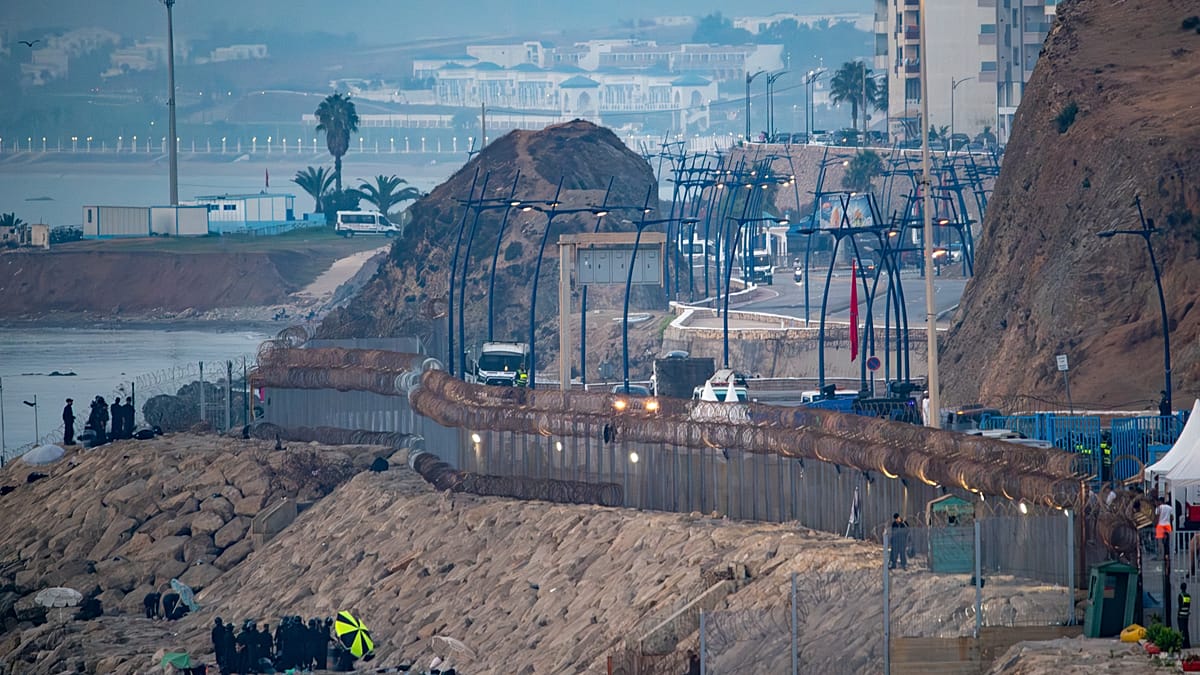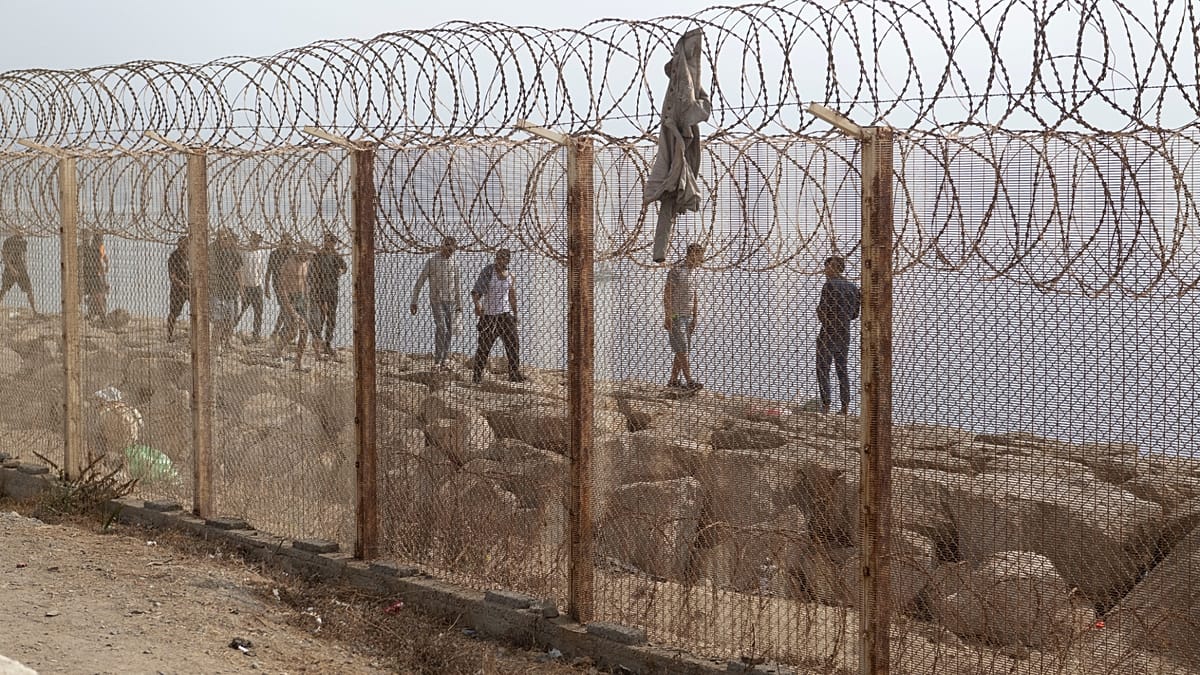
The late-July surge of irregular migrants into Ceuta, Spain's North African enclave, has reshaped the European debate on migration. The incident, which left around 100 people dead, has not only strained relations between Madrid and Rome but also underscored how a security-first approach has become the new mainstream across the continent.
For years, migration policy in the EU has been drifting rightward. The 2024 European Parliament elections saw right-of-centre parties gain nearly 60 additional seats, with far-right and national-populist groups driving much of that growth. The centre-right European People's Party (EPP) now holds 14 of the 27 Commission portfolios, a first in the bloc's history.
This shift is not confined to Brussels. In Germany, the Alternative for Germany (AfD) is polling as the country's strongest party. In France, Marine Le Pen's National Rally is tipped to win the next presidential race. Even in Italy, Giorgia Meloni faces competition from a new hard-right party led by former general Roberto Vannacci. The trend extends beyond Europe: the Trump administration has openly backed right-wing candidates in South America, most notably in Colombia.
Migration has long been a rallying issue for the right, and the Ceuta influx gave fresh ammunition to those demanding tougher border controls. "In the past years, there has been a progressive shift towards a more securitarian language from both traditionally conservative politicians and left-leaning ones," Chiara Catelli, an advocacy officer at the Platform for International Cooperation on Undocumented Migrants, told Euronews. "The result of treating migration as a security problem with ever more repressive measures is to foster social exclusion and marginalisation, while also criminalising solidarity towards migrants."
Spain's growing isolation
The most immediate fallout was a diplomatic clash between Italy and Spain. Rome reinstated border checks on air and sea arrivals following the Ceuta surge, a move Madrid saw as a rebuke. EU Home Affairs Commissioner Magnus Brunner attempted to mediate, stating on X that both interior ministers had confirmed the checks were temporary.
But Italy was not alone. Germany, Denmark, Sweden, and Finland also called for swift restoration of control over the EU's external borders and floated reintroducing checks within the Schengen area. Italy and Denmark led an open letter, signed by 22 EU governments, urging EU leaders to "address all policies that can serve as pull factors, such as the regularisation of very large numbers of irregular migrants." Only Ireland, Portugal, France, and Luxembourg declined to sign.
Spain's Prime Minister Pedro Sánchez had already faced criticism at the European Council over his plan to regularise around half a million undocumented migrants. For left-wing MEPs, that plan is precisely why Spain is under attack. "At the European scale, the right wing and the nationalist, reactionary attitude towards migration is the prevailing one," said Juan Fernando López Aguilar, a Spanish MEP from the Socialists & Democrats group and former justice minister. He argues that Spain's approach is not just a minority position but increasingly isolated, and that Ceuta was used to undermine it.
MEP Cecilia Strada (Italy/S&D) echoed this view, saying Sánchez is regularly attacked in the European Parliament because he remains the last bastion of progressive migration policy at EU level. Yet even some centre-left leaders have aligned with the security-first agenda. Danish Prime Minister Mette Frederiksen has worked closely with Meloni on migration, and Sánchez himself adopted security-first language to restore order at the border, calling the influx a "violation of Spain's territorial integrity" and vowing to use "all the levers of the state" to guarantee security.
The rightward turn was cemented in June when EU governments and lawmakers endorsed new legislation that includes stricter surveillance, restrictions on freedom of movement, and the possibility of establishing "return hubs" in third countries. Italy has already spearheaded such a facility in Albania, a controversial initiative that has drawn both praise and criticism.
For now, the EU's migration policy appears firmly anchored in a security paradigm. The question is whether Spain's alternative model can survive the pressure, or whether the continent's centre of gravity has shifted for good.