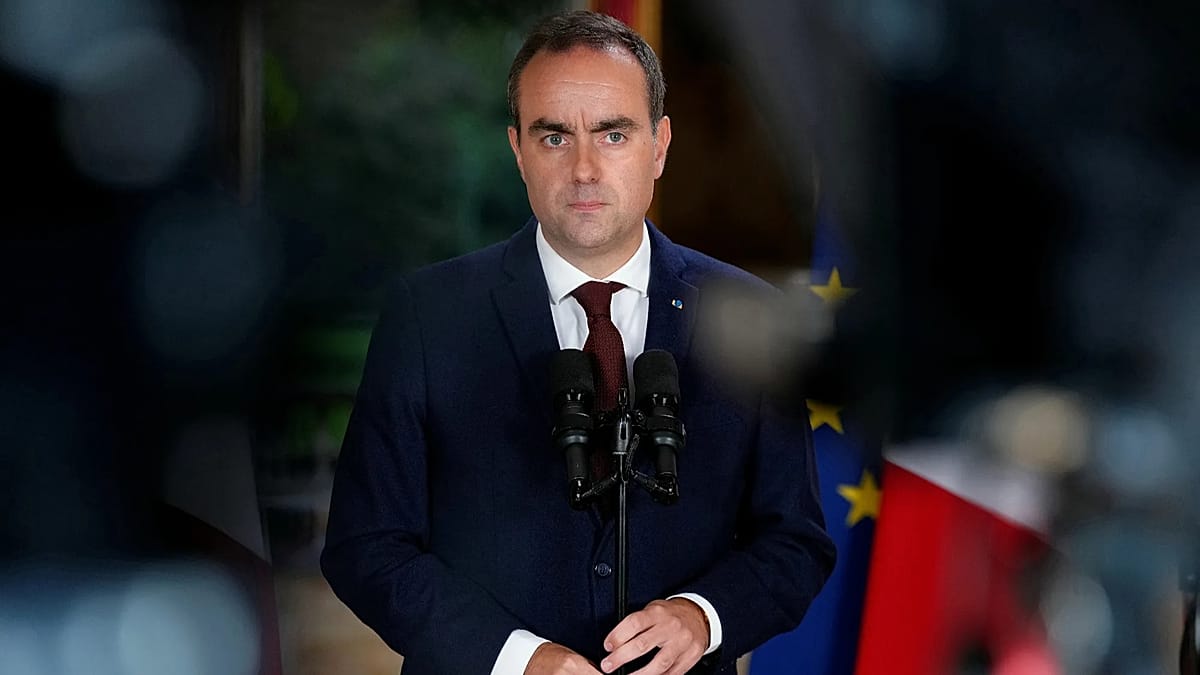
French Prime Minister Sébastien Lecornu has announced an early increase in the national minimum wage, alongside a package of tax measures designed to support household purchasing power without alienating employers. The decision follows a morning conference at Matignon with trade unions and business representatives, part of a broader effort to defuse social tensions that have simmered for months.
From 1 December, the minimum wage (SMIC) will rise by 1.6%, bringing it to roughly €1,502 net per month — an extra €24 net for full-time workers. The increase, originally scheduled for January 2027, will be formalised by decree in the coming days. Lecornu called it “the second largest increase of the past twenty years,” a claim that reflects both the scale of the adjustment and the government’s desire to present it as a meaningful step.
Wage talks and tax incentives
Speaking after the meeting, Lecornu stressed that raising the minimum wage alone is not enough. “It kicks off a cycle of discussions on pay rises,” he said, announcing a reform of the so-called “general reductions” in social security contributions — a mechanism that currently lowers employer charges on low wages. The goal, he explained, is to increase the net salary that workers actually receive, while keeping labour costs manageable for companies.
To address business concerns about rising costs, the government is preparing several tax measures: income tax exemption for overtime pay up to €10,000, exemption from employer contributions for public transport costs, and making “value-sharing bonuses” — sometimes called the “Macron bonus” — fully tax-free. These bonuses allow companies to distribute a share of profits to employees under favourable tax and social security conditions.
Lecornu framed the package as part of a broader negotiation process. “Several chapters have been opened with detailed proposals,” he said, adding that the state would act as guarantor of mutual commitments between workers and employers. Sectoral negotiations are expected to continue in around a hundred professional branches, each of which will set its own pay arrangements.
The Prime Minister also defended his government’s pace, rejecting criticism that it had been slow to respond. “I no longer believe in headline-grabbing announcements... I even think they are killing us,” he told reporters. “When we come before the French people, I want to announce things that work.” He insisted that the government, which has no electoral timetable, is focused on finding durable solutions rather than short-term gestures.
Unions remain sceptical
Trade unions have greeted the announcements with caution. The 1.6% rise falls far short of their demands: the CFDT had called for an extra €100 net per month, while the CGT asked for around €150. Even before the details were unveiled, the president of the CFTC, Cyril Chabanier, said the measures under consideration were “not commensurate with the level of social anger.”
The CGT’s secretary general, Sophie Binet, has called for another major day of strikes and demonstrations on 17 November, echoing the protests that have already drawn tens of thousands onto the streets in cities like Lyon and Paris. The government’s approach is also being tested by broader political pressures, including the rise of left-wing opposition and the looming presidential race.
Lecornu’s insistence on “sincere” commitments appears aimed at contrasting his government’s record with the promises of rivals. Yet the gap between the announced measures and union expectations suggests that social dialogue will remain fraught. The coming weeks will show whether the December wage rise and tax breaks are enough to ease the mood, or whether the cost-of-living protests continue to grow.
For now, the government is betting that a combination of targeted tax relief and a modest wage boost can restore a measure of calm. But with unions already planning new actions, the outcome is far from certain.