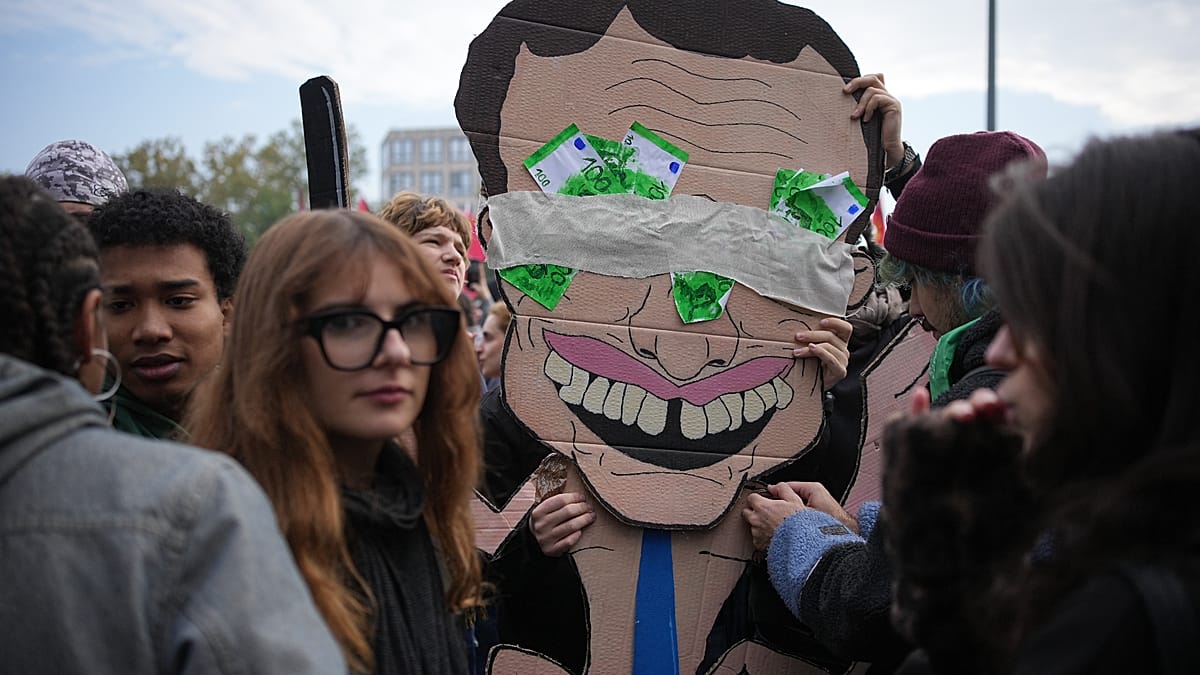
Up to 55,000 people marched through Lyon on Tuesday as part of a nationwide strike over wages and purchasing power, with police firing tear gas and charging demonstrators as clashes erupted along the route. The protest, one of the largest in recent weeks, underscores the deep frustration among French workers facing rising inflation and stagnant salaries.
Nationwide unrest
The Lyon demonstration was mirrored by smaller protests in cities including Paris, Marseille, and Nantes, as unions pushed for higher pay and better working conditions. The strikes have disrupted public transport, schools, and energy supplies, adding pressure on President Emmanuel Macron's government, which is already grappling with a deepening budget crisis. France's budget troubles have made it harder for the government to offer concessions, but unions remain adamant that workers cannot absorb further cost-of-living increases.
In Lyon, the atmosphere turned tense in the afternoon when small groups of demonstrators threw projectiles at police, who responded with volleys of tear gas. The prefecture reported several arrests, though no serious injuries were confirmed. Local shopkeepers boarded up windows, and tram services were suspended in the city center as a precaution.
Economic pressures
The protests come as France's inflation rate hovers above the European average, with food and energy prices hitting households particularly hard. According to INSEE, the national statistics agency, real wages have fallen by nearly 2% over the past year. For many workers, especially in the public sector, the squeeze has become unbearable.
"We are not asking for the moon, just a salary that allows us to live with dignity," said Sophie Martin, a hospital worker from Villeurbanne, a suburb of Lyon. "The government keeps telling us there is no money, but they find billions for tax cuts for the wealthy." Her sentiments were echoed by many in the crowd, which included teachers, railway workers, and energy sector employees.
The industrial action has also affected France's strategic diesel reserves, with the government tapping reserves to keep fuel flowing as refinery workers continue their strike. This has raised concerns about supply chains across the country, though officials insist there is no immediate shortage.
Political implications
The unrest poses a significant challenge to President Macron, who has staked his second term on pension reform and fiscal discipline. His government has so far refused to budge on wage demands, arguing that broad-based pay increases would fuel inflation further. However, with the youth protests over living costs already shaking the capital, the pressure is mounting.
Analysts say the strikes could force the government to offer targeted relief, such as fuel vouchers or a one-off bonus for low-income workers. But any such measures would strain the public finances, which are already under scrutiny from Brussels and credit rating agencies.
The protests also have a European dimension, as France's labour unrest is part of a broader wave of discontent across the continent. In Germany, Gen Z protests have escalated into clashes with police, and similar demonstrations have occurred in Spain and Italy. The common thread is the cost-of-living crisis, which is testing the social fabric of many EU member states.
For now, the unions have vowed to continue the strike unless the government opens meaningful negotiations. "We are ready to go all the way," said Philippe Martinez, a prominent union leader, addressing the crowd in Lyon. "The government must understand that the patience of workers has limits."
As night fell, the streets of Lyon gradually emptied, but the smell of tear gas lingered. The coming days will show whether this wave of protest can force a change in policy, or whether it will fade like so many before it. What is certain is that the issue of purchasing power will remain at the top of France's political agenda for months to come.