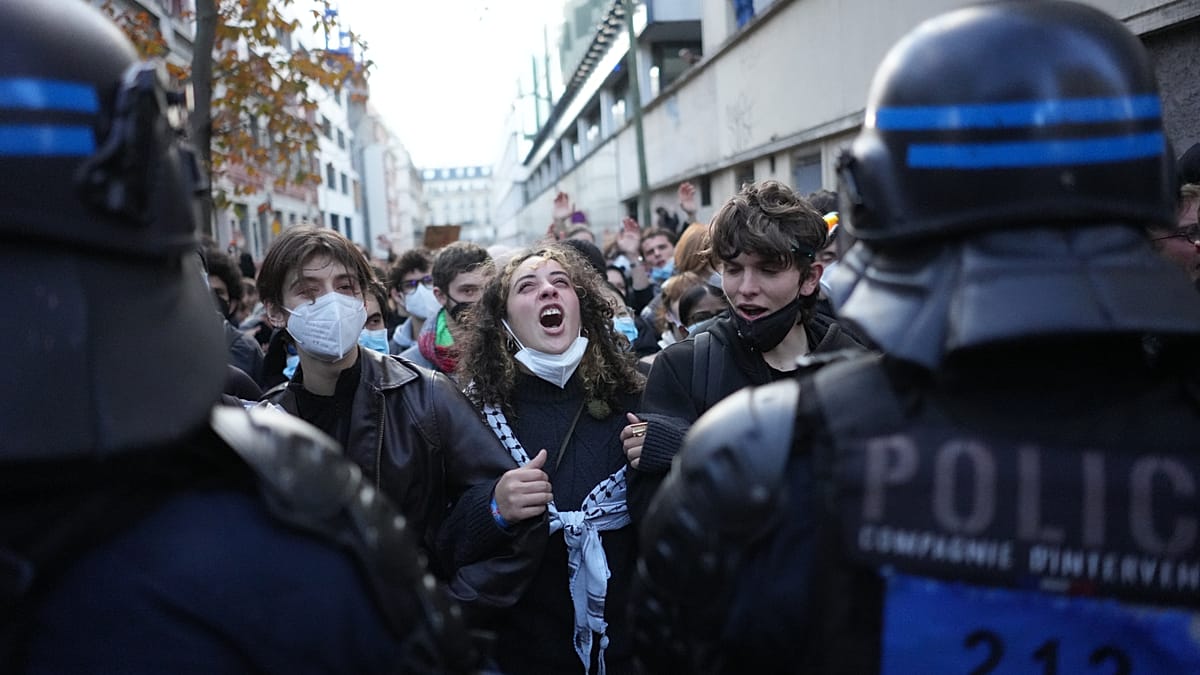
France is bracing for a day of nationwide strikes and demonstrations on Thursday, with unions, students, and workers from transport, health, education, and other sectors expected to take to the streets. The mobilisation comes just a day after the National Assembly rejected the first part of the government's 2027 budget bill, a rare show of cross-party unity that leaves President Emmanuel Macron's administration scrambling to push through its fiscal agenda.
Interior Minister Laurent Nuñez announced that more than 70,000 police officers would be deployed to ensure the protests remain peaceful. He acknowledged that intelligence services had detected "considerable interest" from far-left groups and violent protest movements, warning of possible attempts to provoke unrest, organise unauthorised marches, or carry out looting and vandalism. Authorities have also imposed restrictions on the unions' proposed route in Paris, approving an alternative path instead, a decision that has drawn criticism from civil liberties groups.
Budget battle and austerity measures
The government's budget plan, which includes a series of austerity measures, is being pushed through a hung parliament with less than six months until the presidential election in April. France's public debt and deficit have alarmed financial markets and drawn pressure from the European Union. The far-right National Rally, led by Marine Le Pen, currently leads in the polls, with hard-left France Unbowed's Jean-Luc Mélenchon in second place.
Trade unions have condemned the budget, arguing that it "exacerbates the situation by targeting the most vulnerable and those who are ill, freezing social benefits and undermining the protective role of the social security system." The government's original proposal will now go to the Senate, with a vote scheduled for 9 December, followed by a parliamentary committee to broker a compromise before the legislation returns to the National Assembly.
The protests have their roots in student demonstrations that began in mid-September over overcrowded classrooms, teacher shortages, and university admissions problems. The movement has since broadened to include wider grievances over the cost of living and rising fuel prices. In late October, the government announced a package of education reforms, including €4 billion in preferential-rate loans for school renovations and 15,000 additional university places by 2027–2028. But student unions dismissed the measures as "little more than window dressing," calling for €10 billion in direct investment and 250,000 extra university spots.
Energy prices and strategic reserves
Spiralling energy costs, driven by the conflict in the Middle East and the closure of the Strait of Hormuz, have added to public discontent. French lawmakers have criticised energy companies for record profits while households struggle with bills. On 1 November, the government began releasing 10 million barrels of diesel from its strategic reserves, and Economy Minister Roland Lescure told BFMTV that prices had dropped by an average of 15 cents per litre, with reductions of up to 20 cents at more than 3,000 petrol stations across the country.
The protests come amid broader European concerns about fiscal discipline and social stability. As France grapples with its own budget crisis, similar debates are playing out elsewhere on the continent, from Czech media workers striking over state funding to EU health projects facing potential budget cuts. The outcome of France's budget battle will be closely watched across Europe, as it could set a precedent for how member states balance austerity with social cohesion.
For now, the streets of Paris and other cities are set to fill with demonstrators, and the government faces the delicate task of maintaining order while addressing the deep-seated frustrations that have brought people out. With the election looming, Macron's ability to navigate this crisis will be a defining test of his presidency.