As European Union member states negotiate the bloc's next seven-year budget, cancer organisations are sounding the alarm that a proposed restructuring of health funding could pull the plug on projects ranging from prevention campaigns to personalised medicine and patient advocacy.
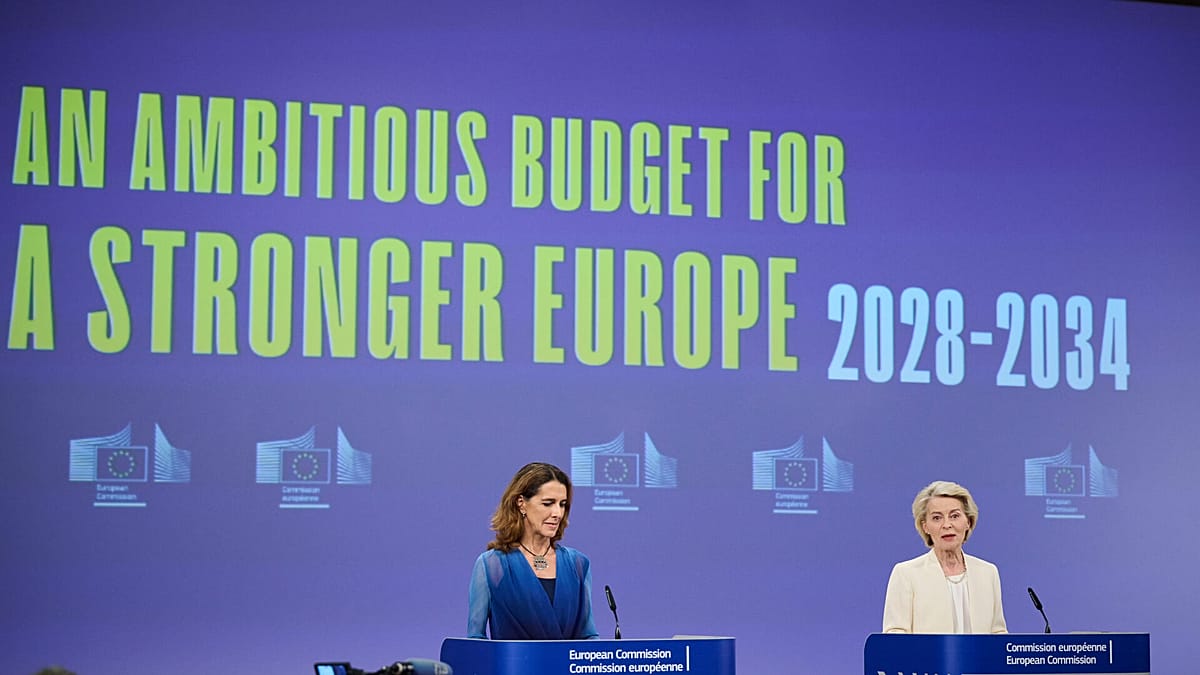
The European Commission's draft for the 2028–2034 Multiannual Financial Framework (MFF) would fold health spending into a broader European Competitiveness Fund, alongside biotechnology, agriculture and the bioeconomy. EU governments have already agreed to keep this structure, but the final shape and allocations are still being hammered out.
Cancer groups argue that without a dedicated health budget, ongoing initiatives under the EU's Beating Cancer Plan and the Cancer Mission—both of which run until 2030—could lose their financial lifeline. These programmes currently draw on the standalone EU4Health programme and Horizon Europe, the bloc's research fund.
Uncertain future for flagship projects
“Projects that are making a real difference – training doctors, giving young people with cancer a voice and developing treatments where options are limited – now face an uncertain future,” said Isabel Rubio, president of the European Cancer Organisation.
One such project is ECHoS, which helps EU countries and regions implement the bloc's cancer action plan. Its co-coordinator, Hugo Soares, told European Pulse that the team is “navigating the uncertainty, always hoping for the best but in a way preparing for the worst.” He stressed that cutting off funding abruptly in 2030 would waste promising investments in technology and therapies. “We don't expect it to be sustained by the Commission forever, but this is something that you should have a phase-out strategy, rather than getting to 2030 and cutting everything,” he said.
The Commission, however, insists that projects currently financed through EU4Health would “generally be eligible” to compete for funding under the new framework. A spokesperson said that national and regional partnership plans would support healthcare systems, while the Competitiveness Fund would foster innovation and the Horizon Europe programme would continue to back research.
Member states divided
Germany's health ministry backs the Commission's approach, arguing that all projects previously eligible for EU4Health should remain so, and that the new structure could strengthen the “Health in all policies” principle. But not all capitals share that optimism.
Spain, which pushed unsuccessfully for a standalone health programme, believes health should not be buried inside a competitiveness fund. “Health should have a role separated from a Competitiveness Fund,” said Javier Sanchez Padilla, Spain's Secretary of Health, though he acknowledged the trend is “putting everything in the competitiveness basket.”
Luxembourg's health ministry worries about the visibility and continuity of public health funding, particularly for prevention and the exchange of best practices. Slovenia has asked for safeguards to guarantee health investment, while Estonia points to the fund's multiannual work programmes as the key to protecting health priorities.
Parliament's concerns and demands
Members of the European Parliament have also raised red flags. Vytenis Andriukaitis, a Socialist MEP, said the Competitiveness Fund is “targeted more at industry” and that prevention programmes “will be far from the attention.” Parliament's public health committee has called for EU4Health to remain a standalone programme and for at least €10.05 billion for health in the next budget, including €2.5 billion specifically for cancer action.
While Parliament cannot amend the budget text, it holds a veto—the Council needs its consent by an absolute majority. The European Cancer Organisation is pushing for at least €10 billion for health, with €2 billion ring-fenced for a dedicated cancer fund, and wants that money protected from competition with industrial priorities.
With negotiations expected to conclude by the end of the year, these final months are a crucial window for lobbying. The outcome will determine whether Europe's cancer community can continue its work—or whether years of progress are put at risk.