Health authorities in New York State confirmed on Monday that a child has died from a measles-associated illness in Lewis County, a rural area in the northern part of the state. It is the first measles-related death recorded in New York in more than three decades, according to the New York State Department of Health and Lewis County Public Health.
The death comes as the United States grapples with its most severe measles outbreak in decades. Nationwide, 4,666 confirmed cases have been reported as of 30 October, roughly double the total for all of last year. New York alone has recorded 178 cases up to 24 October. This is the fourth measles-related death in the country this year.
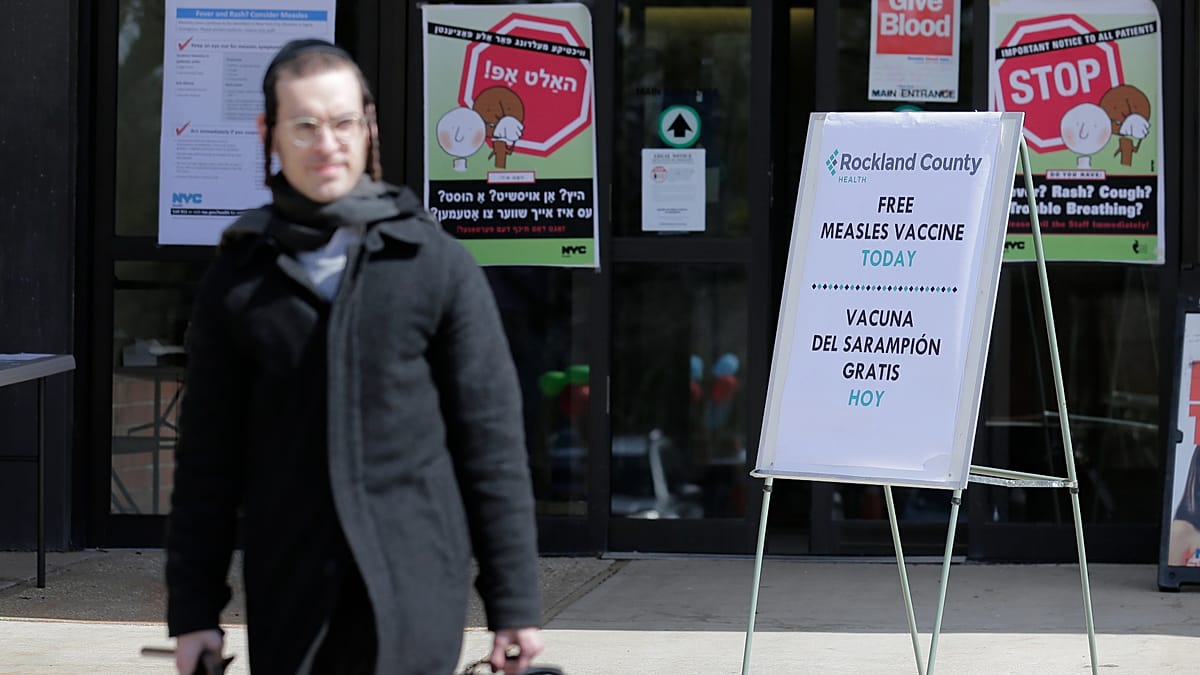
Governor Kathy Hochul declared a state disaster emergency four weeks ago in response to the outbreak. The measure allows a broader range of healthcare professionals to administer measles vaccines and facilitates access to additional resources. State health officials said they are working with county authorities and local partners to vaccinate unvaccinated individuals, while intensifying case monitoring and contact tracing.
“Measles is a highly contagious disease that can cause serious complications and death,” the joint statement said, adding that vaccination remains the best protection against the virus. The statement urged New Yorkers to ensure they are up to date on the measles, mumps, and rubella (MMR) vaccine and to consult their healthcare providers about immunisation.
One dose of the MMR vaccine provides 93% protection against measles, while two doses provide 97%, according to the state health department. The virus can be transmitted for about four days before the characteristic rash appears, meaning infected individuals may travel across borders before realising they are ill.
Vaccination policy under scrutiny
The public health warning comes amid a wider debate over vaccination policy under the Trump administration. In August, President Donald Trump signed an executive order supporting a recommendation to split the combined MMR vaccine into three separate shots, rather than administering them together. Health experts have criticised the proposal, warning that requiring multiple appointments could create additional barriers to vaccination and increase the risk of children missing doses.
Health Secretary Robert F. Kennedy Jr. has also faced criticism for questioning vaccine safety and promoting claims linking vaccines to autism, despite extensive scientific evidence finding no causal association. These developments have raised concerns among European public health officials, who watch the US situation closely for lessons on maintaining high immunisation coverage.
European perspective
While the US outbreak is the immediate focus, measles remains a concern in Europe. The European Centre for Disease Prevention and Control (ECDC) told Euronews last week that the risk for Europeans remains moderate for infants under 12 months, children aged one to five, and immunocompromised people. For older unvaccinated children and adults, the risk is estimated to range from low to moderate. Those with immunity from vaccination or previous infection are considered to have a low risk.
Measles is endemic in twelve European countries: Bosnia and Herzegovina, France, Georgia, Germany, Italy, Kazakhstan, Kyrgyzstan, Poland, Romania, Russia, Türkiye, and Ukraine. Romania reported the highest number of cases, with 30,692 in 2024, up from 3,371 in 2023. Six other European countries—Armenia, Austria, Azerbaijan, Spain, the United Kingdom, and Uzbekistan—have re-established endemic measles transmission based on 2024 case numbers.
The situation underscores the importance of maintaining robust vaccination programmes across the continent. As the US outbreak exposes Europe's vaccination gaps, public health officials are urging parents to ensure their children are fully immunised. The ECDC continues to monitor the situation and advises travellers to check their vaccination status before visiting affected regions.
For Europeans planning trips to the United States, the risk of contracting measles is low if they are properly vaccinated, but the outbreak serves as a reminder of the disease's potential severity. Health authorities recommend that all travellers be up to date on routine vaccinations, including MMR, before international travel.