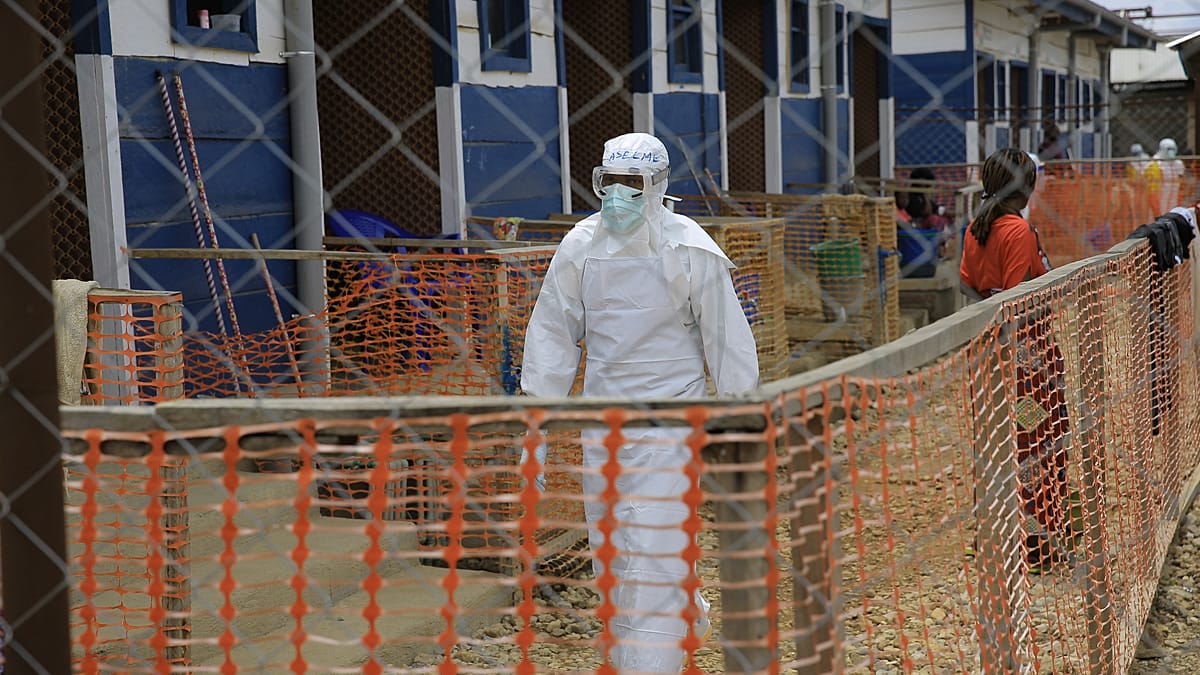
The worst Ebola outbreak ever recorded continues to escalate, with the Africa Centres for Disease Control and Prevention (Africa CDC) reporting 5,376 deaths as of late October. The vast majority—5,372—have occurred in the Democratic Republic of Congo (DRC), where the outbreak began in May. Two deaths each have been confirmed in Kenya and Uganda, according to data shared with Agence France-Presse.
More than 10,000 people have been infected across the affected countries, and the case fatality rate exceeds 50 percent, making this the fastest-growing and most widespread Ebola epidemic since the virus was identified in 1976. The outbreak is caused by the Bundibugyo virus, a rare strain that has no approved vaccine or specific treatment. Unlike the more common Zaire strain, which has an effective vaccine, Bundibugyo remains a formidable challenge for health workers.
A regional crisis with global implications
Uganda, which shares a porous border with the DRC, recorded 20 cases, nearly all involving travellers who had crossed from the DRC. The country was declared Ebola-free in August after a swift containment effort. Kenya reported its first-ever Ebola cases in October, with nine infections confirmed. Nigeria, Africa's most populous nation, also saw its first case that month: a 42-year-old Swiss woman whose husband works at the Swiss embassy in Abuja. The couple had travelled to Uganda before returning to Nigeria.
The spread to multiple countries underscores the difficulty of containing a virus that transmits through contact with bodily fluids and causes severe haemorrhagic fever. In the DRC, conflict and displacement have hampered response efforts, and health workers have faced attacks in remote areas. The World Health Organization (WHO) has warned that the outbreak could strain already fragile health systems across the region.
Recent weeks have seen the start of clinical trials for the Ervebo vaccine, which is effective against the Zaire strain. Researchers hope that the vaccine, developed by Merck, might offer some cross-protection against Bundibugyo, but results are months away. In the meantime, public health measures—contact tracing, isolation, and safe burial practices—remain the primary tools.
European governments and institutions have a direct stake in this crisis. The EU has pledged additional funding for Ebola response, and the European Centre for Disease Prevention and Control has issued travel advisories. However, former Irish President Mary Robinson has criticised Europe for not doing enough, arguing that the continent's response has been too slow and underfunded. In a recent commentary, she called for a more robust international effort, noting that the outbreak is not just an African problem but a global health security threat.
The WHO has also urged member states to accelerate work on a pandemic treaty, citing the Ebola outbreak as a stark reminder of the need for coordinated global preparedness. The treaty, which has been under negotiation, aims to strengthen surveillance, response, and equitable access to medical countermeasures.
For now, the focus remains on containing the virus in the DRC and preventing further cross-border spread. Health officials in Kenya and Nigeria are on high alert, and screening at airports and border crossings has been intensified. The coming weeks will be critical in determining whether the outbreak can be brought under control or whether it will continue to expand.