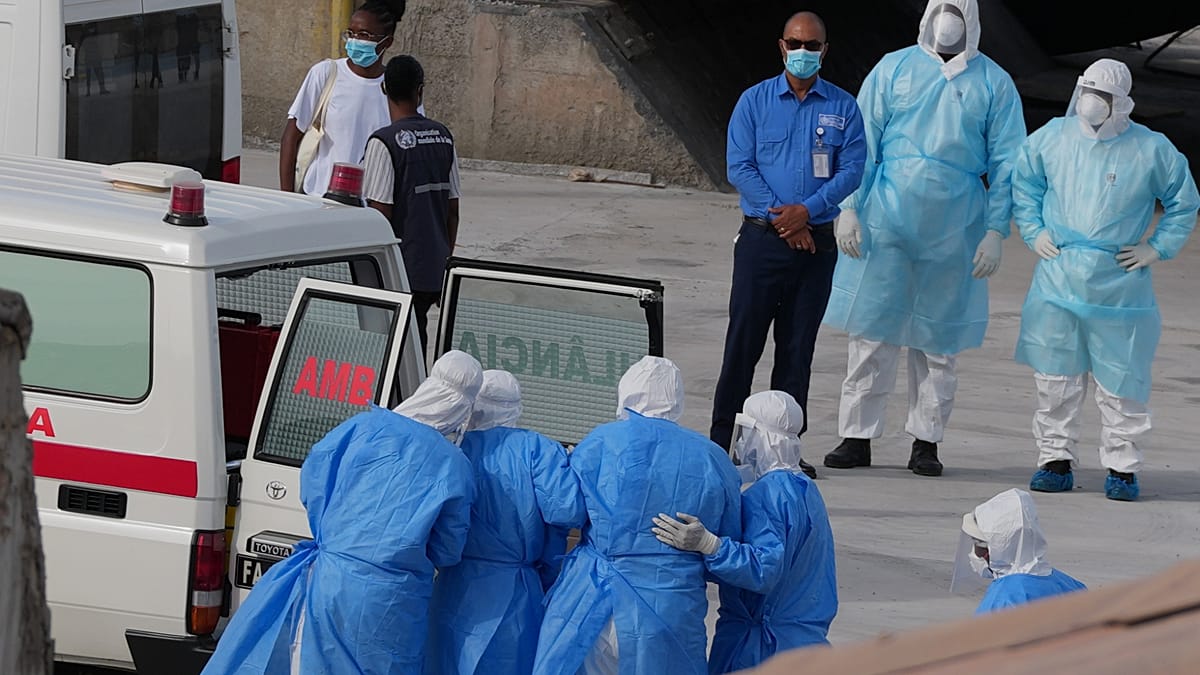
GENEVA — The head of the World Health Organization has used a fresh wave of deadly outbreaks to press governments into completing a long-stalled international pandemic treaty, warning that the next global health emergency may already be taking shape.
Speaking on Monday at a negotiating session in Geneva, WHO Director-General Tedros Adhanom Ghebreyesus said the ongoing Ebola epidemic in the Democratic Republic of Congo and a hantavirus outbreak earlier this year demonstrate why the agreement cannot remain a work in progress.
“A pathogen threat anywhere can become a threat everywhere, to people of every country,” Tedros said, according to a written version of his remarks. “The outbreak of hantavirus earlier this year, and the ongoing Ebola epidemic in DRC remind us of this threat.”
The comments come as negotiators from the WHO’s 194 member states remain divided over the operational details of the Pandemic Agreement, which was adopted in May 2025 after years of fraught diplomacy. The deal was meant to provide a framework for coordinating responses to future COVID-like pandemics, but its most contentious element — the Pathogen Access and Benefit-Sharing (PABS) system — was left unresolved to secure adoption.
PABS is designed to govern how pathogen samples with pandemic potential are shared between countries, and how the vaccines, tests, and treatments developed from them are distributed fairly. Without a functioning PABS, the treaty risks becoming a paper promise, critics say.
“Timely access to vaccines and affordable medicines was a recurring concern raised by Member States during my meetings across all six WHO regions,” said Hans Kluge, WHO Regional Director for Europe, who is currently on special leave as he campaigns to become the next WHO Director-General. In a post on X, Kluge added: “That is why we need a system where countries can quickly share pathogen samples and data, while ensuring that the vaccines, tests and treatments developed from them are shared fairly.”
The urgency is not merely theoretical. The Ebola strain now circulating in the DRC, known as Bundibugyo, has a fatality rate of around 40 percent, and the outbreak has already spread to Uganda. Meanwhile, hantavirus, which is transmitted through rodent droppings, caused a cluster of severe respiratory infections in Europe earlier this year, underscoring that no region is immune to emerging pathogens.
For European governments, the stakes are high. The continent’s dense travel networks and interconnected economies mean a pathogen that emerges in one member state can reach another within hours. The early warning systems that Europe has developed, such as analyzing mosquito waste for viral traces, are valuable but only work if the global response is coordinated.
“The world developed vaccines in record time during COVID-19, but too many countries were left waiting while others secured far more than they needed,” Tedros reminded delegates, echoing a criticism that has long animated developing nations.
Negotiators are now under pressure to resolve the PABS mechanism before the next World Health Assembly in May 2026. But the gap between wealthy and developing countries remains wide. Rich nations, including many in the EU, want to ensure that pathogen sharing is rapid and unencumbered, while poorer countries insist on guarantees that any resulting medical products will be affordable and accessible to them.
“This is not just a technical issue; it is a matter of equity and global security,” said a European diplomat involved in the talks, speaking on condition of anonymity. “If we fail to agree on PABS, we will have a treaty that nobody trusts.”
The WHO chief’s appeal comes as Europe also faces other health security challenges, from the first human case of Shamonda virus in France to the neglected diseases that could signal the next pandemic. These developments reinforce the argument that pandemic preparedness must be a global, not national, endeavor.
What remains unresolved
The PABS system is the last major hurdle. It must define how pathogen samples are deposited in a global repository, how access is granted, and how benefits — such as royalties on vaccines or technology transfers — are shared. The WHO has proposed a model based on standardized agreements, but member states have yet to agree on the legal details.
Some European officials worry that without a robust PABS, the treaty could collapse into a series of bilateral deals, undermining the collective approach that the WHO was founded to promote. Others point to the broader security implications of health crises, which can destabilize regions and divert resources from other priorities.
For now, the clock is ticking. Tedros’s message was blunt: “We have the opportunity to build a safer world, but only if we act now.”