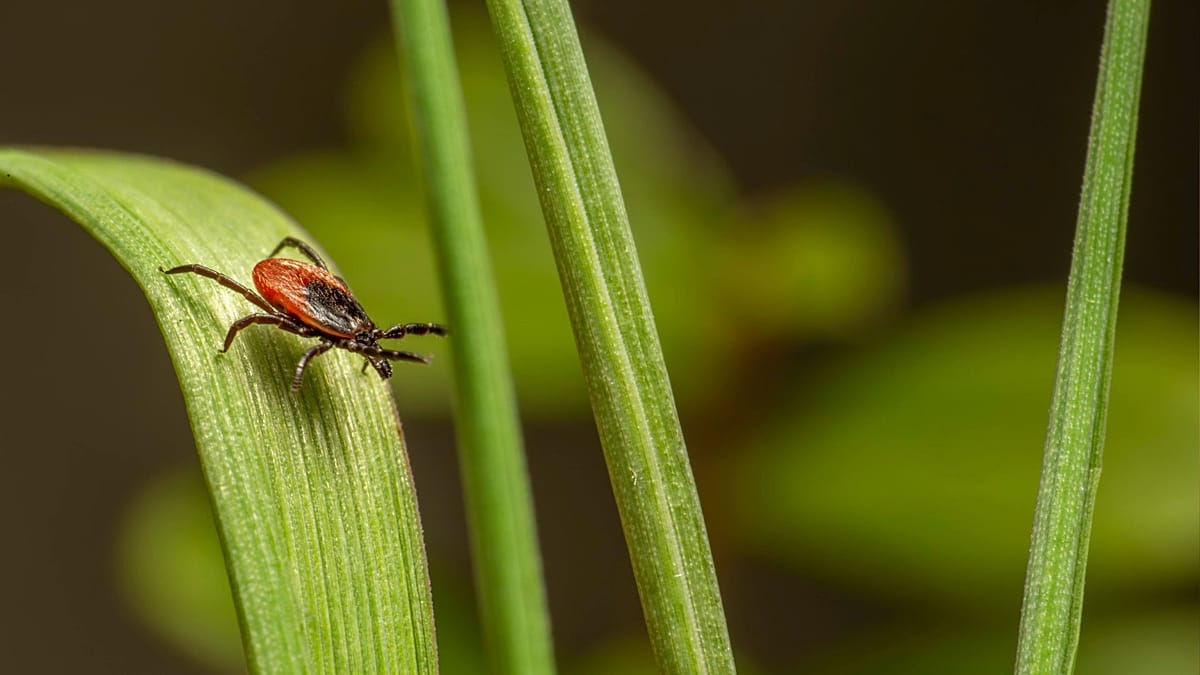
For many Germans, the warning about the fox tapeworm is as familiar as the forest itself. Anyone who has ever picked berries or collected mushrooms in the woods has heard the caution: the tapeworm's eggs might be clinging to their harvest. The concern is not unfounded—the parasite can attack the liver and cause a potentially fatal disease.
This disease, alveolar echinococcosis, is one of 21 illnesses that the World Health Organization (WHO) has classified as Neglected Tropical Diseases (NTDs). These diseases, often overlooked in global health discussions, are now being recognized as a crucial early-warning system for emerging pandemics.
"Wherever NTDs occur, they mark the weak points in the global health system, precisely because there is no system in place there," explains Dr. Dr. Carsten Köhler from the University of Tübingen. Köhler, who heads the Institute of Tropical Medicine, Travel Medicine and Human Parasitology and serves as president of the German Society for Tropical Medicine, Travel Medicine and Global Health, spoke to European Pulse at the World Health Summit.
NTDs can reveal where medical care, disease surveillance, and reliable data are lacking. In such regions, infectious diseases may go undetected for long periods, with consequences that can extend far beyond the directly affected areas.
The fox tapeworm: a persistent threat
The parasite measures only two to six millimetres but can cause severe liver disease in humans. The adult tapeworms live in the small intestine of foxes, and occasionally in dogs and cats, which serve as definitive hosts. In biology, a definitive host is where a parasite reaches sexual maturity and reproduces. The life cycle is complex: a mouse (intermediate host) ingests the eggs, larvae develop inside the mouse, and a fox (definitive host) that eats the mouse becomes infected, allowing the tapeworm to mature and produce new eggs.
According to the Bavarian State Office for Health and Food Safety (LGL), the red fox is the most important definitive host in central Europe. Human infections are rare but can be life-threatening. In 2024, the Robert Koch Institute (RKI) recorded 52 infections, up from the typical 40 to 45 cases in previous years. Most cases come from the southern states of Baden-Württemberg and Bavaria, where between 33 and 50 percent of foxes carry the parasite.
Echinococcosis is one of the neglected tropical diseases that occur in Germany. But Köhler warns that others are now knocking at the door. Leishmaniases, transmitted by tiny sandflies, are a growing concern. "Many Germans like to travel to the Mediterranean region on holiday and can then bring it back with them," he notes. The disease is often curable if detected early, but the WHO estimates that 700,000 to one million people worldwide contract leishmaniases each year.
Most of the 21 NTDs, however, are concentrated in parts of the world with less developed health systems than Germany's. They serve as a barometer for the resilience of global health infrastructure.
New disease on the horizon
In 2026, the Central African state of Gabon submitted an application to the WHO to add another disease to the NTD list: Loa loa, also known as the eye worm. "Only endemic countries are allowed to submit applications," Köhler explains. The parasite, transmitted by horseflies, can migrate through subcutaneous tissue and sometimes become visible under the conjunctiva of the eye, causing itching, swelling, and other discomforts.
Köhler believes the WHO should consider the application. However, in October 2026, the WHO advisory committee recommended a temporary pause in adding new diseases, pending a fundamental review of the criteria and procedures for inclusion.
"NTDs occur in regions where the health system does not exist or is only rudimentary," Köhler continues. The diseases themselves are not automatically a danger to the global population. What matters more is what they reveal about the conditions under which infections can spread: lack of medical care, inadequate monitoring, and gaps in disease reporting. There is also a risk that illnesses with pandemic potential may emerge and spread in such settings.
Early warning through community health workers
In these regions, community health workers play a pivotal role. They move from community to community, informing the population and observing the local health situation. "A community health worker who is looking out for a worm infection that itself has no pandemic potential would still notice if, all of a sudden, an entire family had died and could report that immediately," says Köhler.
These workers can recognize illnesses, refer people to medical facilities, and report unusual developments to authorities. "That is why we say these structures can be used as an early-warning system if such basic services have already been set up for NTDs," he explains. The advantage is that helpers are already present in communities. If NTD programmes are running, diseases with pandemic potential are likely to be detected earlier, and emergency structures do not have to be created from scratch when a new infectious disease appears.
The fox tapeworm, though a rare threat in Germany, is a reminder that neglected diseases are not just a distant problem. They are a lens through which we can see the fragility of global health systems—and a warning that the next pandemic may already be brewing in the shadows. As Europe looks to strengthen its health defences, the lessons from these tiny parasites are more relevant than ever.