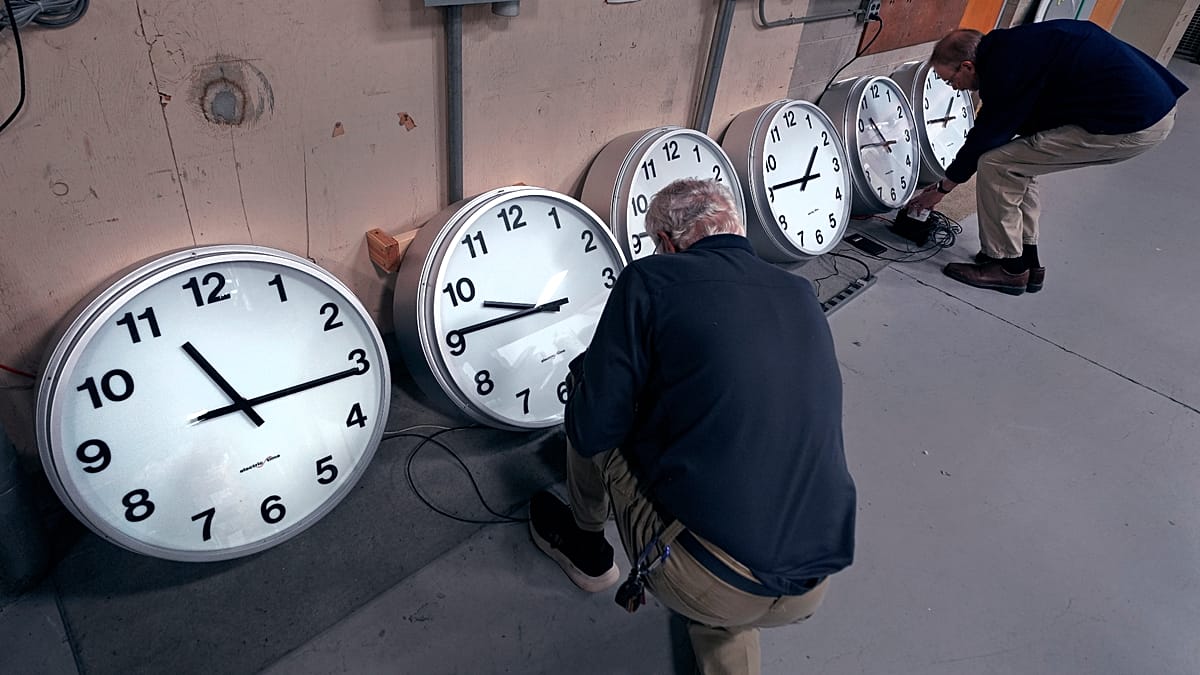
This weekend, most European countries will set their clocks back one hour, returning to standard time after months of daylight saving. The twice-yearly ritual, introduced during the First World War to save energy and revived in the 1970s, has long been debated. But the question is no longer just whether to end the clock change—it's which permanent time to adopt.
Health researchers are increasingly clear: permanent standard time is the better option. A recent analysis led by Raymond Lam, professor of psychiatry at the University of British Columbia, concludes that standard time aligns with human circadian rhythms, while permanent daylight saving time would push sunrise later, leaving many Europeans to start their days in darkness.
“Ending the clock change solves one problem, but it creates another decision: which time should we live on year-round?” said Lam. The analysis, published in the Canadian Medical Association Journal, notes that while eliminating clock changes reduces short-term disruption, the permanent choice determines chronic, long-term public health outcomes.
The science of morning light
Our internal body clocks are synchronized by light, particularly in the morning. Ralph Mistlberger, professor of psychology at Simon Fraser University, explained: “Our biological clocks need morning light to stay synchronized with the 24-hour day. Permanent daylight saving time moves that light an hour later just when winter mornings are already darkest.”
Morning light exposure helps compensate for the body clock's natural tendency to lag, reducing sleepiness and supporting alertness, sleep quality, and mood. Permanent standard time preserves earlier winter dawns, which naturally align with human biology.
“Time policy is a public health policy,” said Alexandra Choi, medical health officer with Vancouver Coastal Health. “If governments choose permanent daylight saving time, they should plan for the consequences before the first winter—from safer morning travel and flexible start times to monitoring sleep, mental health, and injuries.”
The debate is not purely academic. In 2018, the European Commission proposed ending seasonal clock changes, and the European Parliament voted in favour. But the decision has stalled, with member states unable to agree on a common permanent time. Countries like Belgium, where winter fuel costs are a concern, have other priorities, but the health argument is gaining traction.
Proponents of permanent daylight saving time point to lighter evenings, which may support recreation, social activity, and some economic sectors. However, the health evidence suggests these benefits come at a cost. The analysis notes that permanent daylight saving time would leave more people commuting to work or school in darkness during winter, increasing risks of accidents and affecting mental health.
For Europe, the choice is not just about convenience. As the continent faces record heatwaves and climate-related health challenges, aligning time policy with public health is increasingly important. The EU's climate plans have been praised for their health focus, but emissions cuts still lag—and time policy could be a simple, cost-free health win.
Some argue that the EU should adopt standard time year-round, as Portugal, Iceland, and the UK already do in winter. Others, like Spain, have considered shifting to a time zone more aligned with solar time. The debate is far from settled, but the scientific consensus is clear: for the sake of our health, standard time should be the permanent choice.
As the clocks change this weekend, the question remains: will European leaders listen to the evidence? The answer could shape the continent's health for decades to come.