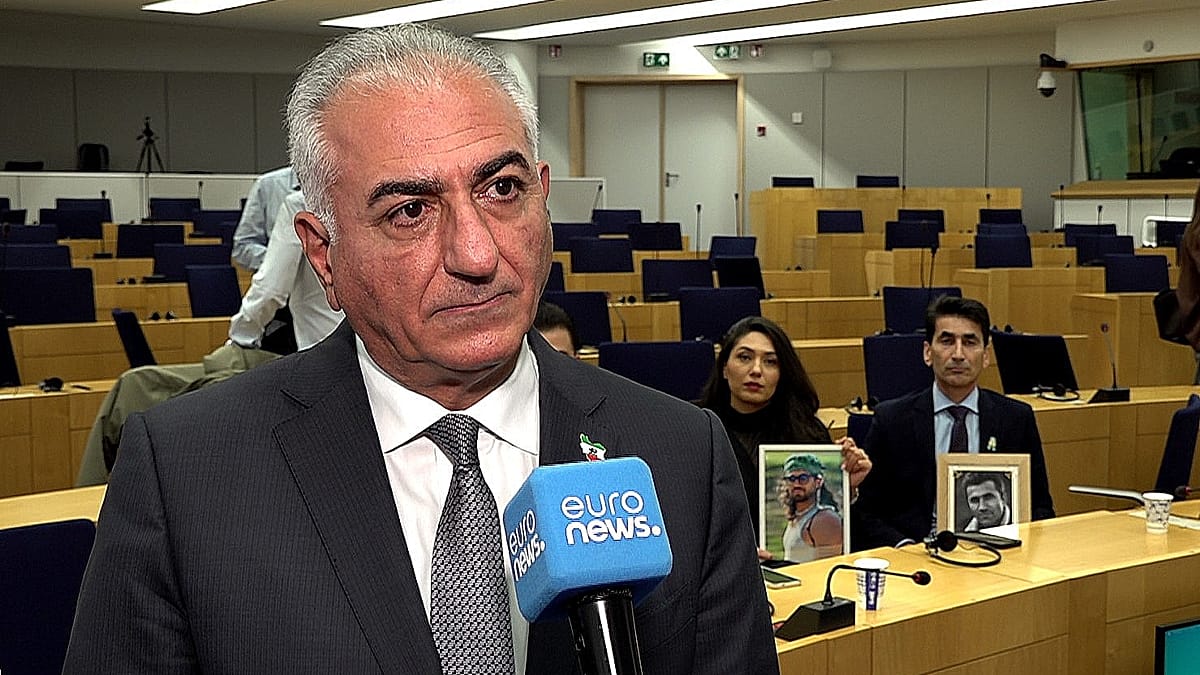
Reza Pahlavi, the Paris-based son of Iran's last Shah and a prominent figure in the opposition to the Islamic Republic, spent Wednesday in Brussels pressing European lawmakers to escalate economic pressure on Tehran. In a series of meetings with members of the European Parliament, he argued that the regime is cornered and therefore more dangerous.
"The Iranian regime is a wounded animal," Pahlavi told reporters after his talks. "It will seek revenge and is willing to go all the way for its own survival." His warning comes as the EU struggles to balance its critical dialogue with Iran against growing concerns over human rights abuses and Tehran's military support for Russia.
Call for asset freezes and hidden wealth
At a press conference in the European Parliament, Pahlavi called on the EU to "show the same resolve as it has toward Russian President Vladimir Putin" by uncovering hidden assets and freezing illegal funds linked to the Iranian leadership. He argued that the regime's financial networks are vulnerable and that targeted measures could bite harder than broad trade restrictions.
His lobbying effort coincides with a broader European debate on how to respond to Iran's crackdown on domestic protests and its role in regional conflicts. While the EU has already imposed several rounds of sanctions on Iranian officials and entities, Pahlavi insists that more can be done to choke off the regime's access to international finance.
"The EU has been effective in isolating Russia's elite," he said. "The same tools can be applied to Iran's clerical establishment, which has stashed billions abroad." He urged member states to coordinate intelligence-sharing to trace these assets, many of which are hidden behind shell companies in European jurisdictions.
A familiar voice in European capitals
Pahlavi, who has lived in exile since the 1979 revolution, has become a regular visitor to European capitals, seeking support for a transition to a constitutional monarchy in Iran. His meetings in Brussels this week are part of a wider campaign to keep Iran on the EU's agenda, even as attention shifts to the war in Ukraine and other crises.
His message resonates with some MEPs who have pushed for a harder line on Tehran, but it also draws criticism from those who fear that regime change rhetoric could destabilise the region further. The EU's foreign policy arm has so far avoided endorsing any particular opposition group, preferring to engage with the Iranian government on nuclear and human rights issues.
Nevertheless, Pahlavi's presence in Brussels highlights the growing influence of the Iranian diaspora in European politics. Many of his supporters live in Germany, France, and the UK, and they have organised protests outside Iranian embassies across the continent.
His call for asset freezes echoes similar measures taken against Russian oligarchs, a policy that has been widely implemented since 2022. Whether the EU will apply the same logic to Iran remains an open question, but Pahlavi is determined to keep pressing.
"We are not asking for military intervention," he clarified. "We are asking for economic and diplomatic isolation of a regime that has lost all legitimacy."
As he left the European Parliament, Pahlavi said he would continue his tour of European capitals in the coming months, hoping to build a coalition of governments willing to act. For now, his message is clear: the regime is wounded, but it is not yet defeated.