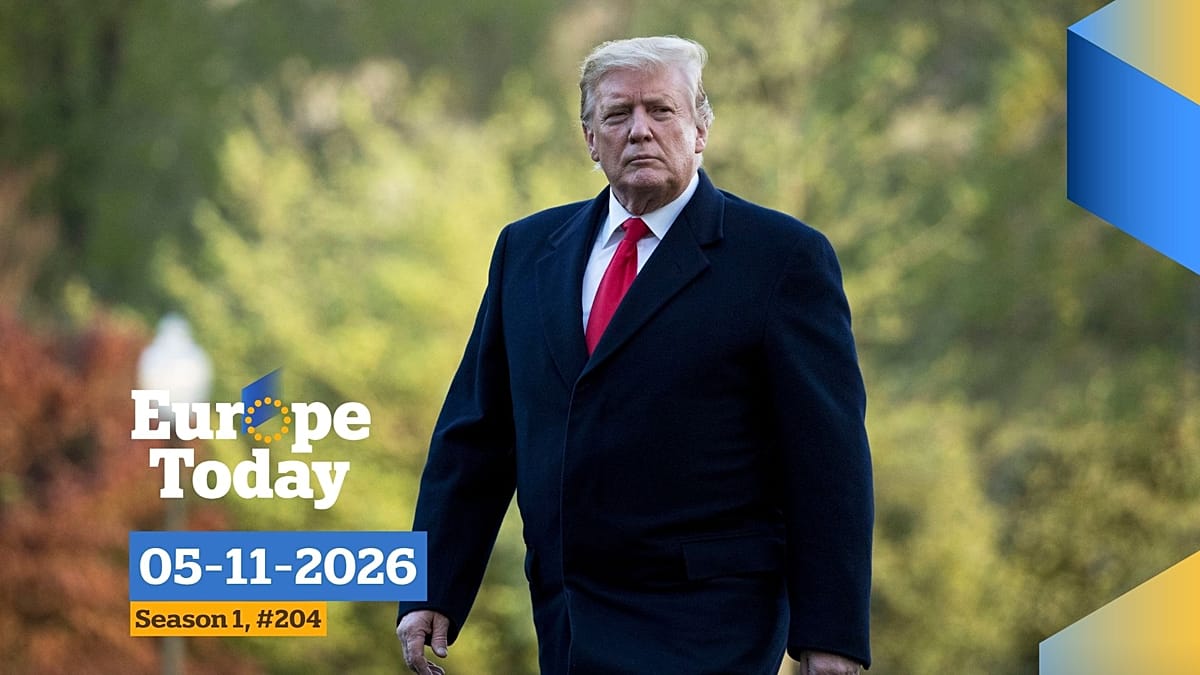
The Democratic Party's capture of both the Senate and the House of Representatives in the US midterm elections has delivered a stinging rebuke to Donald Trump. For European policymakers, the question is no longer whether the American president is weakened, but how he will channel that weakness on the world stage.
Political analyst Eric Ham, speaking from Washington, argues that a cornered Trump is unlikely to retreat into caution. "He has never responded to defeat with moderation," Ham said. "The pattern is escalation, and Europe should prepare for a more volatile partner." This sentiment echoes warnings from European capitals that a president with diminished domestic standing may seek to project strength abroad, particularly in trade and security matters.
European investors and markets react
The immediate financial fallout was visible across European exchanges. Xavier Volatier, head of transatlantic private wealth at Banque Transatlantique in New York, noted that European investors are recalibrating their expectations. "The midterms remove some policy certainty, but they also open the door to checks and balances," Volatier said. "Markets dislike unpredictability, and Trump's response to this defeat is the key variable."
In Helsinki, correspondent Shona Murray reported that European governments are cautiously optimistic about the Democratic gains, hoping for a more stable US foreign policy. However, she added that the upcoming Ukraine talks, scheduled for next week, will be a critical test. European leaders are anxious that a distracted or resentful Trump could undercut the transatlantic consensus on Russia.
The weakened president's potential to unsettle Europe is a central concern. Analysts point to his willingness to use tariffs as leverage and his skepticism toward multilateral institutions. A Democratic Congress may restrain some of his impulses, but it could also push him to act unilaterally in foreign policy, where he retains significant latitude.
Hybrid warfare: from blood banks to fridges
Beyond Washington, Europe faces a new front in hybrid warfare. Hackers have targeted a French blood bank and supermarket refrigeration systems, raising alarms about the vulnerability of critical infrastructure. Kevin Curran, professor of cybersecurity at Ulster University, explained that such attacks are relatively simple to execute. "Supermarket fridges and blood-bank coolers are often connected to the internet with minimal security," Curran said. "A successful intrusion can disrupt supply chains, endanger lives, and create chaos."
These incidents underscore the growing threat of cyberattacks as a tool of state and non-state actors. European Union member states have been urged to bolster their defenses, but progress remains uneven. The rise of autonomous AI agents adds another layer of complexity, as such systems could be used to launch attacks faster than human defenders can respond.
Iran opposition leader calls for EU resolve
In a separate development, Reza Pahlavi, son of Iran's last Shah and a prominent opposition figure, called on the European Union to freeze assets linked to the Tehran regime. Speaking to Vincenzo Genovese, Pahlavi urged Brussels to show the same resolve it has demonstrated toward Vladimir Putin. "The EU has been bold in sanctioning Russia," he said. "It must apply the same standards to the Iranian regime, which continues to oppress its people and destabilize the region."
Pahlavi's appeal comes as European governments weigh new sanctions against Iran over its nuclear program and human rights record. The EU has already imposed several rounds of measures, but activists argue that more needs to be done, including targeting the financial networks of the Islamic Revolutionary Guard Corps.
For Europe, the confluence of a weakened US president, escalating cyber threats, and unresolved geopolitical tensions creates a precarious moment. The continent's leaders must navigate a landscape where traditional alliances are tested and new vulnerabilities emerge. As the warnings about Trump's potential aggressiveness abroad circulate, the need for a cohesive European strategy has never been more urgent.
The coming weeks will reveal whether the Democratic victory in Congress translates into a more predictable US foreign policy—or whether Trump's unpredictability becomes the new normal. For Europe, the stakes are high, and the margin for error is thin.