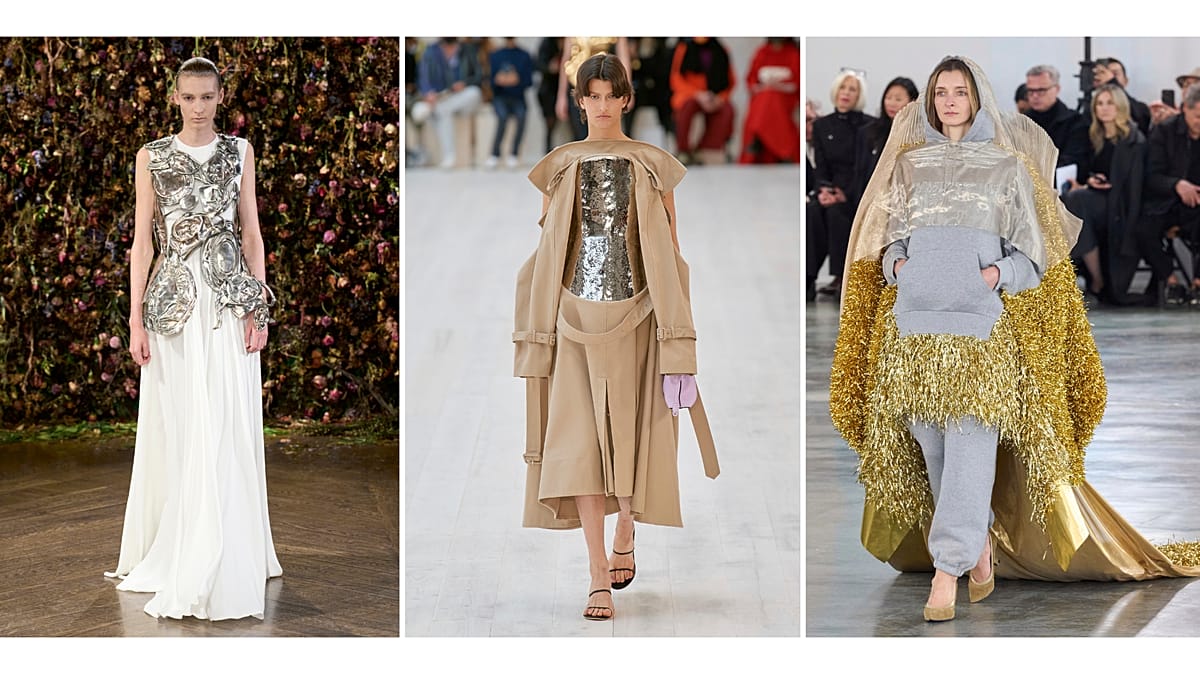
New York's Metropolitan Museum of Art has announced that its 2027 Costume Institute exhibition will turn the spotlight on the ordinary: jeans, T-shirts, puffer jackets, even paper and plastic. Titled extraORDINARY: Fashion and the Poetics of the Everyday, the show will examine how designers elevate familiar materials into works of art through craftsmanship and experimentation.
The exhibition, opening next spring, will draw on the museum's own collection as well as loans and new acquisitions. Visitors will be invited to reconsider objects they encounter daily, from denim to metal, and see how fashion can transform them while preserving their original associations. The theme marks a deliberate shift away from the glamorous, often theatrical costumes that have dominated recent Met Galas, toward a more grounded, material-focused approach.
A new direction after the Galliano controversy
The announcement follows the museum's decision to cancel a planned retrospective on British designer John Galliano. That exhibition was dropped after fierce criticism from donors and Jewish community leaders, who objected to Galliano's history of anti-Semitic and racist remarks, for which he has repeatedly apologised. Andrew Bolton, the Costume Institute's head curator, said the replacement had to be developed from scratch, giving the team an opportunity to rethink the museum's programming.
The Met Gala, held annually on the first Monday in May, is one of the fashion world's most anticipated events. It raises funds for the Costume Institute and draws celebrities, designers and musicians, who interpret the exhibition's theme in elaborate outfits. For 2027, that theme will challenge attendees to find elegance in the mundane—a concept that could produce both minimalist statements and playful, ironic ensembles.
The choice of everyday materials also resonates beyond the runway. In Europe, where sustainability and circular fashion are pressing concerns, the exhibition may prompt reflection on how we value the clothes we wear. As everyday Europeans increasingly seek durable, meaningful garments, the Met's focus on the ordinary could feel particularly timely.
Bolton, known for his scholarly yet accessible curatorial style, has previously explored themes like camp and Catholicism. This new direction, he said, is about poetics—finding beauty in the overlooked. The exhibition will likely feature pieces from designers who have long worked with unconventional materials, such as Issey Miyake's pleats or Martin Margiela's deconstructed denim.
The Met's decision to pivot from a single designer to a broader cultural theme also aligns with a wider trend in fashion institutions. European museums, from the V&A in London to the Musée des Arts Décoratifs in Paris, have increasingly mounted exhibitions that examine fashion's social and material history rather than celebrating individual genius. The Copenhagen show decoding Roman fashion is a recent example of this approach.
While the Met Gala is a New York institution, its influence extends across the Atlantic. European designers and houses regularly dominate the red carpet, and the exhibition's theme will likely inspire collections shown in Paris, Milan and London. For an industry that often looks to the Met for cultural cues, the emphasis on everyday materials could signal a move away from excess and toward introspection.
The 2027 gala will take place on the first Monday of May, as always. Until then, fashion watchers will speculate about which designers will embrace the challenge of making plastic and paper look luxurious. If the past is any guide, the results will be as surprising as they are inventive.