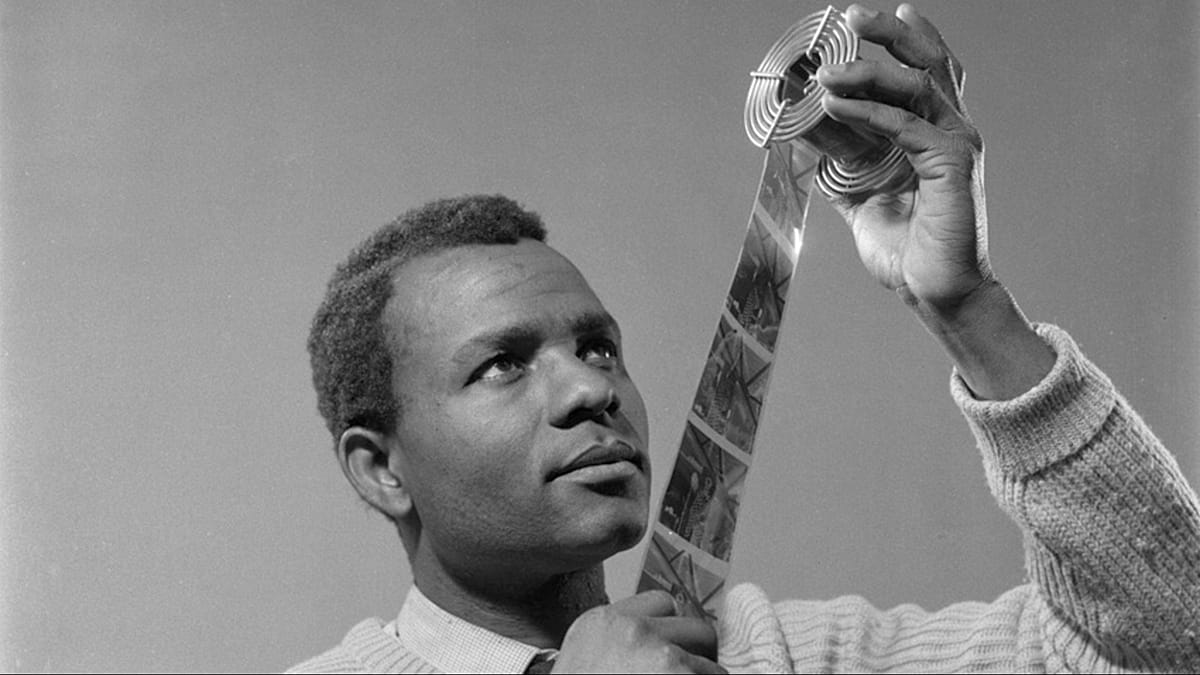
James Barnor has spent more than seven decades documenting moments of profound change, from the final years of colonial rule in Ghana to the emergence of a multicultural Britain. Now, at 97, the photographer is being recognised with one of the industry's highest honours.
The World Photography Organisation has announced that Barnor will receive the Outstanding Contribution to Photography award at the 2027 Sony World Photography Awards, with a ceremony scheduled for 15 April in London. A retrospective of his work, featuring over 50 photographs and archival materials, will run at Somerset House from 16 April to 3 May 2027.
From Accra to London and back
Born in 1929, Barnor learned photography from his cousin J. P. D. Dodoo, a prominent photographer in Accra during the Gold Coast colonial era. At 21, he became the first staff photographer at Ghana's Daily Graphic, covering political rallies, street parades and the country's path to independence in 1957. He was present when Kwame Nkrumah declared Ghana free from British rule, though film processing delays meant his images never made it into the newspapers.
In 1953, Barnor opened the Ever Young studio in Accra's Jamestown district. There, students, shop assistants, politicians and judges posed for portraits as he documented everyday life in a nation undergoing rapid transformation. His work captured the optimism and energy of a society on the cusp of change.
In 1959, Barnor moved to Britain, where he studied at Medway College of Art and later worked as a colour printer. He also contributed to Drum, the South African magazine known for its anti-apartheid reporting, and photographed London's African diaspora during the 1960s. His fashion photography, often shot on the city's streets, portrayed Black models and celebrities with a confidence rarely seen in the British press at the time. His images appeared on Drum's covers and fashion pages, giving Black Londoners a visibility that mainstream magazines often denied them.
After training with film manufacturer Agfa-Gevaert in Belgium and Germany, Barnor returned to Ghana in 1970 as a company representative and helped establish the country's first commercial colour-processing laboratory.
A global legacy
Barnor's work has been exhibited worldwide, including at London's Serpentine Gallery, the Detroit Institute of Arts and New York's Museum of Modern Art. His photographs are also held in major collections at the Tate, the National Portrait Gallery in London and the Centre Pompidou in Paris.
His recognition comes as France celebrates 200 years of photography with more than 1,000 events running until September 2027, a reminder of the medium's enduring power to capture history. Barnor's career, spanning Ghana's independence and the rise of a multicultural United Kingdom, is a testament to that power.
Reflecting on his journey, Barnor said: "When I opened my studio in Accra, I never imagined that my work would take me so far: through Ghana's independence, to London and back again. My camera became my companion, and I have never regretted it."
His photographs, from portraits of Muhammad Ali surrounded by fans in London in 1966 to intimate scenes of church celebrations in Accra, continue to inspire new generations of photographers and historians alike.