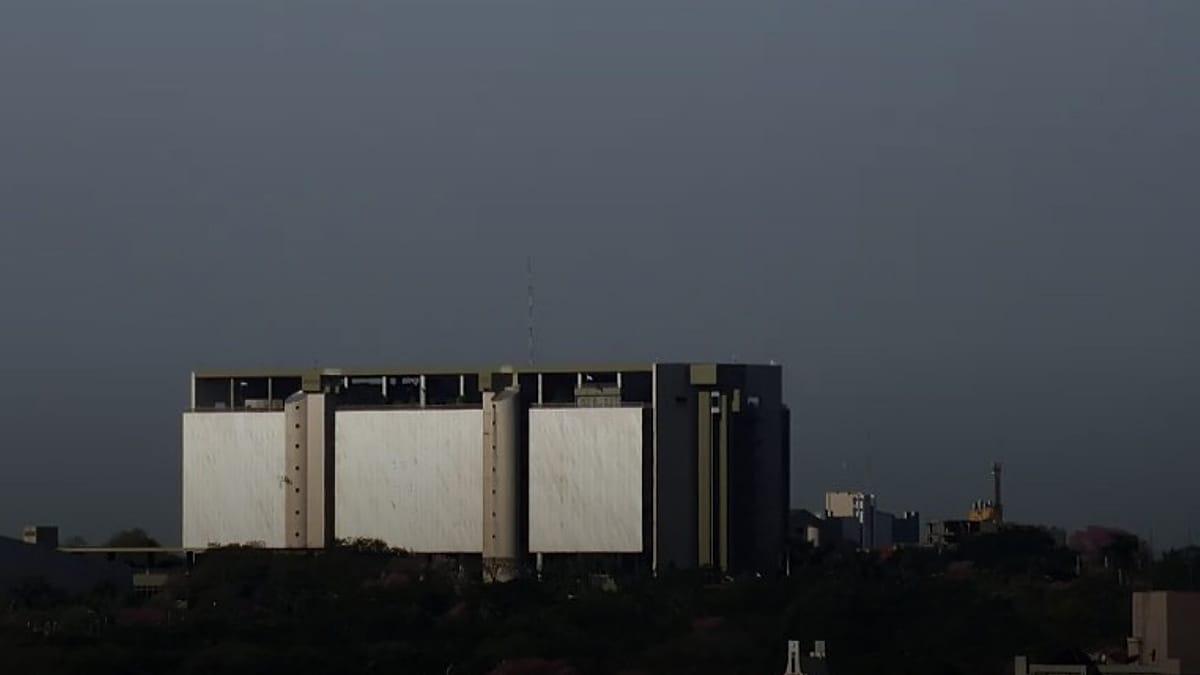
In the early hours of Tuesday, 3 November, nearly three million customers of Ueno Bank in Paraguay woke to a blank screen. The bank's app, which had become a symbol of modern, frictionless finance in a country long accustomed to bureaucratic banking, displayed only a terse message: "We cannot display the balance." Within minutes, the Banco Central del Paraguay (BCP) announced it had intervened and begun winding up the institution, citing a critical collapse in its solvency ratio below 50%.
The fallout was immediate and seismic. Crowds of desperate account holders gathered outside Ueno's headquarters in Asunción and its 75 branches nationwide, hoping to recover their money. The scenes were harrowing: a woman in tears pleaded to withdraw funds to pay for medicine for a gravely ill child; a construction worker, unable to access his savings, said he had no money to feed his family that day. The bank's closure has frozen around $850 million (€758 million) in public resources, including pension funds managed by the Instituto de Previsión Social, which supports workers' healthcare and retirement.
A political earthquake
The crisis has quickly morphed into a political firestorm for President Santiago Peña, a former IMF economist who took office in 2023 with promises of attracting foreign investment. The opposition has accused the central bank leadership of complicity by omission, but the most serious threat is aimed at Peña himself. Thirty-five legislators have requested an extraordinary session of the Chamber of Deputies to vote on opening impeachment proceedings against him. The motion, which accuses Peña of "poor performance of his duties," cites alleged conflicts of interest, embezzlement of pension funds, and institutional shielding of the central bank. To proceed, it needs 53 votes in the lower house and then a two-thirds majority in the Senate.
Peña cancelled his official agenda on Wednesday and remained silent until late afternoon, when he appeared online to announce the dismissal of the central bank's governor and to demand that the judiciary establish responsibility. The judicial net has already closed on eight senior Ueno executives, including CEO Miguel Vázquez, who were arrested on Wednesday.
From football sponsorships to financial collapse
Ueno Bank, owned by the influential Grupo Vázquez, was more than a financial institution; it was a cultural phenomenon. Its fluorescent green branding was ubiquitous, sponsoring Paraguay's top football clubs, including Cerro Porteño and Olimpia, and the iconic Defensores del Chaco stadium. The bank had positioned itself as a modern alternative to the country's traditional agrarian banking system, boasting of cutting through red tape. Just days before the collapse, it had announced an ambitious $100 million capitalisation plan.
But behind the marketing, the Superintendencia de Bancos uncovered a stark reality: Ueno was unable to meet a compulsory reserve of $70 million (€62.4 million) required by the central bank. The financial collapse was inevitable, and its political consequences are now unfolding.
Economic fallout and public anger
The real economy is already feeling the shock. The Association of Importers and Retailers has warned of an immediate 35% drop in sales at major retailers, as consumers with frozen accounts halt spending. The spectre of an Argentine-style corralito—a freeze on bank withdrawals—has alarmed the population. Protesters outside branches hold banners reading: "Who will answer for a lifetime of savings? Will there be impunity?"
The central bank has tried to calm fears by reminding citizens that a guarantee fund will reimburse each client up to 75 minimum wages (about 228 million guaranis, or $37,700, €33,620). But trust has evaporated. The crisis has also drawn comparisons to other political upheavals in the region, though Paraguay's situation is distinct. As the impeachment process moves forward, the country faces its worst institutional crisis in years, with President Peña's political future hanging in the balance.
The coming days will be critical. The Chamber of Deputies is set to vote on the impeachment motion, and the outcome will determine whether Paraguay can navigate this financial and political storm without further damage to its democratic institutions.