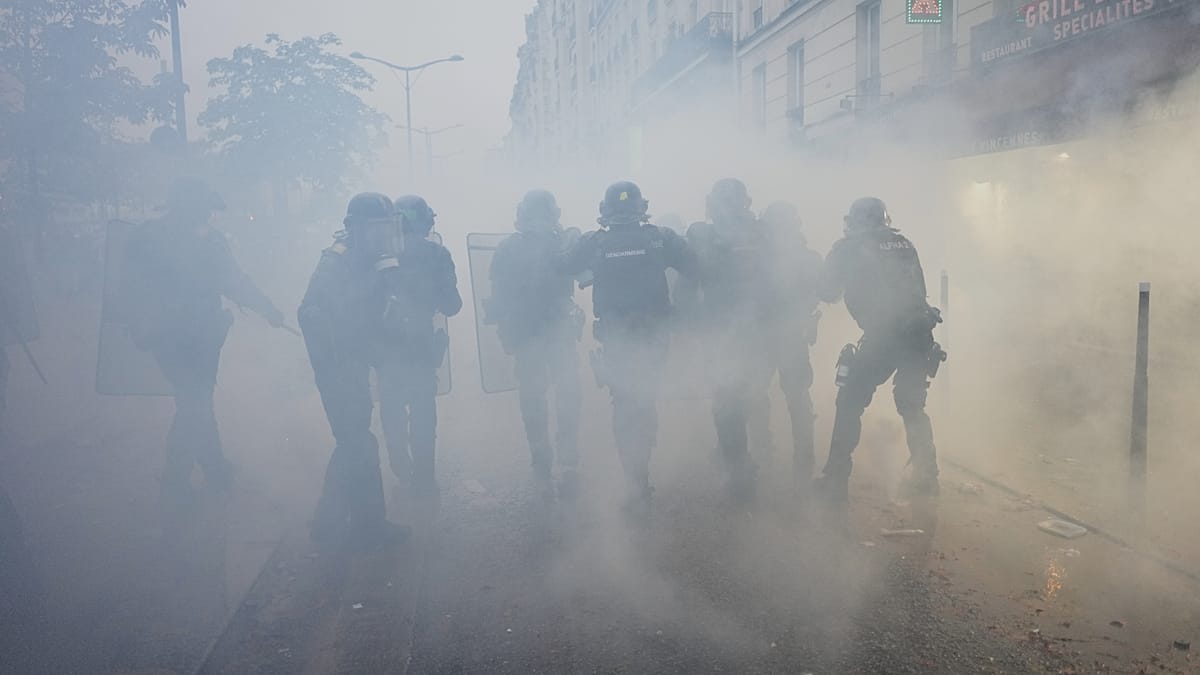
Paris witnessed another weekend of unrest as thousands of young protesters gathered to voice their frustration over the soaring cost of living, underfunded education, and deteriorating public services. The demonstrations, now in their third consecutive weekend, turned violent in several parts of the capital, with police deploying tear gas and water cannons to disperse crowds.
Youth anger boils over
The protests, largely organized by student unions and youth collectives, reflect a deepening discontent among France's younger generation. Many say they are struggling to afford rent, food, and transport, while wages and student grants fail to keep pace with inflation. In Paris, demonstrators marched from the Sorbonne to the Place de la République, chanting slogans against President Emmanuel Macron's economic policies and demanding increased investment in education and social services.
Clashes broke out in the late afternoon near the Bastille, where groups of masked individuals threw projectiles at police, who responded with stun grenades. Several shop windows were smashed, and at least a dozen people were arrested, according to local authorities. Similar, though smaller, protests took place in Lyon, Marseille, and Toulouse, with reports of minor skirmishes.
The unrest is not confined to France. In Germany, Frankfurt saw riots and looting after youth protests turned violent, and Berlin experienced a night of looting and clashes as Gen Z demonstrators took to the streets. The parallel movements across Europe highlight a generational divide over economic opportunity and social mobility.
Economic pressures mount
France's inflation rate, while slightly below the eurozone average, remains stubbornly high, particularly for food and energy. The government has introduced some relief measures, such as fuel subsidies and rent caps, but many young people argue these are insufficient. "We are the first generation that will be poorer than our parents," said Camille, a 22-year-old sociology student at the protest. "The state is cutting our future to save the banks."
The protests come as France taps its strategic diesel reserves to stabilize pump prices, a move that underscores the severity of the energy crunch. Yet for many, the deeper issue is structural: a labor market that offers precarious contracts, a housing shortage in major cities, and a public university system that has seen per-student funding decline over the past decade.
Political analysts note that the protests could pose a challenge to Macron's reform agenda, particularly his plans to raise the retirement age and further liberalize the economy. The president has so far remained silent on the demonstrations, but his government has called for calm and condemned the violence. Interior Minister Gérald Darmanin blamed "a small minority of troublemakers" for the clashes, while acknowledging the legitimate grievances of the marchers.
European dimension
The French protests are part of a broader European phenomenon. In Berlin, a youth rally combined education demands with pro-Palestinian slogans, reflecting the intersection of domestic and international issues. Meanwhile, business leaders like the CEO of Kärcher have warned that Europe faces a 'perfect storm' of high energy costs, labor shortages, and supply chain disruptions, urging governments to implement structural reforms.
For many young Europeans, the cost-of-living crisis is not just a temporary squeeze but a permanent feature of their economic reality. As one protester in Paris put it, "We are not asking for charity; we are asking for a future."
The coming weeks will be crucial. With winter approaching and energy bills set to rise further, the pressure on governments across the continent is unlikely to ease. Whether France's youth protests will force a policy shift remains to be seen, but the anger on the streets is a clear signal that the social contract is fraying.