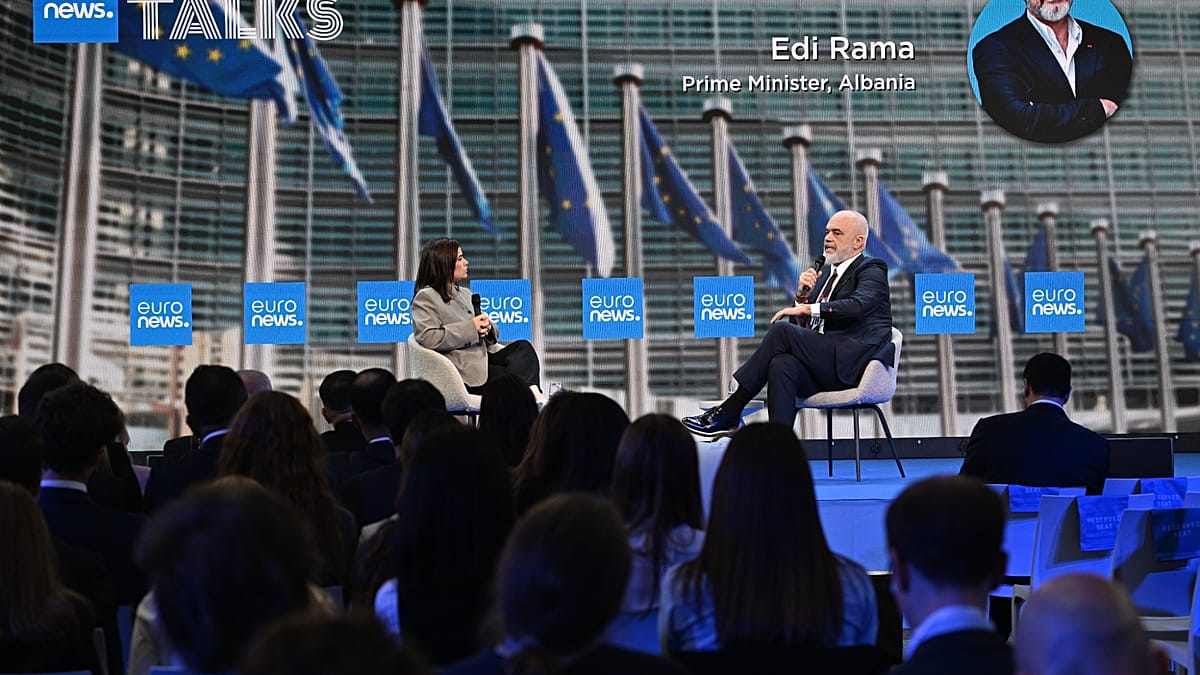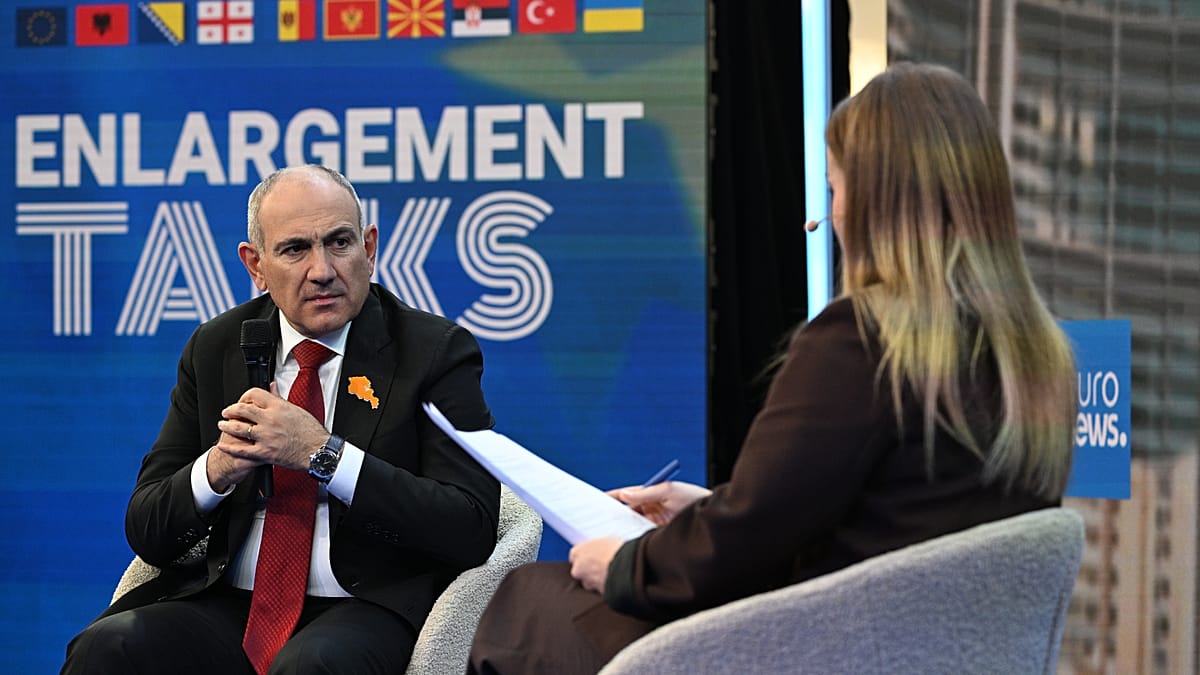
Armenia could formally apply to join the European Union within the next few years, Prime Minister Nikol Pashinyan said on Tuesday, describing a 2027 or 2028 application as a realistic goal. Speaking at the Euronews EU Enlargement Summit, Pashinyan said his government had already started the process that would lead to a formal membership request.
“Next year we can be realistic. 2028 can be realistic,” he said. “We started the process which will bring us to the final decision to submit application for formal membership of European Union.”
The announcement marks a significant shift for the South Caucasus nation, which has historically been tied to Russia’s political and economic orbit. In August, Pashinyan told Armenia’s parliament that his government intended to apply for EU membership “in the near future”. Yerevan has not yet submitted a formal application, but it is already engaged in a visa liberalisation dialogue with the European Commission, with a target of completing that process by 2029.
A strategic choice for democracy
For Pashinyan, EU membership is not merely a geopolitical manoeuvre but a way to safeguard the democratic reforms that followed the 2018 revolution, which removed a pro-Russian government from power. “For our people, democracy isn’t a matter of circumstances. It is a strategic choice,” he said. “The European Union was one of the main partners of the Republic of Armenia in the democratic reform agenda implementation.”
Pashinyan also stressed the importance of offering Armenians a genuine alternative to the traditional reliance on Moscow. “Our first intention is to create an alternative for the people of Armenia and for the Republic of Armenia, because, traditionally, the perception of our society and maybe our neighbourhood was that Armenia has no alternative,” he explained.
Russia has reacted with threats, most notably warning that it could cut off Armenia’s energy supplies. Pashinyan acknowledged the risk but said his government was working to diversify the country’s political and economic relationships. “If there is no balance in any relations, there is always a risk,” he said.
Asked about a warning from former Russian president Dmitry Medvedev that Armenia could become the next Ukraine, Pashinyan dismissed the comparison. “Our goal is to level up, to develop our independence. And that is a legitimate goal. Nobody could reduce Armenia’s aspiration to be a more independent, more integrated country,” he said.
The Armenian leader also acknowledged the difficult trade-off between EU membership and remaining in the Russia-led Eurasian Economic Union, saying that ultimately it would be for the Armenian people to decide. “We have to be honest with our people,” he said, adding that the choice would be made through a democratic process.
Armenia’s move comes as the EU itself is debating how to handle enlargement, with some member states pushing for stricter rules and others backing faster integration. The bloc has recently explored new forms of partnership, such as the proposed associate membership for Canada, though that idea has faced objections from Germany. Meanwhile, Montenegro is leading the current enlargement test as the EU considers how to admit new members without destabilising the union.
For Armenia, the path to membership remains long and uncertain. But Pashinyan’s comments signal a clear intention to break with the past and move closer to Brussels, even at the risk of further straining relations with Moscow.