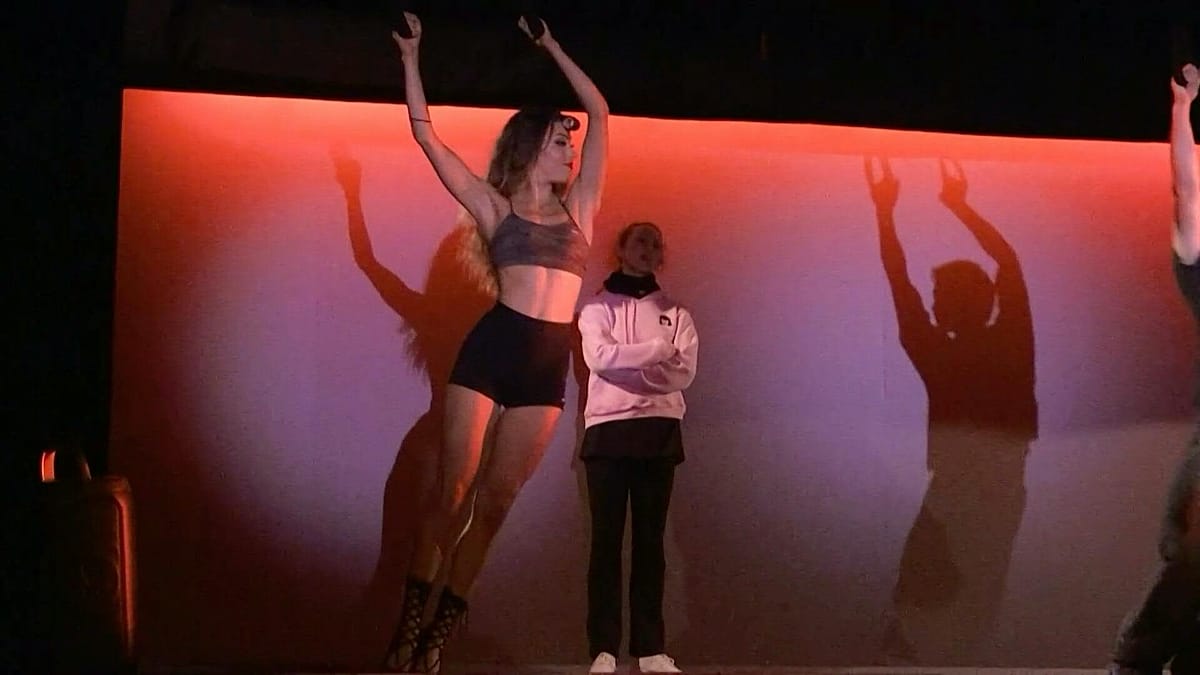
Paris's legendary Crazy Horse cabaret is set to make its Middle East debut in Dubai, presenting a version of its famous show that respects local cultural norms while preserving the essence that has made it a symbol of French nightlife since 1951.
The production, staged at the luxury Jumeirah Zabeel Saray hotel on Palm Jumeirah, features dancers in more elaborate costumes than their Parisian counterparts, yet retains the cabaret's signature lighting, choreography, and stage design. This adaptation marks a careful balancing act between artistic identity and cultural sensitivity.
A show that adapts without losing its soul
Andree Deissenberg, Chief Creative and Brand Officer of Crazy Horse Paris, explained that the decision to proceed with the Dubai project was not taken lightly, especially given the broader geopolitical context. "It's very paradoxical, it's very contrary, but at the same time, I think it's maybe people in regions of war that say you need to live," she said, referring to ongoing conflicts in the Middle East and beyond.
Deissenberg emphasized that the Dubai production remains unmistakably Crazy Horse. "It's a 100 percent Crazy Horse. You keep our signature, you have the lights, you have our little signature stage, we have the dancers, which are trained in a very special way, have a very special choreography. So, Crazy Horse has a lot of elements that make the signature Crazy Horse Paris recognisable, and we played inside of that to adapt it."
The key difference lies in the costumes. In Paris, dancers are often "dressed in lights," with minimal fabric and elaborate lighting effects creating the visual spectacle. In Dubai, the dancers wear more substantial costumes, though the lighting design remains the same. "Here, they are dressed in costumes, which they have in Paris too, but in Paris, for example, they will be more dressed in lights, and here they have more costumes, the same lighting," Deissenberg noted.
For dancer Brio Mindset, the project represents a unique opportunity to introduce Crazy Horse's artistry to a new audience. "It's true that there was a question about the project: how would it come to be and continue in the long term? Personally, I've always wanted to be part of the project, and so we saw here that anything was possible and that everything was moving forward," she said.
The move comes as Paris itself has seen a wave of cultural and political turbulence, from youth protests over living costs to debates about freedom of expression. The cabaret's expansion to the Gulf underscores the growing cultural exchange between Europe and the United Arab Emirates, a trend that has accelerated in recent years as Emirati cities like Dubai and Abu Dhabi have become hubs for international art, fashion, and entertainment.
Crazy Horse is not the first Parisian institution to adapt its offerings for the Gulf. The Louvre Abu Dhabi, a branch of the famous Paris museum, opened in 2017, and the Sorbonne has a campus in Abu Dhabi. This latest venture, however, is particularly notable because it involves a live performance art form that is often associated with a more liberal European sensibility.
The Dubai show is expected to run for an extended period, with the hotel hoping to attract both tourists and residents. While the adaptation may disappoint purists who expect the full Parisian experience, Deissenberg insists that the core of Crazy Horse remains intact. "We are not changing the DNA of the show," she said. "We are simply adjusting the presentation to respect the local culture."
This approach reflects a broader trend among European cultural institutions seeking to expand globally without alienating local audiences. As France's economic outlook faces headwinds, such international ventures also offer new revenue streams for cultural organizations.
For now, the dancers and creative team are focused on delivering a show that honors both the Crazy Horse legacy and the expectations of its new home. As Brio Mindset put it, "We saw here that anything was possible."