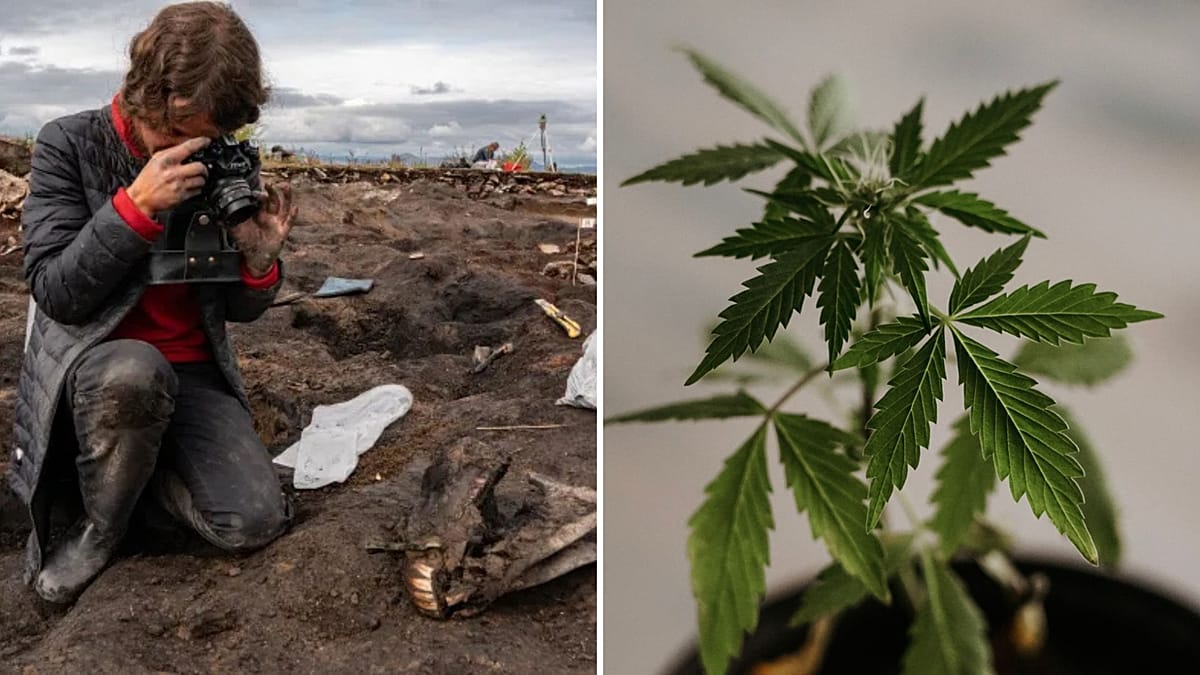
Archaeologists working in southern Siberia have uncovered what may be the earliest known evidence of cannabis being used for its psychoactive effects. The discovery, made at the Tunnug 1 site in the Uyuk Valley—often called Siberia's Valley of the Kings—could push back the timeline for deliberate cannabis consumption by around 300 years.
The team, led by Dr Gino Caspari of the University of Bern, found more than 1,000 cannabis seeds alongside human remains in a monumental burial mound measuring roughly 140 metres in diameter. The mound is associated with the Scythians, nomadic peoples who once roamed the steppes of Central Asia and parts of southern Russia and Ukraine.
A lucky find in the burial chamber
During excavations that began in 2017, the researchers noticed tiny black specks in the central burial area. "You have to imagine an excavation trench with lots of organic materials, sort of greyish-brown colours. It's not so easy to spot them, but once we had them, we picked them out and they turned out to be seeds," Caspari explained. The seeds were identified as cannabis through their distinctive surface patterns.
Shortly after, the team discovered preserved human hair, which allowed them to test whether the plant had actually been consumed. "It's only so often as an archaeologist that you do get to drug test a person that's been dead for almost 3,000 years," Caspari said.
The findings, published in the journal Science, offer potential archaeological support for the writings of the Greek historian Herodotus. In the fifth century BC, he described Scythians gathering inside tents, throwing hemp seeds onto red-hot stones, and inhaling the fumes until they "howled in their joy." The new discovery aligns with those accounts, though the researchers cannot confirm whether the cannabis was smoked or ingested.
The seeds appear to have been deliberately placed in the tomb, suggesting cannabis held ritual significance in Scythian burial practices. Caspari noted that this was unlikely to be casual recreational use. "Clearly in a burial context, there's some aspect of ritual behind this," he said. He also speculated that cannabis might have been used to sedate individuals before sacrificial ceremonies, given the evidence of horse and possibly human sacrifices at the site. "That is speculation and an interpretation based on the context," he added.
Experts urge caution
Not all researchers are convinced. Volker Auwaerter, head of forensic toxicology at the University Medical Center in Freiburg, Germany, called the hair analysis "scientifically weak" and said there is insufficient evidence to prove cannabis use. "For a central part of the study, the article falls far short of what would have been possible," he wrote in an email, noting that the hair data underpin the paper's main claims.
Despite the debate, the discovery adds a new chapter to our understanding of ancient drug use. It also echoes other recent archaeological finds, such as the ancient garden and tombs uncovered by an Italian dig in Jerusalem, which highlight how burial sites can reveal unexpected details about past cultures.
For Caspari, the find is a reminder of how much remains hidden beneath the steppe. "We have a lot of horse sacrifices and also potentially human sacrifices," he said, hinting at the complex rituals that may have accompanied these burials. The research opens new questions about the role of psychoactive plants in ancient societies—questions that may only be answered with further excavation and analysis.