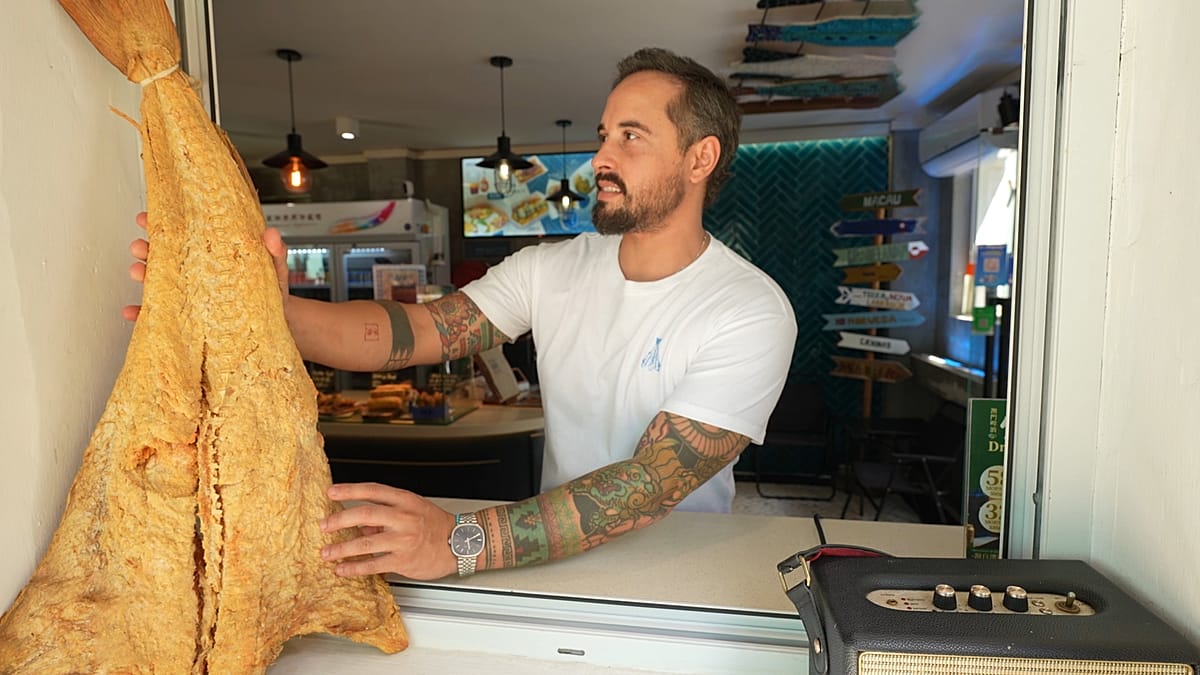
When Cristiano Tavares first arrived in Macao in 2012, he carried with him the culinary memories of Vila do Conde, a coastal town in northern Portugal known for its fishing heritage. Over a decade later, he has become a fixture in the city's food scene, running a codfish takeaway, introducing a Portuguese ice cream brand, and serving as executive chef at a hotel restaurant.
Macao's recognition as a UNESCO Creative City of Gastronomy in 2017 validated his decision to build a career there. "Macao got recognised in 2017 by UNESCO as a 'Creative City of Gastronomy', so I think it's the right place if you want to open a restaurant, a takeaway shop," Tavares says. The designation, which highlights cities that use gastronomy as a driver for sustainable development, has helped put Macao on the global culinary map.
Tavares' first venture, Macalhau, is a takeaway dedicated to bacalhau, the salted codfish that is a cornerstone of Portuguese cuisine. The name is a playful nod to both the fish and his own surname. The shop is a tribute to his grandfather, a codfish fisherman from the Atlantic coast. "Opening Macalhau was quite easy," he recalls, though the ease likely came from a deep familiarity with the ingredient and its preparation.
He later brought Gelados de Portugal, an ice cream brand from his homeland, to Macao, adding a sweet layer to his portfolio. The brand, known for its traditional flavours, has found a following in the city's humid climate.
Bridging two culinary worlds
As executive chef at Vic's Restaurant in the Rocks Hotel, Tavares has the opportunity to experiment with fusion. One of his notable creations is a reimagined Minchee, a Macanese dish traditionally made with minced pork or beef. His version swaps in codfish, blending the local recipe with his Portuguese roots. The dish is a symbol of the cultural exchange that defines Macao's cuisine, which has absorbed Portuguese influences for over four centuries.
Tavares sees his work as more than a business venture. "I always knew my purpose here was to give back to this community, to this region that gave me this opportunity," he says. His gratitude is evident in his efforts to source local ingredients and collaborate with Macanese chefs, helping to sustain the city's unique food identity.
His journey is part of a broader story of Portuguese entrepreneurs finding opportunity in Macao, a special administrative region of China with a strong Lusophone legacy. A Belgian's path in Macao similarly shows how Europeans have carved niches in the city's hospitality and tech sectors. For Tavares, the connection to Portugal remains vital; he frequently returns to Vila do Conde to visit family and source inspiration.
Macao's gastronomic scene is set to celebrate its UNESCO anniversary in 2027, an event that food pilgrims from Europe and beyond are already anticipating. Tavares hopes to be part of that celebration, showcasing how a chef from a small Portuguese town can help shape a global culinary destination.
His advice to young chefs considering a move abroad is simple: embrace the local culture. "You have to respect where you are," he says. "Learn the ingredients, learn the people, and then you can bring your own story to the table."
For now, Tavares continues to balance his roles, from frying codfish fritters at Macalhau to plating refined dishes at Vic's. His work is a testament to the enduring ties between Portugal and Macao, and a reminder that food can be a powerful bridge between distant worlds.