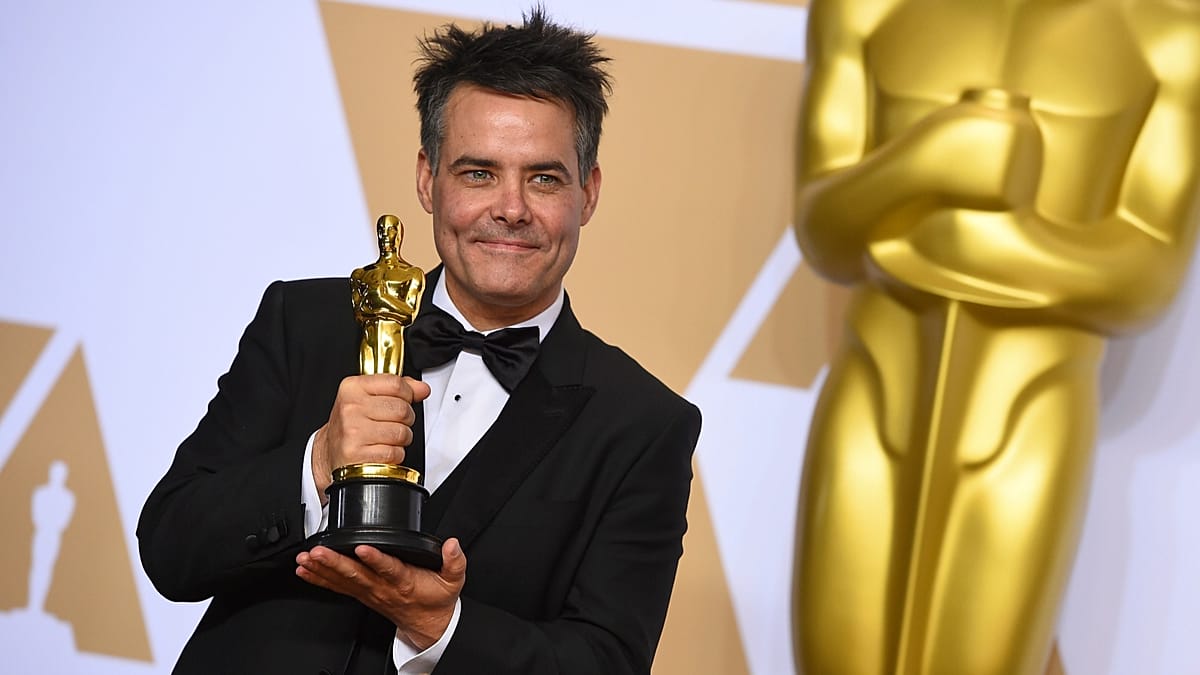
Sebastián Lelio, the Chilean filmmaker whose 2017 drama A Fantastic Woman won the Academy Award for Best International Feature Film, died on Friday at his home in Las Condes, Santiago. He was 52. His partner, Amalia Kassai, announced the news on Instagram, citing health reasons without specifying the cause.
“His memory will remain forever among us,” the statement read. “He was a beautiful person who contributed to Chilean culture in great moments of its history.”
Born in Argentina but raised in Chile, Lelio first drew international attention with his fourth feature, Gloria (2013), a portrait of a middle-aged woman in Santiago. Its lead, Paulina García, took the Silver Bear for Best Actress at the Berlin International Film Festival, and the film itself was nominated for the Golden Bear.
But it was A Fantastic Woman that cemented his reputation. The film starred trans actress Daniela Vega as Marina, a waitress and nightclub singer whose life unravels after the sudden death of her older boyfriend. The story, told with Lelio’s signature empathy and restraint, was not only a critical triumph—it also became a cultural touchstone in Chile. Its success helped fuel a national debate that led to a 2018 law allowing Chileans to legally change their gender.
Lelio’s work often crossed borders. He directed the English-language remake of Gloria, titled Gloria Bell, with Julianne Moore in the lead. He also made Disobedience, a queer love story set in London’s Orthodox Jewish community, starring Rachel Weisz and Rachel McAdams. And in 2022, he adapted Emma Donoghue’s novel The Wonder into a haunting period piece with Florence Pugh—a film that was among the most praised of that year.
His final feature, The Wave, a musical protest drama, premiered at the Cannes Film Festival in 2025.
A legacy beyond awards
Lelio’s death comes at a moment when the global film industry is still reflecting on the power of cinema to shape public discourse. His Oscar win was only Chile’s second, following the animated short Bear Story in 2016. But his influence extended far beyond the trophy shelf.
“He was a filmmaker who understood that personal stories can carry political weight,” said a statement from Chile’s Ministry of Cultures, Arts and Heritage. “His work will continue to inspire generations of storytellers across Latin America and Europe.”
Lelio’s films were frequently shown at European festivals, from Berlin to Cannes, and he maintained close ties with the continent’s film community. His passing has prompted tributes from directors and actors across Europe, including several who worked with him on The Wonder and Disobedience.
In a 2018 interview with Euronews Culture, Lelio spoke about the responsibility of telling stories about marginalized communities. “Cinema is a way of making the invisible visible,” he said. “It’s not about giving answers, but about asking questions that society is afraid to ask.”
His death is a significant loss for world cinema, but his films remain. They will continue to be screened in art houses from Paris to Prague, and his influence will be felt in the work of younger directors who grew up watching his careful, humane storytelling.
As the news spread, tributes poured in on social media. Daniela Vega, the star of A Fantastic Woman, wrote: “Thank you for seeing me, for believing in me. You changed my life and the lives of so many.”
Lelio is survived by his partner and their child.