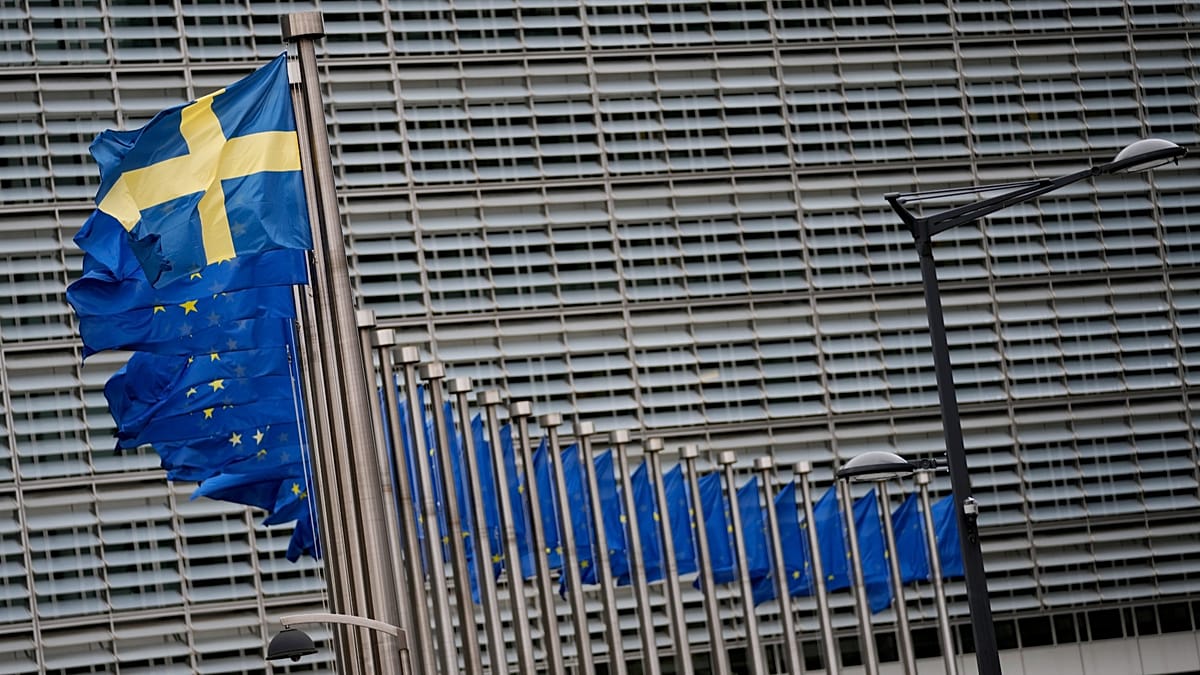
Sweden's domestic security agency, Säpo, announced on Monday that it had disrupted a Russian intelligence operation designed to undermine Swedish decision-making and tarnish the reputations of Sweden, NATO, and the European Union. The operation, allegedly orchestrated by Russia's foreign intelligence service, the SVR, involved an agent operating within a foreign diplomatic mission on Swedish soil.
In a statement, Säpo said it had "gathered information on, and taken measures against, a Russian intelligence operation aiming at influencing Swedish decision-making and discrediting Sweden, NATO and the EU." The agency did not identify the specific diplomatic mission where the agent was purportedly based, citing operational security.
According to Säpo, the operation had been in the planning stages for some time and was directed by the SVR. One of its primary objectives was to collect intelligence on Sweden's decision-making processes, which would then be used to launch influence campaigns on divisive issues. The ultimate goal, the agency said, was to weaken Swedish governance and cast doubt on the country's commitments to NATO and the EU.
A direct challenge to Sweden's new security posture
The disclosure comes at a sensitive moment for Sweden, which in 2024 formally ended two centuries of military non-alignment by joining NATO. The decision, driven by Russia's full-scale invasion of Ukraine in 2022, marked a historic shift in Swedish foreign and security policy. Since then, Stockholm has become a more visible target for Russian intelligence activities, as Moscow seeks to counterbalance the alliance's expansion in the Baltics and the broader Nordic region.
Christoffer Wedelin, Säpo's deputy head of operations, said that upon learning of the operation, "the Swedish Security Service took action to protect vital Swedish assets and counter continued impact." He declined to elaborate on the specific measures taken, but stressed that the agency's response was swift and decisive.
The operation's focus on polarising issues is a familiar tactic in Russian influence campaigns, which often exploit societal divisions to erode public trust in democratic institutions. In Sweden, debates over immigration, energy policy, and security cooperation have provided fertile ground for such efforts, particularly in the wake of the NATO accession.
This incident is not isolated. Across Europe, intelligence agencies have repeatedly warned of Russian attempts to interfere in domestic politics and undermine support for Ukraine. The EU's recent sanctions on Russian individuals and the channelling of frozen Russian assets to Ukraine are part of a broader effort to counter such threats.
Sweden's heightened alertness is also reflected in its actions at sea. In a separate development, a Swedish court confirmed that a seized shadow fleet ship would be handed over to Ukraine, a move that underscores Stockholm's commitment to maritime security in the Baltic. The transfer of the vessel is seen as a direct response to Russian attempts to circumvent sanctions and threaten critical infrastructure.
The Säpo announcement has drawn attention to the broader pattern of Russian intelligence operations across Europe. In recent months, several countries have expelled Russian diplomats accused of espionage, and security services have stepped up their monitoring of diplomatic missions. The use of diplomatic cover for intelligence operations is a long-standing practice, but the scale and audacity of recent attempts have raised alarms.
For Sweden, the disruption of this operation is a reminder that its new NATO membership comes with heightened risks. As a frontline state in the alliance's northern flank, Sweden is now a priority target for Russian intelligence. The country's security services have repeatedly called for increased vigilance and public awareness of foreign influence activities.
The timing of the announcement, just days after deadly Russian strikes on Kyiv, underscores the ongoing threat posed by Moscow. While the operation in Sweden was disrupted, the broader challenge of countering Russian influence remains a top priority for European security agencies.
Säpo's statement did not specify whether any arrests had been made or whether the agent had been expelled. However, the agency's confidence in its response suggests that the operation has been effectively neutralised. The Swedish government has not commented publicly on the matter, but officials are expected to address the issue in the coming days.
As Europe grapples with the fallout from Russia's war in Ukraine, the disruption of this operation serves as a stark reminder of the ongoing intelligence battle being waged across the continent. For Sweden, the challenge is clear: to maintain its democratic resilience while navigating the complex security landscape of the post-Cold War era.