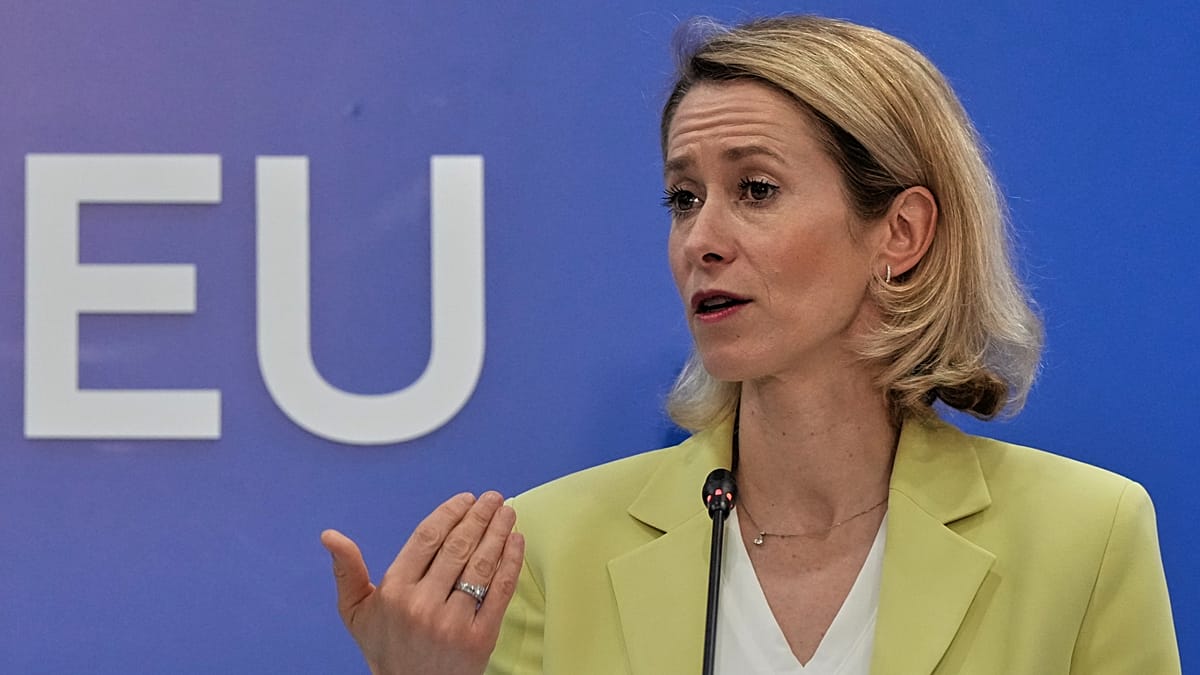
The European Union has added five more names to its sanctions list in response to Russia's recent wave of air strikes against Ukrainian cities. The move, announced on Friday by the bloc's foreign policy chief, Kaja Kallas, targets individuals linked to Russia's military-industrial complex.
“Each new attack on Ukraine is another reason for Europe to tighten the screws on Russia,” Kallas wrote on X, the social media platform. The sanctions were formally adopted on 7 August, though the EU did not disclose the identities of those listed or the specific measures applied.
Kallas framed the decision as a direct answer to Moscow's continued bombardment of civilian areas. “With its army stalled on the battlefield, Moscow is further escalating its campaign of terror against civilians,” she said. “The EU must continue to intensify pressure on Russia until Moscow ends its war.”
The new listings come just over two weeks after EU governments approved their 21st sanctions package against Russia. That package, adopted on 23 July, was the largest since the full-scale invasion began in February 2022, adding 48 individuals and 170 entities to the bloc's blacklist.
Targeting the war economy
The July package was designed to squeeze Russia's financial, energy, and military-industrial sectors. It also took aim at cryptocurrency networks, the so-called shadow fleet used to circumvent oil price caps, and companies supplying Moscow's war machine. Among the 56 listings focused on the military-industrial complex were 37 individuals and entities directly involved in the production and supply chain of long-range drones.
These latest five designations appear to be a follow-up, targeting those who enable Russia's aerial campaign. The EU has repeatedly said it will keep tightening restrictions as long as the war continues, and Kallas's statement suggests more measures could be on the way.
The sanctions come amid heightened concerns over Russian drone activity near European borders. Earlier this week, a German-owned cargo ship was struck by Russian drones near Odessa, though the crew was reported safe. Meanwhile, Ukraine has continued to strike Russian refineries in an effort to disrupt fuel supplies for the military.
European officials have also warned about potential provocations. Lithuania has cautioned that Russia may stage a false-flag drone attack on Baltic infrastructure, a scenario that would test NATO's collective defence commitments.
The EU's sanctions regime now covers thousands of individuals and entities, with asset freezes and travel bans in place across all 27 member states. The bloc has also moved to seize assets linked to the Russian state, though legal challenges have slowed some efforts.
Kallas, a former Estonian prime minister, has made support for Ukraine a central theme of her tenure as the EU's top diplomat. Her remarks on Friday echo the bloc's broader stance that economic pressure must continue until Russia withdraws its forces.
As the war enters its third year, the EU is balancing the need to maintain unity among member states while addressing concerns about the economic impact of sanctions on European businesses. Still, the political consensus in Brussels and national capitals remains firmly behind the policy of ratcheting up pressure on Moscow.