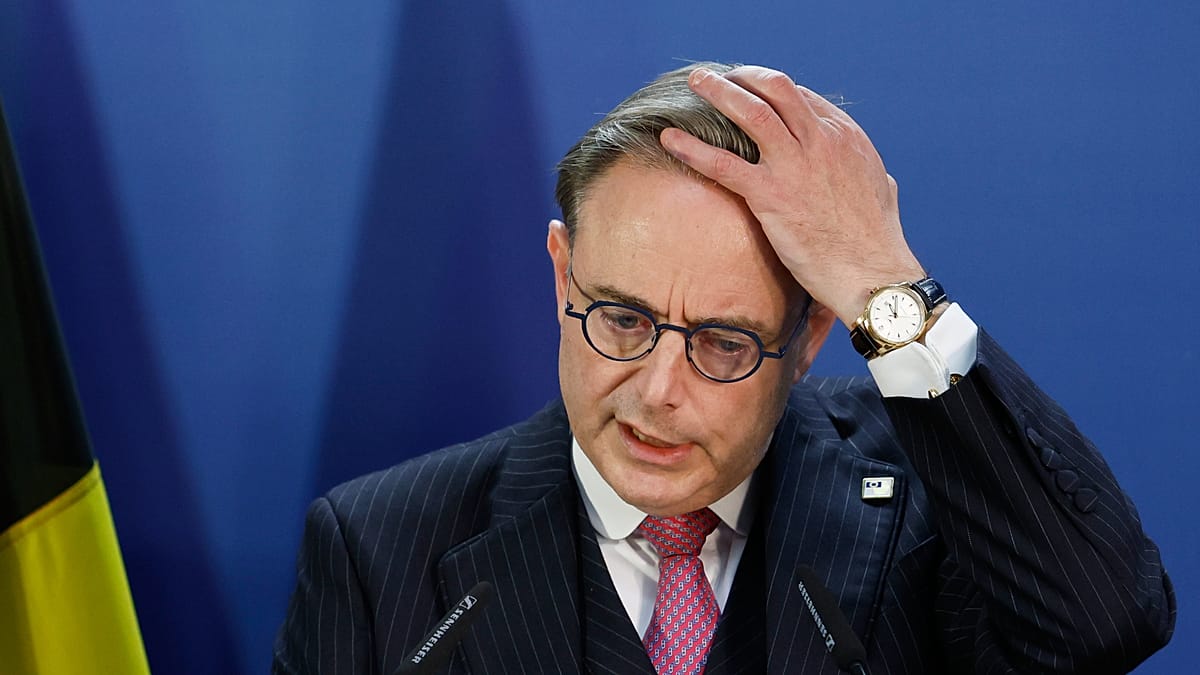
Belgium's constitutional crisis took a new turn on Friday when King Philippe refused to accept Prime Minister Bart De Wever's resignation and instructed him to return to the negotiating table. The royal palace said the king had asked De Wever to resume budget talks immediately, with the prime minister expected to report back on Monday 16 November.
The Flemish conservative leader, whose N-VA party heads a fragile five-party coalition, submitted his resignation on Monday after weeks of failed negotiations over the 2027 budget. The coalition partners—including the francophone liberal Reformist Movement (MR), the Flemish Christian Democrats (CD&V), the Flemish socialists (Vooruit), and the francophone socialists (PS)—have been unable to agree on how to close a widening fiscal gap.
In a statement, the palace said King Philippe had "put his decision on hold" and would consult party leaders. After meeting with the leaders of the five majority parties on Tuesday, the king noted "each of their commitment to concluding the budget negotiations as soon as possible." All five leaders reaffirmed their determination to reach an agreement on a sound budgetary path for the next three years, the palace added.
The king also secured a "formal commitment from the five leaders that their parties are prepared to make concessions in order to reach an agreement within the government." This unusual intervention underscores the gravity of the impasse, which has paralysed the federal government since the June elections.
Deep divisions over how to find €10 billion
At the heart of the dispute is De Wever's demand for €10 billion in savings by 2029 to bring the budget deficit under control. The prime minister has proposed a mix of spending cuts and a VAT increase, but the MR, led by Georges-Louis Bouchez, has flatly rejected any tax rise, insisting that expenditure reductions alone should suffice.
The standoff has raised fears of a prolonged political paralysis in Brussels, just as the country faces pressure from the European Commission to submit a credible medium-term fiscal plan. Belgium's deficit is among the highest in the eurozone, and the EU has already placed the country under an excessive deficit procedure.
Political analysts note that the king's decision to reject the resignation is a calculated move to force the coalition partners to compromise. By extracting a public pledge from all five leaders to make concessions, Philippe has effectively put the onus on them to deliver a deal before Monday.
If no agreement is reached, De Wever could return to the palace with a renewed resignation, potentially triggering a government collapse and fresh elections. Such an outcome would be deeply unsettling for Belgium, which already endured a record 541 days without a government in 2010-2011.
The budget crisis is not unique to Belgium. Across Europe, governments are grappling with how to balance fiscal consolidation with social spending. In France, similar tensions have erupted into mass strikes over budget cuts, while the EU's next multi-year budget is already straining under competing priorities, including health programmes that may face funding shortfalls.
For now, all eyes are on Brussels. The coming days will test whether Belgium's coalition can overcome its ideological divides and deliver the fiscal discipline that both the king and the EU are demanding. As one diplomat put it, "The king has given them a second chance—but also a clear warning that failure is not an option."