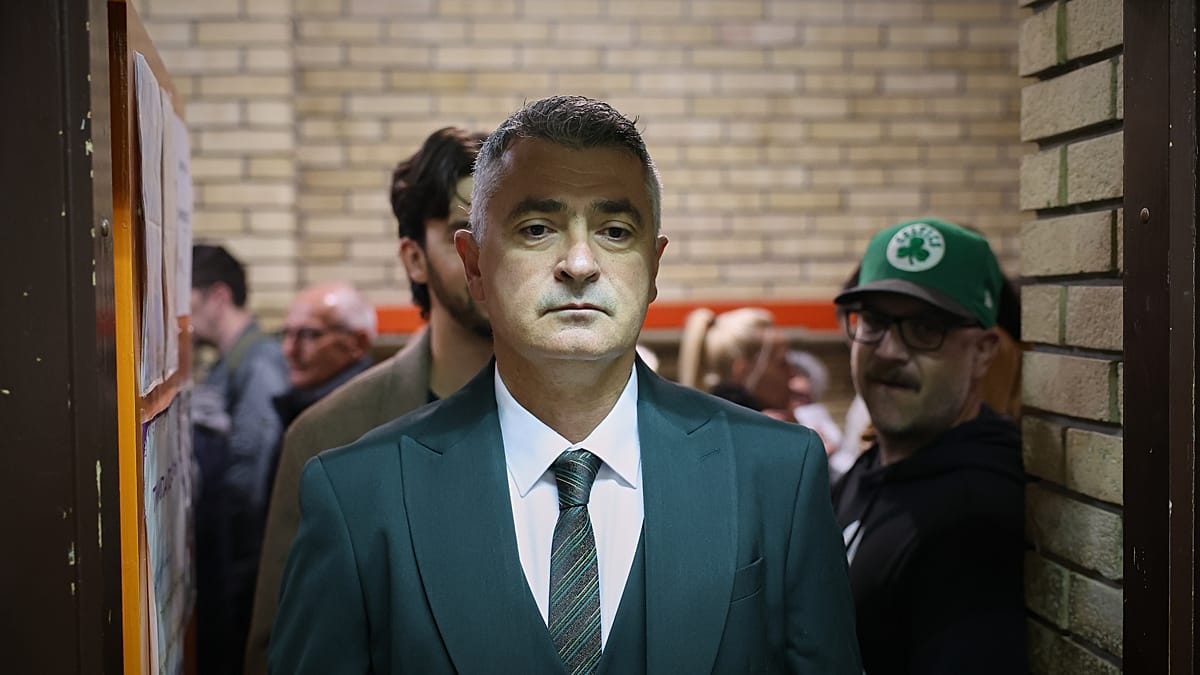
When French President Emmanuel Macron posted on X that he had spoken with Ilija Srdanović, it was a clear signal: the man who once spent his days in a cardiology clinic is now the person European leaders call when they want to talk about Serbia.
Srdanović, 56, is the public face of Serbia's Student List, the movement that won a stunning victory in the 25 October parliamentary elections, ending 14 years of dominance by Aleksandar Vučić's Serbian Progressive Party (SNS). The list secured 140 of 250 seats, enough to govern alone, and its international outreach has been remarkably effective.
Macron's call was just the latest in a series of high-level contacts. European Council President António Costa, Croatian Prime Minister Andrej Plenković, Hungarian Prime Minister Péter Magyar, North Macedonia's Prime Minister Hristijan Mickoski, and EU Enlargement Commissioner Marta Kos have all reached out. Almost all of them asked for Srdanović.
Yet Srdanović's rise is anything but conventional. Until two years ago, he was a little-known professor at the University of Novi Sad, working at the Institute for Cardiovascular Diseases of Vojvodina in Sremska Kamenica since 1997. He was born in Novi Sad and raised in Vrbas, and his medical career was his life.
The turning point came after the Novi Sad railway station disaster on 1 November 2024, which killed 16 people. The tragedy became a symbol of corruption and institutional decay under SNS rule, and it ignited a student-led protest movement. Srdanović emerged as a vocal critic of Vučić, particularly over police violence against protesters and government interference in academic freedom.
“Those who are not aware that this unstoppable wave is present in society today and cannot understand it, unfortunately, are not worthy of the time they are in and do not serve this historical moment,” he told the Serbian daily Nova in September 2025.
Two months ago, he was chosen to head the Student List's slate of 250 candidates, making him one of the most recognisable figures in Serbian public life. But the movement is deliberately leaderless, with a collegial decision-making structure that has avoided personalising the struggle. Srdanović has said he would accept a nomination for prime minister, but insists that candidates will be chosen collectively.
Foreign policy: continuity or change?
On foreign policy, Srdanović has been clear about the Student List's commitment to EU membership, anti-corruption, judicial independence, and media freedom. “We remain committed to European integration,” he told Radio Free Europe on 27 October.
But the movement is a broad coalition, ranging from the radical left to more conservative figures, united more by opposition to SNS than by a shared ideology. Its campaign focused almost entirely on domestic issues, leaving Serbia's international orientation largely unexamined.
One area where change is unlikely is sanctions on Russia. Many Serbs remember the pain of Western sanctions against Slobodan Milošević's regime, and the Student List has shown little appetite for aligning with Brussels on this issue. As EU enlargement policy increasingly demands strategic alignment, this could become a sticking point.
On Kosovo, Albanian Prime Minister Edi Rama told Euronews that the Student List was unwilling to discuss recognition, saying “the music in Belgrade will not change”. Srdanović has said dialogue with Pristina should continue, but has left open a review of agreements reached so far. Rama's assessment suggests that the new government may not be as flexible as some in Brussels hope.
The Student List's first high-level meeting with the EU executive took place on Monday, when a four-person delegation met Commissioner Kos in Brussels. Srdanović was not part of that delegation, a reminder that the movement's leadership structure is still being worked out. The meeting was not announced in advance, and the European Commission declined to name the attendees, reflecting the fact that the delegation's members are not yet MPs and the old establishment formally remains in power.
The final election results were only declared on Thursday, setting in motion the deadlines for convening parliament and forming a government. The Student List's elected lawmakers will vote on the leadership and government composition, and Srdanović is not the only contender. Belgrade weekly Vreme reported that the top slot had been expected to go to Vladan Djokić, rector of the University of Belgrade, until a narrow majority of the movement's plenum dropped him. Other possible candidates include Dejan Šoškić, former governor of Serbia's National Bank, and Radomir Saičić, a university professor. Montenegrin President Jakov Milatović has spoken to both, as well as to Srdanović.
As Serbia prepares for a new political era, the question is whether Srdanović will emerge as the leader of the future government. His medical background and calm demeanour have made him an effective international envoy, but the movement's internal dynamics remain fluid. What is clear is that Europe is watching closely, and that the man who once treated heart conditions is now at the centre of Serbia's political heartbeat.