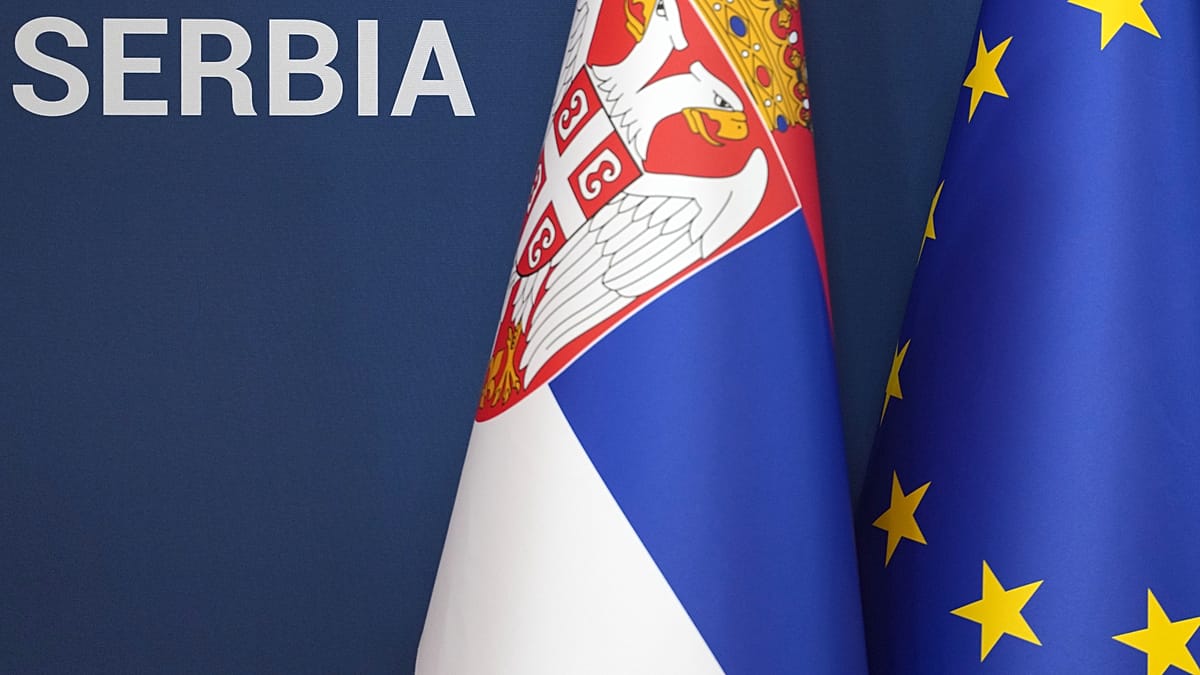
Brussels is sharpening its enlargement strategy, making closer alignment with EU foreign and security policy a central condition for candidate countries. In its latest annual assessments, the European Commission singles out Serbia, Georgia, and Turkey for their weak or deteriorating alignment, which could limit their access to the bloc's new "gradual integration" framework.
As Russia's war in Ukraine spills into hybrid attacks on EU soil, the Commission is using enlargement to pull neighbours closer to its external action and democratic standards. "Common security and defence policy has become an increasingly important dimension in the accession process," a senior EU official told reporters. "Particularly in the context we are at the moment, we believe that candidate countries already contribute to the Union's security."
The EU plans to deepen cooperation with candidates on defence, border management, cybersecurity, and critical infrastructure protection. Alignment with sanctions against Russia is a key indicator. The Commission has labelled the four most advanced candidates "frontrunners," but the reports paint a more mixed picture for the rest, with stagnation and backsliding in several cases.
Serbia: a strategic outlier
Serbia's report highlights negative trends in the fundamentals cluster covering rule of law, judiciary, and fundamental rights. Belgrade remains a significant outlier, despite technical progress on the internal market. Its foreign policy alignment stands at 63%, and its ties with China and Russia contradict EU positions, notably its refusal to join sanctions on Moscow, Minsk, and Tehran.
Brussels sees the recent election victory of the Student List, which ousted Aleksandar Vučić's Serbian Progressive Party after 14 years, as a chance for a reset. "This is an opportunity to advance this whole process of accession," the first official said. "We're ready to engage with the incumbent government and help them to translate the stated priorities, particularly in the areas of fundamentals, into concrete reforms."
Normalisation with Kosovo remains a sticking point. Albanian Prime Minister Edi Rama said at the Euronews Enlargement Summit that Belgrade's new government is unlikely to recognise Kosovo, a position echoed in Rama's remarks.
Georgia: a "very sad story"
EU officials describe Georgia as a "very sad story," as Tbilisi slides deeper into democratic backsliding and curbs fundamental rights. In March, the EU suspended visa-free travel for Georgian diplomatic and service passport holders. Brussels considers Georgia a candidate in name only, with no progress on the nine steps set out when candidate status was granted. In 2024, the Georgian government said it would not pursue accession talks until 2028.
At the summit, Prime Minister Irakli Kobakhidze could not explain how Tbilisi plans to normalise relations with the EU, accusing the Commission of double standards while refusing to back down on controversial legislation. "There is no prospect of changing this unless the Georgian authorities urgently change course," a second senior EU official said. "We, of course, remain committed to the European aspirations of the Georgian people." The EU's frustration is detailed in Georgia's hard line.
Turkey: low alignment, strategic importance
Turkey is the only candidate with "very low" foreign policy alignment, and the Commission also notes democratic backsliding. Yet Ankara has stepped up cooperation in areas of mutual interest: trade, migration, regional security, and connectivity. Turkey is a critical gateway for the Middle Corridor, the transport route the EU is investing in to link Europe with Central Asia, bypassing Russia and the Suez Canal.
"The circumvention of EU sanctions against Russia remains important," the second official said. "Turkey has made some progress, but should make more progress." The occupation of Northern Cyprus remains a major obstacle to better relations and to unfreezing accession talks.
Gradual integration: conditional and reversible
Foreign policy alignment will matter even more as the EU reforms how it rewards candidates. The new approach offers gradual access to the internal market, Erasmus+, the end of roaming charges, and inclusion in the Single Euro Payments Area (SEPA). Early next year, the Commission will launch a dedicated dialogue with candidates to develop tailor-made measures.
"This is not an offer that comes without conditions," the second official added. "It remains merit-based, conditional and reversible. We expect progressive alignment with EU rules and strategic priorities."
The strategy reflects a broader shift in Brussels, where enlargement is entering a decisive phase, with frontrunners surging and laggards falling behind. For Serbia, Georgia, and Turkey, the message is clear: strategic alignment is no longer optional.