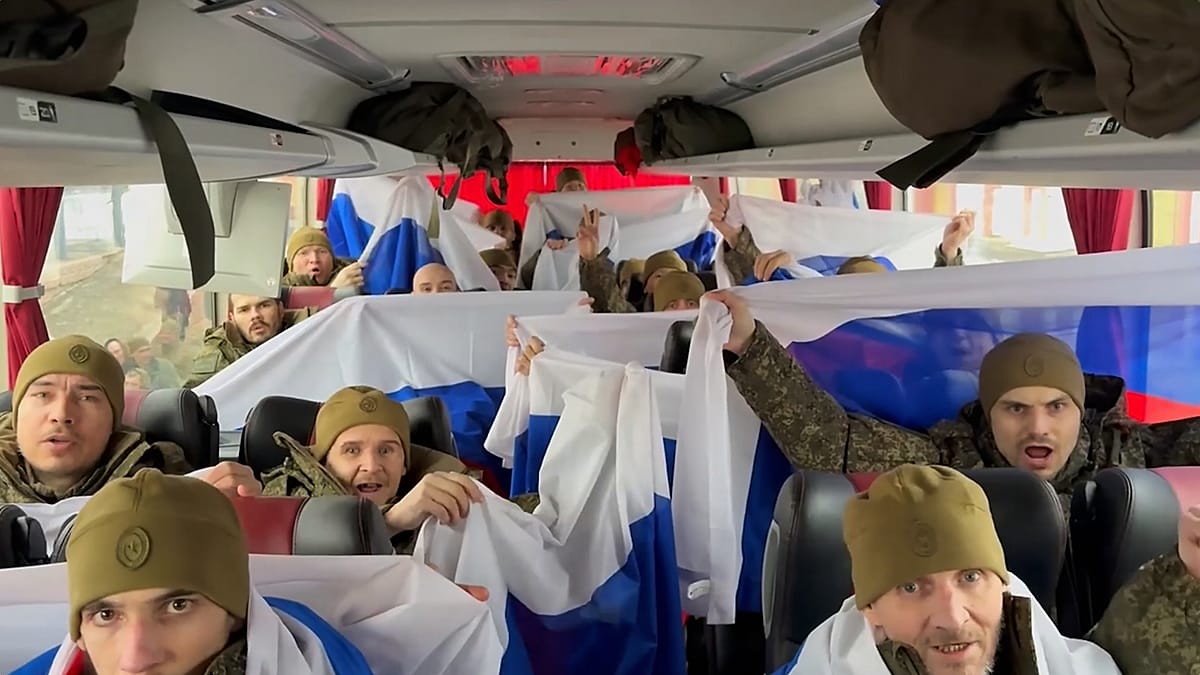
European Union member states are finding it difficult to keep Russian soldiers and war veterans out of the bloc, despite growing concerns about security threats from Moscow. Legal and bureaucratic obstacles have prevented the addition of hundreds of thousands of names to the Schengen Information System (SIS), the EU's shared database used by border guards and police.
Ukraine has supplied European authorities with the identities of more than half a million Russian soldiers, hoping to block their entry into the EU. But after nearly a year of work, fewer than 1% of those names have been added to SIS, according to EU officials. The database is designed to flag individuals who should be refused entry, but its legal framework requires an individual assessment for each alert, not a blanket listing of entire categories of foreign nationals.
Kyiv has been compiling a database of Russian soldiers identified on the frontline and systematically sharing it with Estonia. Tallinn, in turn, passes the information to countries including Germany, Lithuania, Poland and Czechia. Officials in these countries have been painstakingly entering the names into SIS, but the process is slow and resource-intensive.
Legal hurdles and individual assessments
Under EU rules, national authorities must establish specific grounds for each SIS alert, including an individual assessment of the threat a person poses to public policy, public security or national security. This means they cannot simply upload Ukraine's database into SIS; they must gather further information, take formal decisions, and issue alerts one by one. Given the high death toll among Russian troops, some listed individuals may already be dead, adding to the inefficiency.
“At this stage, we have nothing better to do than put these people in the SIS; it’s the most effective system,” an EU diplomat told Euronews, noting that once one member state enters a name, the alert becomes binding on all others. The challenge is not new—similar issues arose with former ISIS members, but those numbered a few hundred, not hundreds of thousands.
EU institutions and governments have spent recent months discussing technical ways to bar current and former Russian combatants from European soil. The issue was a sticking point in negotiations on the latest sanctions package against Russia, adopted in July, and was watered down at the insistence of Italy and France. Under the final compromise, the package does not apply the combatants ban directly but makes it conditional on implementing measures. The European Commission is working on those measures and could present them as early as the next Foreign Affairs Council on 16 November.
Shifting security landscape
Russia's hybrid threats have become increasingly physical. The most prominent case is the attempted drone attack on Leipzig airport in August, which Berlin formally attributed to Moscow in September. The episode has shifted perceptions of the Russian threat across Europe. Northern and eastern European countries are pushing to restrict tourist visas for Russians, while Italy, France and Spain issue them in large numbers.
At an informal ministerial meeting in early September, EU foreign policy chief Kaja Kallas said there was “broad support” for moving forward with a ban on tourist visas for Russian soldiers and war veterans. “The moment you say it was Russia, you need to react, or you are inviting more attacks. France understands this and has moved; it is only Italy standing in the way now,” a second EU diplomat told Euronews on condition of anonymity.
While France's position appears to have shifted, Italy remains sceptical, fearing its consular services would be overloaded identifying Russian ex-combatants among visa applicants, as well as potential legal challenges. Rome, however, faces an awkward fact: one of the main suspects in the Leipzig attempted attack was a Belarusian citizen who entered the EU on a tourist visa issued by the Italian consulate in Minsk. The other was a Russian-born Latvian citizen.
Political opposition seems to be gradually giving way, but the question remains technical and, above all, legal. EU officials fear a flood of court challenges, which makes finding a solid solution all the more pressing. The EU delegation in Moscow initially held several rounds of consultations with member states' consulates on operational challenges, but consular procedures are not the main obstacle, and arrangements are expected to be put in place relatively quickly.
A Commission paper circulated during the last sanctions negotiations, seen by Euronews, proposed expanding the legal basis for SIS alerts to cover broader categories of individuals, but such a change would require new legislation and could face legal challenges. Meanwhile, the EU continues to grapple with how to balance security concerns with legal safeguards, as the threat from Russia evolves. For more on the broader geopolitical context, see Europe's fractured voice on Ukraine peace talks and Meloni's call for EU unity.