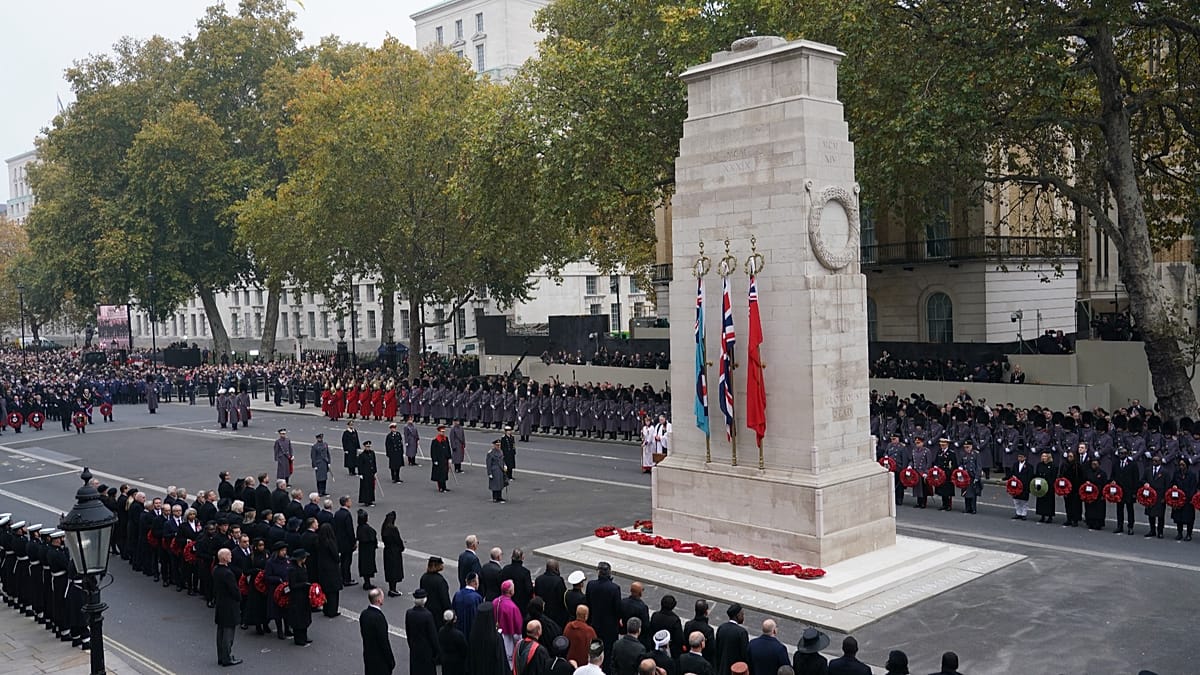
The United Kingdom paused on Sunday to honour the men and women of its armed forces who have died in conflicts, from the world wars to more recent operations. The annual Remembrance Sunday ceremony, held at the Cenotaph in central London, was led by King Charles III, who was joined by senior members of the royal family, political leaders, veterans, and thousands of spectators lining Whitehall.
Remembrance Sunday falls on the second Sunday of November, the closest Sunday to Armistice Day on 11 November, which marks the end of World War I in 1918. The tradition has been observed for over a century, with the Cenotaph—originally erected in 1919—serving as the nation's principal war memorial. It was rededicated in 1946 to include the fallen of World War II.
The ceremony began with the customary two-minute silence at 11:00 AM local time, a moment of quiet reflection observed across the country. Following the silence, King Charles III laid the first wreath at the foot of the Cenotaph, a solemn act repeated by other royals, including Prince William of Wales, and by political leaders such as Prime Minister Andy Burnham. Queen Camilla and Catherine, Princess of Wales, watched from a balcony of the Foreign, Commonwealth and Development Office, as has been tradition.
Around 10,000 veterans took part in a march-past, among them 12 who served in World War II. Their presence underscored the dwindling number of surviving veterans from that conflict, making their participation particularly poignant. This year's commemorations also marked the 35th anniversary of the end of the First Gulf War and the 15th anniversary of the conclusion of British military operations in Iraq, with veterans of those campaigns sharing their personal stories in the preceding Festival of Remembrance.
A national moment of reflection
The Cenotaph, designed by Sir Edwin Lutyens, has become a symbol of national mourning and gratitude. Its stark, understated design—a temporary structure of wood and plaster in 1919, later rebuilt in Portland stone—has made it a focal point for collective memory. The monument's inscription, "The Glorious Dead," is a reminder of the sacrifices made by British and Commonwealth forces.
Prime Minister Andy Burnham, attending his first Remembrance Sunday as premier, laid a wreath on behalf of the government. In a statement, he said, "We owe an unpayable debt to those who gave their lives for our freedom. Their courage and sacrifice must never be forgotten." His presence, alongside former prime ministers and leaders of opposition parties, underscored the non-partisan nature of the occasion.
The event also drew attention to the broader European context of remembrance. Across the continent, nations mark similar days—France observes 11 November with ceremonies at the Arc de Triomphe, Germany holds its own Volkstrauertag, and Belgium commemorates the fallen at the Menin Gate in Ypres. These shared traditions highlight the collective memory of a continent shaped by conflict, and the ongoing commitment to peace and reconciliation.
For many in the crowd, the day was deeply personal. Families held photographs of relatives who served, while veterans in uniform saluted as they passed the memorial. The march-past, which took over an hour, included representatives from all branches of the armed forces, as well as Commonwealth nations such as Canada, Australia, and India, reflecting the global reach of Britain's military history.
As the last notes of the bugle faded and the crowds dispersed, the Cenotaph remained a silent sentinel on Whitehall, its wreaths of red poppies a vivid reminder of the day's meaning. The UK's remembrance tradition, now in its second century, continues to evolve, but its core purpose remains unchanged: to honour those who made the ultimate sacrifice in service of their country.