The president of the Canary Islands has secured a commitment from Spain's prime minister to hold an emergency meeting on immigration, as the archipelago struggles to cope with a sharp rise in arrivals. Fernando Clavijo said Pedro Sánchez agreed to convene the Interministerial Commission on Immigration on Tuesday, following a surge that has put particular strain on the small island of El Hierro.
Between 1 and 6 November, 49 boats carrying a total of 4,587 migrants reached the Canary Islands, according to the regional government. Of those, 35 vessels landed on El Hierro, where local authorities describe the pressure on resources as "extraordinary." The island, with a population of around 11,000, has become a focal point of the Atlantic migration route from West Africa.
A long-running plea for support
Clavijo said the regional government has been calling for months for additional resources, better planning, and a coordinated response from Madrid. In a social media post, he wrote: "This meeting must serve to agree, between both governments and the relevant ministries, on a joint action plan, with specific, responsible measures and deadlines for implementation. We cannot continue to act only when the situation worsens."
The president also said he had requested "urgent meetings" with European Commission President Ursula von der Leyen and EU Commissioner for Internal Affairs and Migration, Magnus Brunner. The move underscores the growing sense that the Canary Islands, as the EU's southern border, cannot manage the influx alone.
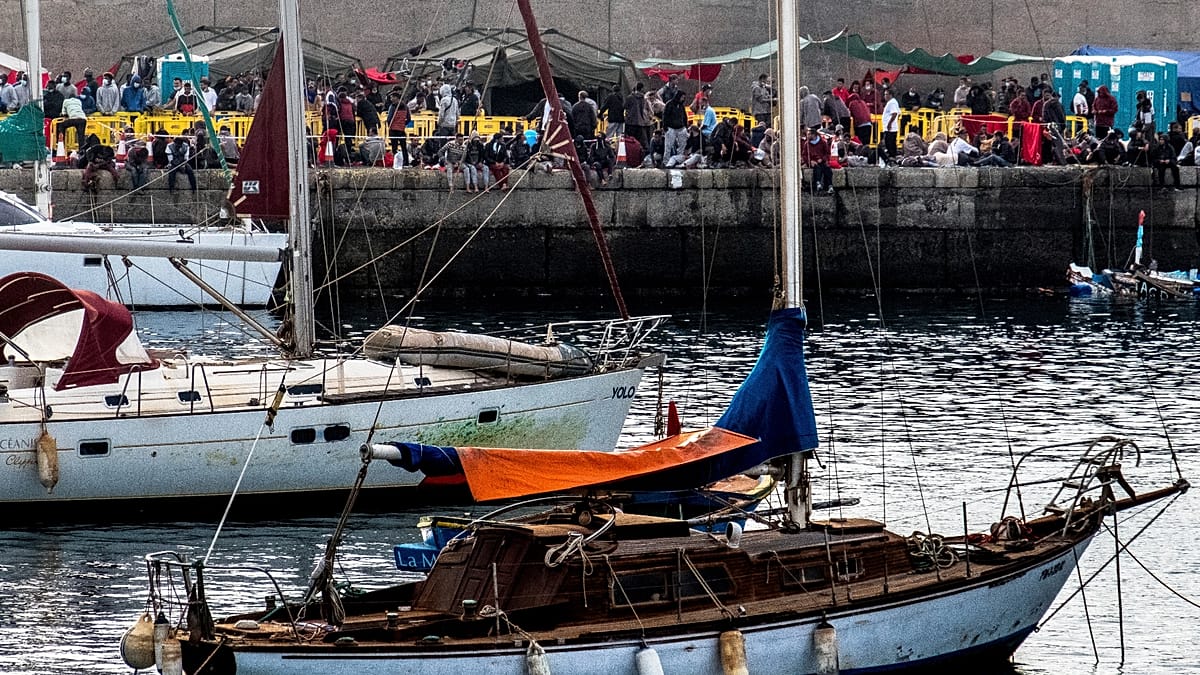
Residents of El Hierro have voiced mounting discontent, with local services such as healthcare and accommodation stretched to breaking point. The regional government has repeatedly warned that the island's reception facilities are overwhelmed, and that migrants are being housed in makeshift shelters.
The latest figures follow a rescue operation off El Hierro that brought 854 people to safety in a single day, highlighting the scale of the challenge. The Atlantic route, often used by migrants from Senegal, Mauritania, and Morocco, has seen a significant increase in traffic this year, with many vessels departing from the West African coast.
The situation has also drawn attention to the human cost of the journey. In October, a boat disaster off Senegal killed at least 21 people, a grim reminder of the dangers migrants face. The Canary Islands have become a key entry point for those seeking to reach Europe, often at great personal risk.
Clavijo's call for a joint action plan reflects frustration that the Spanish government has not acted sooner. He has argued that the crisis requires not only immediate humanitarian aid but also long-term solutions, including cooperation with countries of origin and transit to address the root causes of migration.
The emergency meeting on Tuesday is expected to bring together relevant ministries, including interior, foreign affairs, and social security, to agree on concrete measures. Clavijo has stressed that the plan must include clear deadlines and be implemented without delay.
The Canary Islands' predicament is part of a broader European challenge. As migration pressures mount across the continent, the EU has been working on a new pact on migration and asylum, but progress has been slow. The islands' leaders argue that the bloc must show solidarity with frontline regions, not just in the Mediterranean but also in the Atlantic.
For now, the immediate focus is on relieving pressure on El Hierro and other islands. The regional government has called for additional reception capacity, more staff, and better coordination of search-and-rescue operations. Whether Tuesday's meeting will deliver those resources remains to be seen, but Clavijo has made clear that the status quo is no longer acceptable.