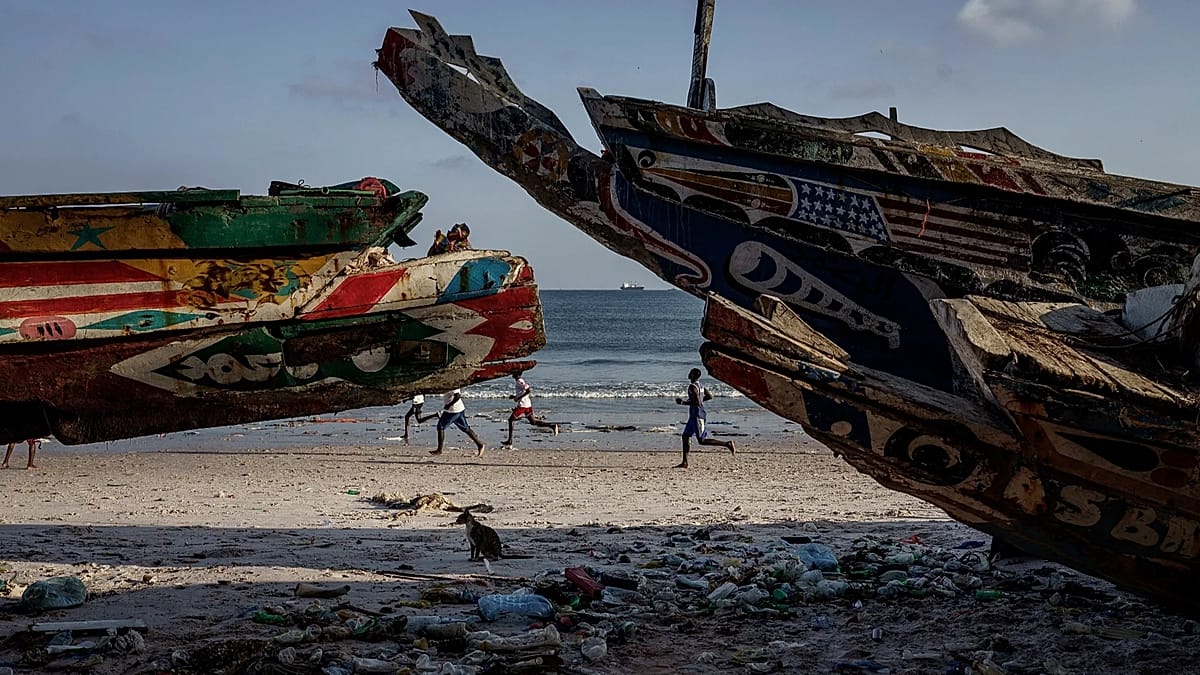
At least 21 people have died after a migrant boat capsized off the coast of Senegal, according to authorities. The incident occurred near Kébémer, a town in the northwestern part of the country, the Senegalese interior ministry said in a statement on Sunday.
Search and rescue operations are still underway, and so far only one survivor has been recovered. The ministry expressed condolences on behalf of the president and the government, paying tribute to the victims and offering sympathy to their families.
The government reiterated its commitment to fighting people-smuggling networks and said it would cooperate with neighboring countries to address the issue. This tragedy is the latest in a series of deadly incidents along the Atlantic route, which has become a key pathway for West African migrants attempting to reach Europe.
A perilous journey
The Atlantic route, which runs from the West African coast to the Canary Islands, is one of the most dangerous migration corridors in the world. According to the International Organization for Migration (IOM), the route has seen a sharp increase in attempts in recent years, despite the risks.
Stricter controls in traditional departure points such as Senegal, Morocco, and Mauritania have pushed many migrants to launch from further south, including from The Gambia. These alternative departure points can add up to 750 kilometers to the crossing, extending some journeys to approximately 2,200 kilometers. As the IOM has noted, this exposes people to longer periods at sea, more remote and less monitored coastlines, and greater risks of shipwreck, dehydration, and disappearance.
The latest tragedy off Kébémer underscores the human cost of these migration routes. While the exact circumstances of the capsizing are still unclear, the loss of life is a stark reminder of the dangers faced by those seeking a better life in Europe.
European countries, particularly Spain, have been on the front line of this migration pressure. In recent months, Spanish authorities have rescued hundreds of migrants off the Canary Islands, as the route continues to see high numbers of arrivals. The pressure on the Canary Islands has been mounting, with local authorities struggling to manage the influx.
The European Union has pledged support to countries of origin and transit, but the root causes of migration—poverty, conflict, and lack of opportunity—remain unresolved. The IOM has called for more legal pathways and better cooperation to prevent further loss of life.
As search operations continue off the Senegalese coast, the focus remains on finding survivors and recovering the bodies of those who perished. The tragedy has once again highlighted the urgent need for a coordinated European and international response to migration, one that prioritizes human life and dignity.