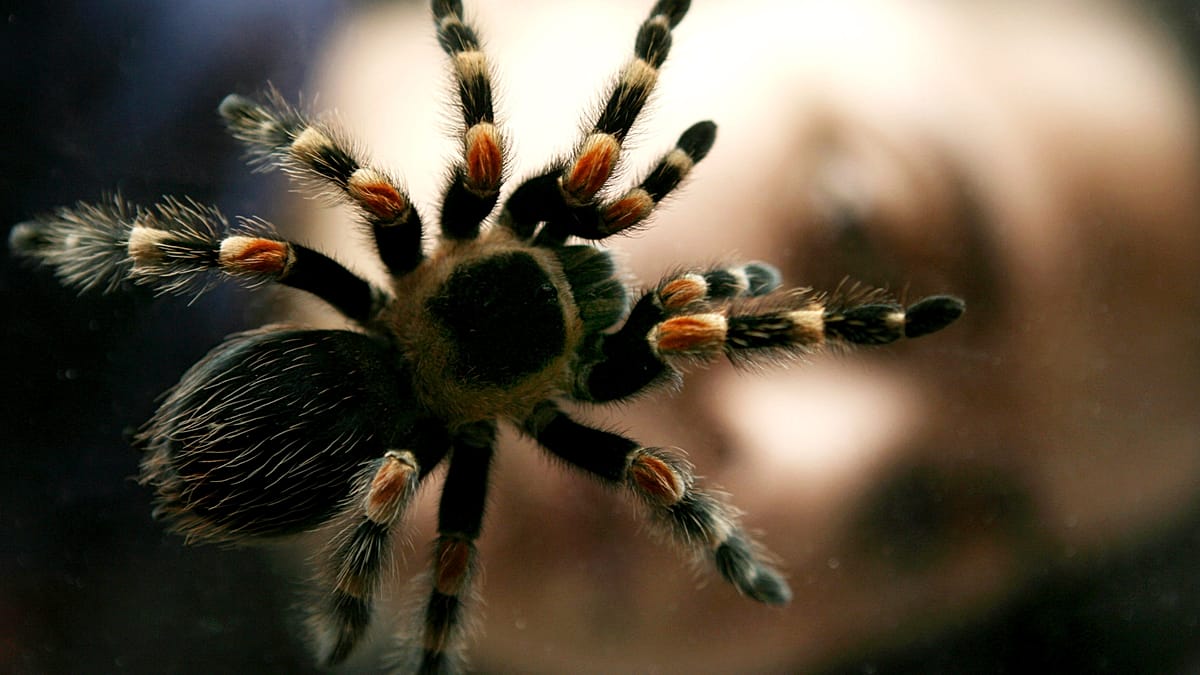
Autumn in Austria usually brings falling leaves and shorter days, but this year it has also brought an unusual number of eight-legged visitors. More than 200 tarantula sightings have been reported across the country since the beginning of September, according to the citizen science platform naturbeobachtung.at. Of those, 175 have been confirmed by experts.
The southeastern state of Styria has seen the highest number of reports, with 66 sightings. Lower Austria follows with 49, and Burgenland, which borders Hungary, has recorded 43. Sightings have also come in from Carinthia, in the south.
Tarantulas are most active in the autumn, when they search for sheltered spots to spend the winter. In their natural habitat, they usually hide in underground burrows or rock crevices, but increasingly they are turning up in flats, houses, and garages. For many Austrians, that has meant unexpected encounters with a creature that, while intimidating, is rarely dangerous.
Notable finds for researchers
Some of the recent discoveries have excited arachnologists. A South Russian tarantula was found in Tulln, in Lower Austria, marking an unusually far northwestern sighting. Carolina Trcka-Rojas of the Austrian Nature Conservation Association noted that there had been no previous reports in the surrounding region.
There were also notable finds involving the black-bellied tarantula. At the end of August, one was spotted in Stossau, in the lower Gail valley, the westernmost record of the species in Austria to date.
Two species of tarantula are generally found in Austria: the South Russian tarantula and the black-bellied tarantula. Both belong to the wolf spider family and can bite if they feel threatened, though such incidents are rare. A bite can be painful and may cause redness and swelling, but for healthy people it is usually not dangerous.
The South Russian tarantula was first recorded in Austria in the early 1920s, around Lake Neusiedl and Vienna. The black-bellied tarantula was first documented in Styria in the 1970s. Their presence is not new, but their numbers and range appear to be expanding.
The trend is not limited to Austria. A study from 2025 showed that tarantulas were also spreading in Czechia after decades of decline. Researchers point to warmer and drier summers as a key factor, conditions that favour the spiders' reproduction and survival.
For now, Austrian authorities advise residents to remain calm if they encounter a tarantula. The spiders are more interested in finding a warm corner than in confronting humans. As the climate continues to change, however, these autumn encounters may become a more familiar part of life in Central Europe.