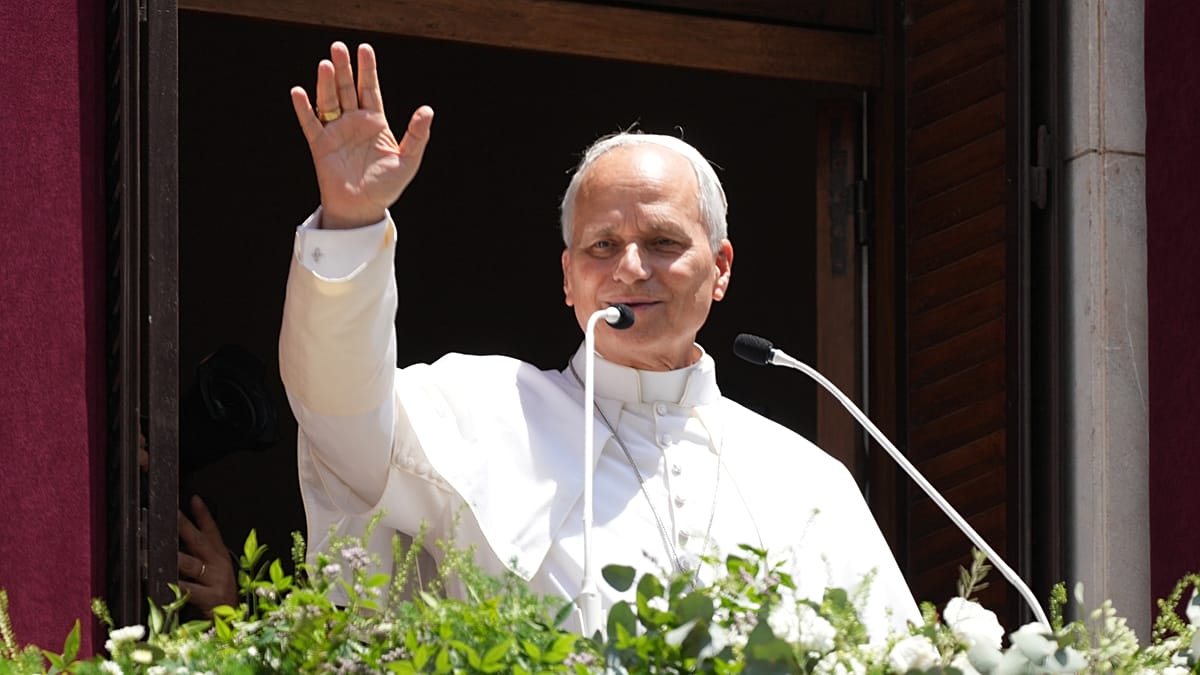
Pope Leo XIV brought his Argentine pilgrimage to the central city of Córdoba on Tuesday, where an estimated 650,000 worshippers gathered for an open-air Mass at the Military Aviation School. The service followed a record-breaking appearance in Buenos Aires, where some 2.5 million people turned out on Monday, making it one of the largest papal events in recent memory.
Faithful travelled from across the vast country—from the northern provinces bordering Bolivia to the southern reaches of Patagonia—often driving for hours to be present. Córdoba, chosen for its central location, had not hosted a papal visit in nearly four decades, and the city's streets filled with pilgrims long before dawn.
In his homily, the Pope urged Argentines to draw inspiration from their own saints, including José Gabriel del Rosario Brochero, the "Gaucho priest," and María Antonia de Paz y Figueroa, known as "Mama Antula," who in 2024 became Argentina's first female saint. Both were canonised by Pope Francis, Leo's predecessor and fellow Argentine.
"We are all called to holiness," Leo said. "These saints and blessed have already fulfilled their mission on Earth. Today, it is our turn to follow the radiant example of holiness they have left with us."
After the Mass, the Pope surprised the crowd with a brief appearance on the balcony of the archbishop's residence in downtown Córdoba—the same balcony from which St. John Paul II greeted the city in 1987. Thousands below chanted "León, León" as he waved and offered a short message. "United, we can do anything," he told them.
Among those in attendance were Erika Viñales, 39, and Elena Llanquenao, 54, religious education teachers from Santa Cruz province in Patagonia. They had travelled more than 2,000 kilometres (over 1,200 miles) to witness the event. "It was quite a journey," Viñales said, her voice carrying the exhaustion and excitement of the pilgrimage.
The Córdoba Mass was the second major stop on a tour that began with the Pope's arrival in Buenos Aires—the first papal visit to Argentina in over two decades. Earlier in the trip, Leo also visited the working-class neighbourhood of Claypole, where large crowds gathered to see him. The visit has also included a pointed exchange with President Javier Milei over disability care, a topic the Pope has pressed during his meetings with Argentine officials.
A message beyond Argentina
While the Argentine leg of the tour has dominated headlines, the Pope has also used the journey to address global concerns. In neighbouring Uruguay, speaking at the Catholic University in Montevideo, he warned about the dehumanising effects of artificial intelligence. "It is urgent, then, that our school and university education contribute to the wise use of technologies and AI, putting the person before the algorithm," he said, calling for a balance between technical, emotional, social, spiritual, and ecological intelligences.
The Pope's final Mass in Argentina is scheduled for Wednesday in the town of Luján, home to the country's most revered Marian shrine. After that, he departs for Peru, where preparations are already underway. At Lima's Jorge Chávez International Airport, Monsignor Paolo Rocco Gualtieri blessed the papal plane and its crew on the eve of the pontiff's arrival.
For many Argentines, the visit has been an emotional watershed. Romeo Armando, a university student, described the experience as "almost touching heaven with your hands." Rosa Acevedo, a retired woman, struggled to contain her joy: "It is a very great feeling, something that fills me. I am going with all my heart full of blessings."
The Pope's journey, which has drawn millions across two countries, underscores the enduring pull of the papacy in a region where the Catholic Church remains a powerful social force—even as its influence wanes in parts of Europe. For Leo XIV, the Argentine-born pontiff, the trip is also a homecoming of sorts, as he follows in the footsteps of his predecessor and mentor.