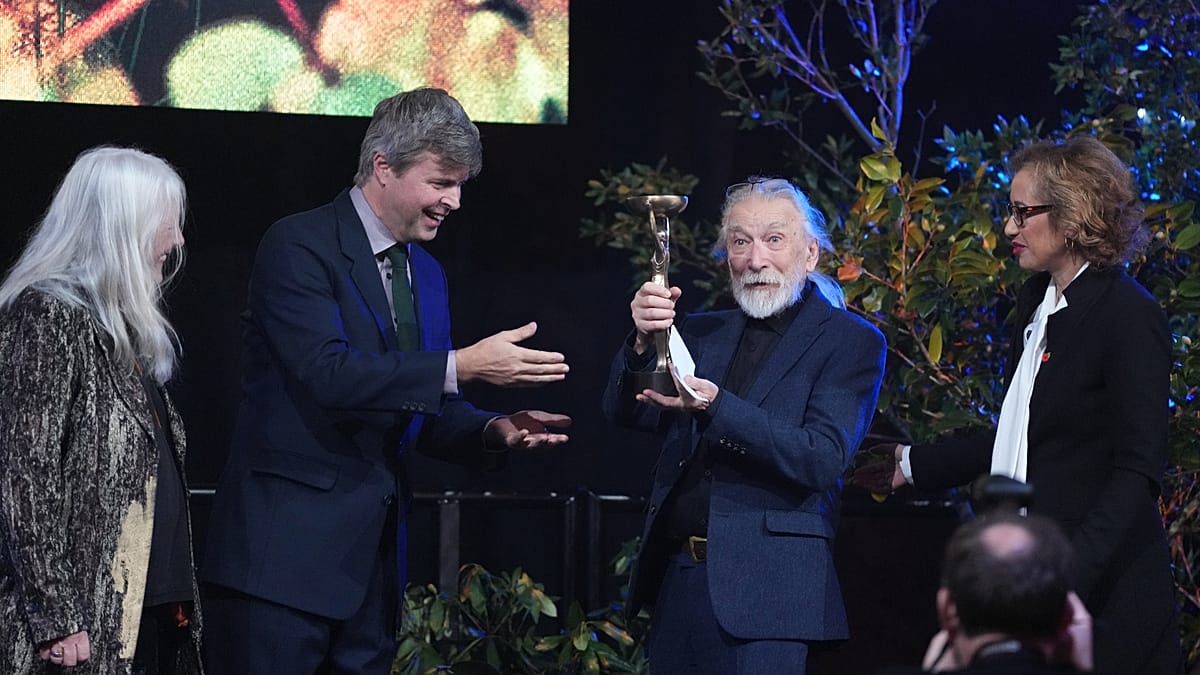
At a ceremony in London on Tuesday evening, the 2026 Booker Prize was awarded to British author M John Harrison for his novel The End of Everything. The announcement, made by classicist Mary Beard, chair of the judging panel, marks a historic moment: at 80, Harrison is the oldest recipient of the prize since its founding in 1969.
The novel, set on England's Channel coast in the near future, imagines a society shattered by an unspecified calamity, with enigmatic alien entities arriving in Britain. The story follows a beachcomber living with his gun-toting aunt, who discovers a puzzling, shapeshifting artifact on the shore. Beard described the book as “the politics of now seen through the lens of the future,” capturing a society “undergoing a catastrophe that they don’t really understand.”
Harrison, long celebrated within science fiction circles but less known to the broader literary public, said the win validates a career spent pushing against genre boundaries. “I’ve been working for 40 to 50 years to shift the balance, both as a novelist and as a critic,” he told reporters before the ceremony. “Why shouldn’t a well-written work of science fiction be considered literary fiction?”
The judges praised the novel for its “extraordinary expert writing and huge ambition.” Harrison himself admitted to feeling like “a proper writer at last,” a sentiment that resonated with an audience aware of the prize's reputation for transforming careers.
A shortlist of heavyweights
This year's shortlist, whittled down from a longlist of 163 novels, was notably strong. It included two former winners: Marlon James from Jamaica and Scot Douglas Stewart. A win for either would have made them the fifth double Booker laureate, joining J.M. Coetzee, Peter Carey, Hilary Mantel, and Margaret Atwood.
Pulitzer Prize winner Elizabeth Strout was also in contention, as were Luke Kennard's satirical campus novel Black Bag and Rebecca Perry's medieval-to-modern tale May We Feed the King. The diversity of the shortlist underscored the prize's global reach, open to novels written in English from any country and published in the UK and Ireland.
The Booker has a storied history of launching authors into the spotlight, with past winners including Salman Rushdie, Ian McEwan, Bernardine Evaristo, and Arundhati Roy. Last year's prize went to Flesh by Hungarian-British writer David Szalay, a reminder of the prize's European connections.
Harrison's win also reignites debates about genre fiction's place in literary awards, a topic that has gained traction across Europe. Earlier this year, the Goncourt winner's use of AI sparked similar discussions about the boundaries of authorship and creativity. Meanwhile, the Cervantes Prize continues to honor Spanish-language literature, highlighting the continent's rich literary tapestry.
As Harrison takes his place in Booker history, his victory signals a broader acceptance of speculative fiction within the literary mainstream—a shift that many writers, particularly in Europe, have long awaited.