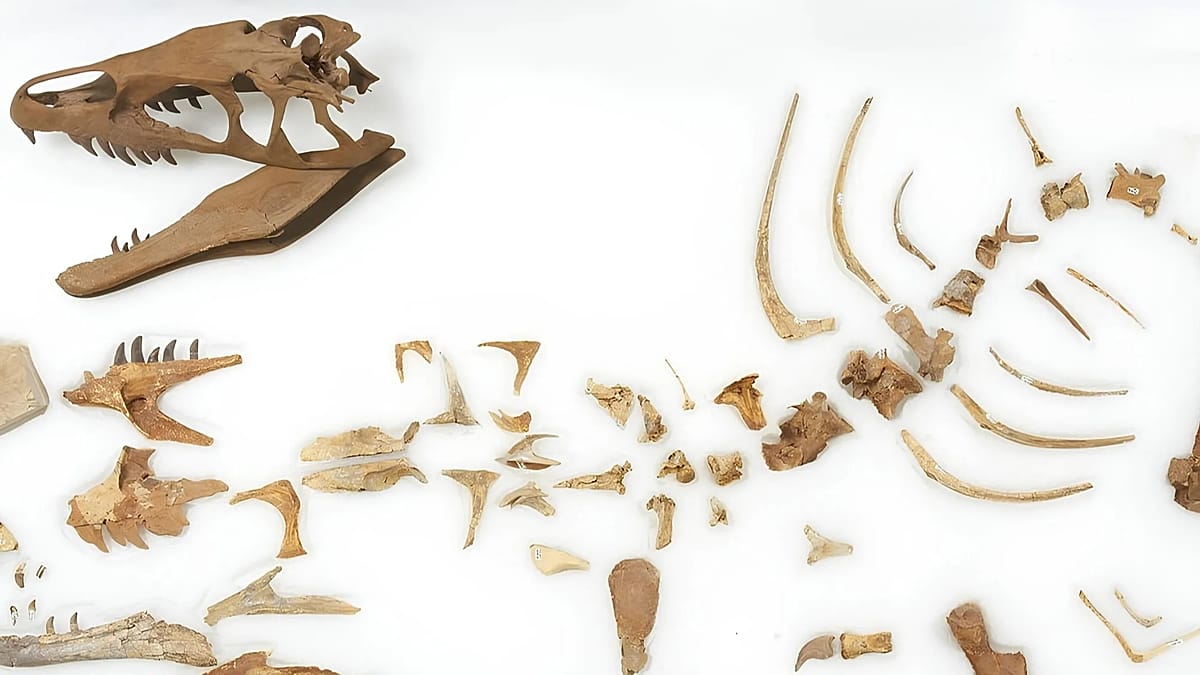
Paris's National Museum of Natural History has secured a remarkable addition to its collections: the skeleton of a 167-million-year-old carnivorous dinosaur, the only known specimen of its kind. The fossil, discovered in Normandy in 1994, was due to be sold at auction but has been acquired by mutual consent after intervention by French authorities.
The skeleton was unearthed in Conteville, a village in the Eure département, by André Dubreuil, then the local mayor. Subsequent excavation campaigns, led by teams from the Centre for Research in Palaeontology under the supervision of the museum, CNRS, and Sorbonne University, revealed a nearly complete theropod—a group that includes some of the most iconic predators in Earth's history.
Palaeontologists have identified the specimen as a new species, naming it Dubuelllosaurus valesdunensis in honour of its discoverer. It belongs to the megalosaur family, a lineage that until now was poorly understood. The skull, exceptionally well preserved, is among the most complete of any theropod dinosaur found in Europe, offering scientists a rare window into the anatomy of these ancient hunters.
A narrow escape from the auction block
The fossil had been on public display since 2014 at the Paléospace museum in Villers-sur-Mer, Normandy. But when the heirs of its owner decided to sell, it was consigned to an auction scheduled for 18 November at the Hôtel Drouot in Paris. The prospect alarmed researchers, who feared the specimen might disappear into a private collection and become inaccessible to science.
French authorities mobilised to prevent that outcome, negotiating a purchase before the hammer could fall. The skeleton will now join the Gallery of Palaeontology and Comparative Anatomy at the Jardin des Plantes, which is set to reopen in the summer of 2027.
The acquisition is a victory for scientific preservation, echoing similar efforts across Europe to keep significant fossils in public hands. It also carries a poignant historical weight: the dinosaur is one of the last traces of prehistoric life in Normandy, as other specimens from the region were destroyed during the bombing raids of 1944.
For palaeontologists, the specimen is more than a museum piece. Its study has already reshaped understanding of megalosaur anatomy, and its continued availability promises further insights into the ecosystems of the Middle Jurassic. As political attention in France remains fixed on other matters, this quiet acquisition underscores the enduring value of scientific heritage.
The museum's commitment to public access aligns with broader European efforts to protect cultural and natural treasures. While the continent grapples with challenges ranging from energy security to climate-related health risks, the preservation of a 167-million-year-old predator offers a reminder of the deep time that shapes our world.
As the skeleton prepares for its new home in Paris, researchers and visitors alike will have the chance to marvel at a creature that roamed what is now France long before the first human set foot on the continent. Its journey from a Norman field to the national collection is a testament to the power of collaboration between local communities, scientists, and the state.