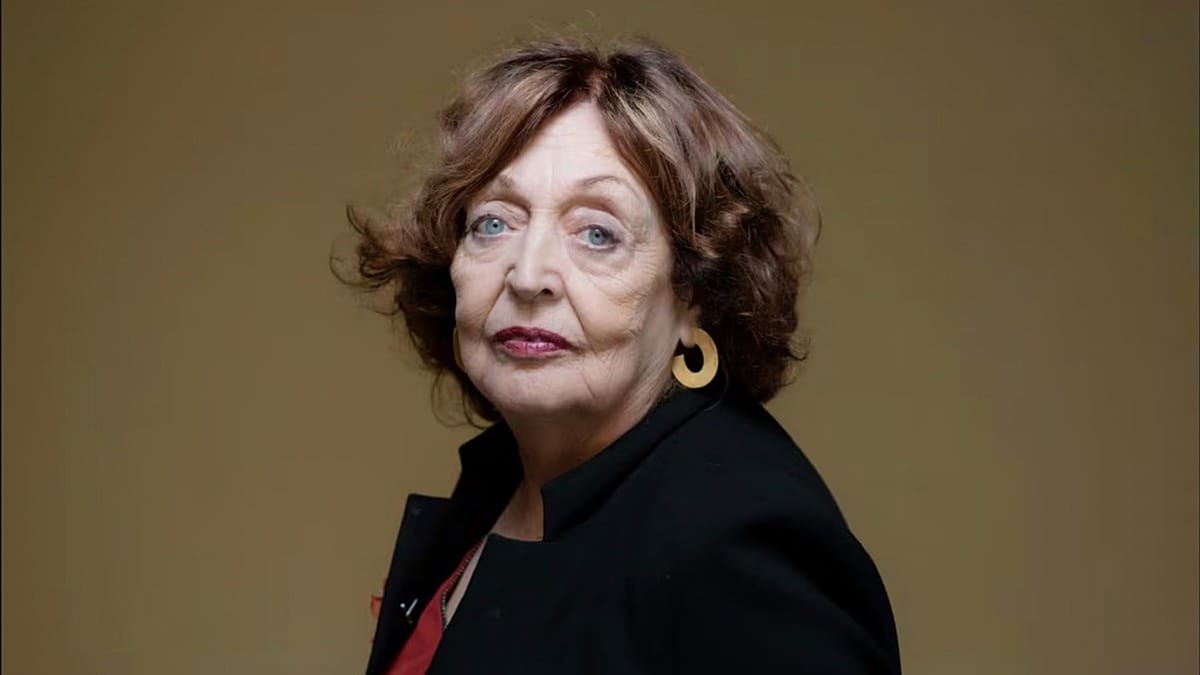
The Catalan author Cristina Fernández Cubas has been awarded the 2026 Cervantes Prize, Spain's most prestigious literary distinction, carrying a purse of €125,000. The announcement was made on Tuesday by the Minister of Culture, Ernest Urtasun, following the jury's decision.
In its citation, the jury commended what it described as the originality, excellence and coherence of a body of work that has reshaped Spanish-language fantastic fiction. It singled out her capacity to probe human experience through narratives steeped in mystery and ambiguity.
A life in letters
Born in Arenys de Mar, a coastal town in the province of Barcelona, in 1945, Fernández Cubas has long been regarded as one of the foremost practitioners of the Spanish short story. Her collections include Mi hermana Elba, El ángulo del horror and La habitación de Nona. Over a career spanning several decades, she has also received the National Narrative Prize and the National Prize for Spanish Literature.
With this latest accolade, she becomes the seventh woman to win the Cervantes, joining a lineage that includes María Zambrano, Ana María Matute and Elena Poniatowska. The award not only crowns her career but also underscores her influence on successive generations of writers.
The Cervantes Prize is awarded annually by Spain's Ministry of Culture and is widely considered the Nobel of the Spanish-speaking world. It recognises an author's lifetime achievement in the language, and its roster of laureates reads as a canon of modern Hispanic letters.
Fernández Cubas's win comes at a moment when the short story is enjoying renewed critical attention across Europe, even as the publishing industry remains fixated on the novel. Her work, often described as unsettling and quietly subversive, has been translated into numerous languages and continues to attract scholarly interest.
In Spain, the prize is also a reminder of the country's decentralised literary geography: a writer from Catalonia, working in Castilian, has once again taken the top honour. The decision may also resonate in Latin America, where her books have a devoted readership and where the Cervantes is followed closely.
The jury's choice has been welcomed by booksellers and critics alike, who see it as a validation of a writer who has never chased commercial trends. As one Madrid-based editor put it, Fernández Cubas has made the strange feel inevitable.
Her victory also invites comparisons with other recent literary awards that have sparked debates about representation. The all-male science Nobels earlier this year, for instance, fuelled fresh scrutiny of gender imbalances in prestigious prizes. The Cervantes, by contrast, has now gone to a woman for the seventh time in its history — a slow but steady shift.
Meanwhile, the wider Spanish-language literary market is evolving. Interest in Spanish letters is growing in unexpected places, such as China's booming demand for Spanish teachers, which suggests the language's cultural reach is expanding beyond its traditional spheres.
For now, Fernández Cubas can expect a flood of new readers. Her publishers are likely to reissue her backlist, and translations may follow. The Cervantes is not just an honour; it is a commercial catalyst. And for a writer whose work thrives on the uncanny, the sudden spotlight may be the strangest twist of all.