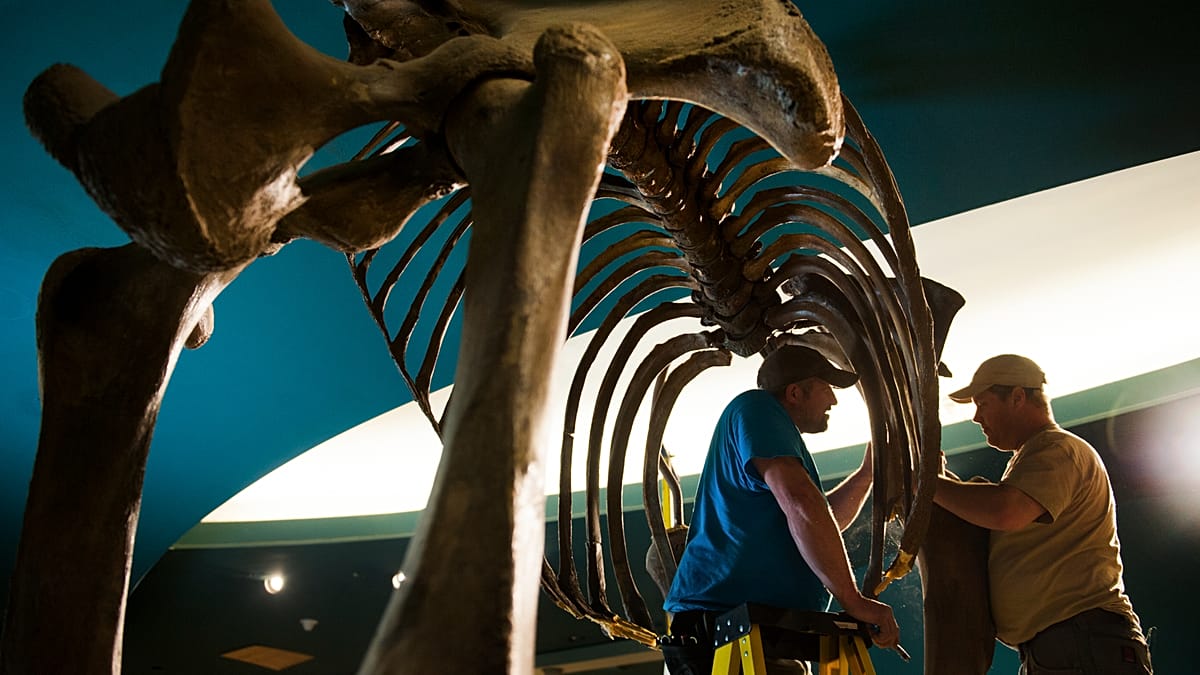
Along the banks of the Danube near the Bulgarian village of Ryahovo, the receding waters have unveiled a remarkable relic from the Ice Age: the skeleton of a woolly mammoth. The river, which has sunk to historic lows after successive heatwaves, has given researchers a rare glimpse into a prehistoric past that usually lies hidden beneath the current.
Specialists from the Regional History Museum in Ruse have identified the remains as belonging to Mammuthus primigenius, the woolly mammoth that roamed Europe and northern Asia for hundreds of thousands of years. So far, they have recovered a jawbone, tusks, a shoulder blade, ribs, and assorted bone fragments, though much of the skeleton is likely still buried in the riverbed.
Krasimir Kirov, the museum's curator, explained that the animal stood nearly five metres tall and weighed between seven and eight tonnes. He suggested that the carcass may have been carried downstream by the Danube, which over millennia has accumulated the remains of prehistoric fauna in this stretch of the river.
The woolly mammoth existed from roughly 500,000 to 800,000 years ago until about 7,000 to 10,000 years ago. The bones, therefore, could be several thousand years old. Because they have been waterlogged for so long, they are extremely fragile once exposed to air, so the excavation is being carried out with great care. After conservation and study, the remains are expected to go on display at the museum in Ruse, about thirty kilometres from the discovery site.
Danube's drought reveals more than ancient bones
The Danube, which flows through ten countries from south-west Germany to the Black Sea, has dropped to record lows along much of its course. The receding waters have exposed not only sandbanks and rocks but also relics of more recent history. In Hungary, near Mohács, and in Serbia, at Prahovo, the hulks of German warships from the Second World War have resurfaced, drawing attention to the river's role as a wartime graveyard.
These discoveries are part of a broader pattern of disruption caused by the drought. The low water levels have also forced the shutdown of Hungary's Paks nuclear power plant, as the river can no longer guarantee sufficient cooling. This has prompted emergency energy talks within the EU, highlighting the fragility of Europe's energy infrastructure in the face of climate extremes.
The Danube's plight is not isolated. The Rhine, another vital European waterway, has also seen disruptions to industry and energy transport, affecting supply chains across the continent. The combination of low river levels and high temperatures is a stark reminder of the challenges that lie ahead for European economies and ecosystems.
For the team in Ruse, the mammoth discovery is a silver lining in an otherwise worrying environmental trend. The skeleton offers a tangible connection to a distant era, and its preservation will allow scientists to study the species in detail. As Kirov noted, the find is a testament to the river's long memory, even as its present-day flow diminishes.
The museum plans to display the remains once they have been properly conserved, giving the public a chance to see a creature that last walked these lands thousands of years ago. For now, the excavation continues, with researchers hoping to recover more of the skeleton before the river rises again.