After years of delays and political wrangling, the European Union's anti-deforestation regulation (EUDR) is finally scheduled to apply from 30 December 2026. But as the deadline approaches, new investigations from Indonesia are testing whether Brussels will actually enforce its environmental rules when major corporate interests are at stake.
Environmental groups WALHI Kalteng, TuK Indonesia, and Sawit Watch have traced palm oil from plantations in Indonesia's Central Kalimantan province to some of the world's largest consumer goods companies. Their findings, based on field investigations and government data, suggest that palm oil sourced from land cleared after the EU's cut-off date of 31 December 2020 could still enter the European market.
The investigation identified recent buyers of palm oil from the plantation PT Karya Makmur Abadi, a subsidiary of the KLK Group, including PepsiCo, Unilever, Ferrero, Mondelez, and Procter & Gamble. While the report does not prove that each named company has violated the EUDR, it highlights the risk that products linked to deforestation could slip through the bloc's supply chain checks.
EUDR at a crossroads
The EUDR requires suppliers of cocoa, coffee, soy, palm oil, wood, rubber, and beef to prove their goods are not linked to deforestation in exchange for market access. The law has faced repeated setbacks, with implementation delayed amid concerns about administrative costs, traceability requirements, and the burden on businesses and trading partners.
Several producer countries, including Brazil, Indonesia, Malaysia, Colombia, Ghana, and the United States, have lobbied Brussels to reconsider the law. US Ambassador to the EU Andrew Puzder has been particularly vocal, labelling the regulation as over-regulation, selective protectionism, and an unnecessary non-tariff trade barrier.
Despite these pressures, the European Commission has maintained that the EUDR is a cornerstone of its Green Deal and a critical tool in the fight against global deforestation. However, the Indonesian findings raise questions about whether the EU will enforce the law as planned, or whether political and economic considerations will lead to further softening.
Indonesia's forests under pressure
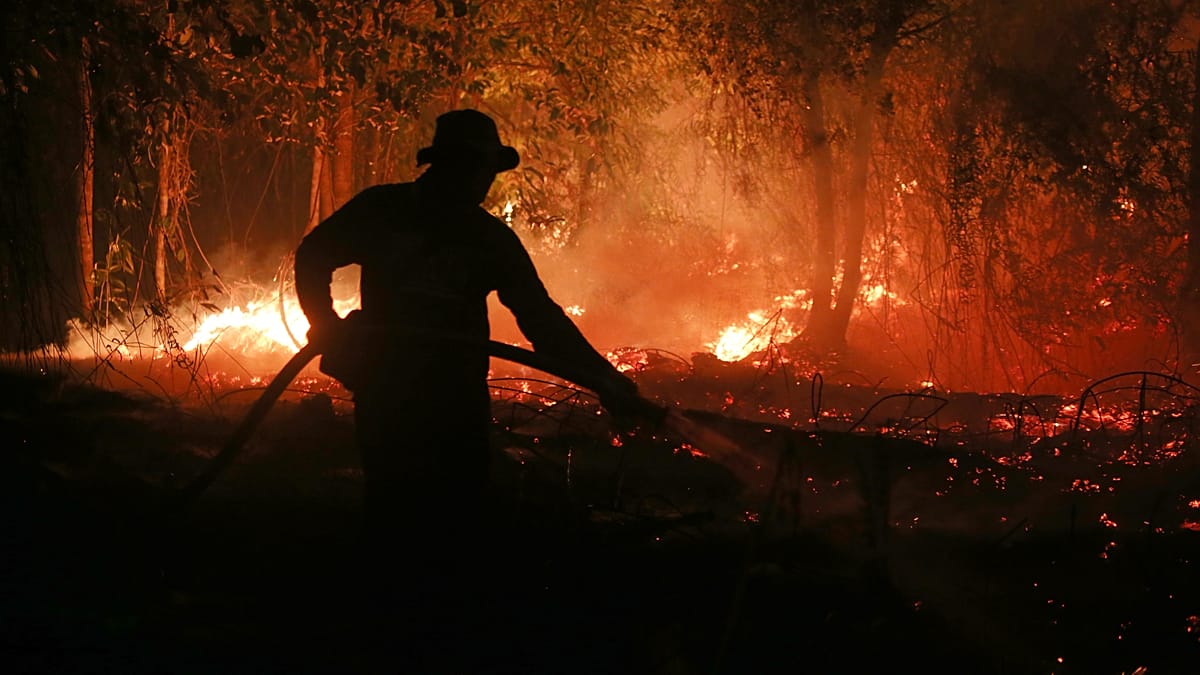
Indonesia has one of the world's fastest rates of forest loss, driven by illegal logging, mining, new oil palm plantations, and slash-and-burn land clearing. Devastating wildfires across the country have also been linked to decades of deforestation and forest degradation. Environmental activists warn that clearing forests for agricultural production leaves landscapes more vulnerable to fires.
Achmad Surambo, executive director of the NGO Sawit Watch, said Europe's largest palm oil buyers have failed to self-police their involvement in deforestation and environmental destruction. "Indonesian communities want immediate and strong enforcement of European supply chain sustainability regulations," he said.
Perrine Fournier, a trade and forest campaigner at global NGO Fern, said the Indonesian findings reveal that the country's palm oil industry "remains tainted by illegality," emboldened by the fact that major international corporations and European consumers are enmeshed in it. "The investigation underlines why the EUDR can be a crucial tool in halting the biggest cause of deforestation on earth: clearing land for agricultural commodities such as palm oil, as well as the pivotal role that NGOs can play in ensuring its success," she added.
The EUDR's success will depend on robust enforcement and the willingness of member states to hold companies accountable. As the 2026 deadline nears, the pressure on Brussels to balance environmental commitments with trade relations will only intensify. The outcome of this test case could set a precedent for how the EU handles similar challenges in other commodity sectors.